Dinner · Part 2 of 3: Instructions
One-Pan Greek Lemon Oregano Chicken with Crispy Feta Step-by-step instructions
- Prep
- Cook
- Total
- Serves
- 4
Before you start
Before you start, gather all your ingredients and equipment. Pat the chicken thighs dry with paper towels to ensure a good sear. Juice the lemons and mince the garlic. Halve the potatoes if they are large.
Cut the feta into 1-inch chunks. Preheat the oven to 400°F (200°C) and place your cast-iron skillet inside to heat. Having everything prepped and ready will make the cooking process smooth and enjoyable.
Ingredients at a glance (8)
- 4 lb bone-in, skin-on chicken thighs
- 1 lb Yukon gold potatoes, halved
- 1/3 cup olive oil
- 2 lemons, juiced
- 6 cloves garlic, minced
- 2 tbsp dried Greek oregano
- 1/2 cup Kalamata olives, pitted
- 6 oz block feta, cut into chunks
Instructions
Marinate and Sear
- Marinate the Chicken and PotatoesIn a large bowl, combine the olive oil, lemon juice, minced garlic, and Greek oregano. Add the chicken thighs and potatoes, tossing to coat thoroughly. Let the mixture marinate in the refrigerator for at least 30 minutes, or up to 2 hours.Look for The chicken and potatoes are evenly coated with the lemony marinade.Tip For deeper flavor, marinate overnight. Always keep raw chicken refrigerated while marinating.
- Preheat the OvenPreheat the oven to 400°F (200°C). Place a large cast-iron skillet in the oven while it heats.Look for The skillet is hot when a drop of water sizzles on contact.Tip Heating the skillet helps achieve a crisp sear on the chicken skin.
The chicken and potatoes are coated in a fragrant marinade of lemon, garlic, and oregano. The oven is preheated, and the skillet is hot. When you place the chicken skin-side down, you'll hear a satisfying sizzle. The skin begins to turn golden and crisp after 8 minutes. The potatoes are starting to soften and absorb the flavors. The kitchen smells of lemon and herbs, promising a delicious meal.
Roast with Olives and Feta
- Sear the Chicken Skin-Side DownCarefully remove the hot skillet from the oven. Arrange the chicken thighs skin-side down in the skillet, placing the potatoes around them. Return the skillet to the oven and roast for 8 minutes.Look for The skin begins to sizzle and turn golden.Tip Use tongs to handle the chicken to avoid burns.
- Flip the Chicken and Add Olives and FetaAfter 8 minutes, remove the skillet from the oven. Flip the chicken thighs so the skin is facing up. Scatter the Kalamata olives and feta chunks around the chicken and potatoes.Look for The chicken is browned on the skin side, and the feta is still in block form.Tip Keep the feta in large chunks so it softens without melting completely.
- Roast at Higher HeatIncrease the oven temperature to 425°F (220°C). Return the skillet to the oven and roast for 20 minutes, until the chicken is golden and cooked through, the potatoes are tender, and the feta is blistered in spots.Look for The chicken reaches an internal temperature of 165°F (74°C), and the potatoes are fork-tender.Safe temperature 165°F (74°C) internal temperature (poultry)Tip If the feta browns too quickly, tent the skillet loosely with foil.
After flipping the chicken, the skin is beautifully browned. The olives and feta are scattered around, and the skillet returns to the oven at a higher temperature.
As it roasts, the feta softens and begins to blister, the olives release their briny aroma, and the potatoes become golden and tender. The chicken reaches an internal temperature of 165°F (74°C), and the whole dish looks glossy and inviting.
Rest and Serve
- Rest and ServeRemove the skillet from the oven and let it rest for 5 minutes before serving. Spoon the pan juices over the chicken and potatoes. Serve directly from the skillet, garnished with fresh oregano if desired.Look for The juices have settled, and the feta is creamy and slightly browned.Tip Resting allows the juices to redistribute, keeping the chicken moist.
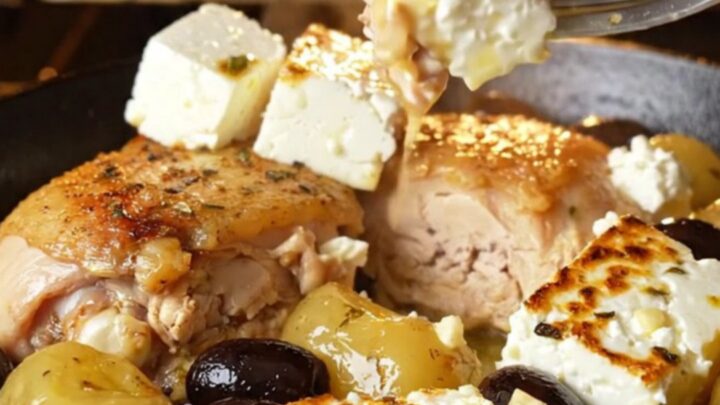
The skillet emerges from the oven with everything glistening. The chicken skin is crackling, the potatoes are caramelized, and the feta is creamy with blistered edges. After a brief rest, the pan juices have settled, and the flavors have melded. Serve hot, with the lemon and oregano aromas wafting up. Each bite is a perfect balance of savory, salty, and bright.
Common mistakes
One common mistake is overcrowding the skillet, which can cause the chicken to steam rather than sear. Use a large enough skillet and arrange the chicken and potatoes in a single layer.
Another mistake is flipping the chicken too early; let it sear undisturbed for the full 8 minutes to get a good crust. Also, avoid using low-fat feta, as it won't melt as well. Finally, don't skip the resting time—it's essential for juicy chicken.
How to tell it’s done
The chicken is done when it reaches an internal temperature of 165°F (74°C) in the thickest part, without touching the bone. The skin should be deep golden brown and crispy. The potatoes should be fork-tender and easily pierced.
The feta should be soft and lightly browned on the edges. Let the dish rest for 5 minutes before serving to allow the juices to redistribute. If the chicken hasn't reached temperature, return the skillet to the oven for a few more minutes.
- Poultry: 165°F (74°C) in the thickest part
Up next · Part 3 of 3
4 variations · storage & make-ahead · 5 answers · printable card
Tips, FAQ & printable recipe (Part 3)← Back to the ingredients (Part 1)