Dinner · Part 2 of 3: Instructions
One-Pan Garden Vegetable Tomato Tagliatelle Step-by-step instructions
- Prep
- Cook
- Total
- Serves
- 4
Before you start
Before starting, gather all the ingredients and equipment. Wash the vegetables but leave them whole. Peel the onions. Measure the olive oil, water, spices, and cheese. Bring a kettle of water to a boil so you have 1 cup of boiling water ready for the pasta.
Set out the wide skillet with a lid, a potato masher, culinary tweezers, and a wooden spoon. Have the tagliatelle and parsley within reach. The prep is minimal, so the cooking flows smoothly.
Ingredients at a glance (14)
- 1 large ripe beefsteak tomato
- 1 whole green zucchini
- 1 whole slender eggplant
- 2 whole peeled onions
- 1/4 cup olive oil
- 1/2 cup water
- 1 tsp sweet paprika
- 1 tsp salt
- 1/2 tsp ground cumin
- 1/2 tsp black pepper
- 10 oz tagliatelle pasta
- 1 cup boiling water
- 1 1/2 cups shredded kashar mozzarella cheese
- 2 tbsp chopped fresh parsley
Instructions
Steam and Mash
- Steam the Whole VegetablesPlace the whole tomato, zucchini, eggplant, and onions in a wide skillet with the olive oil and 1/2 cup water. Cover with a lid and bring to a simmer over medium heat. Steam for 12 minutes until the vegetables are fork-tender and the skins blister. Remove the lid and carefully peel away the blistered skins using culinary tweezers, discarding the skins.Look for The vegetables are soft enough that a fork slides in easily, and the skins peel away without resistance.Tip Keep the heat medium so the water simmers gently without evaporating completely; add a splash more water if needed.
- Mash into a Rustic RagùAdd the sweet paprika, salt, ground cumin, and black pepper to the skillet. Use a potato masher to crush the soft vegetables into a thick, fragrant garden vegetable ragù. Mash until the mixture is mostly smooth but still has some texture from the vegetable pieces.Look for The ragù is thick and aromatic, with no large vegetable chunks remaining.Tip Mash with a gentle rocking motion to avoid splattering the hot sauce.
After steaming, the vegetables should be fork-tender and the skins blistered. The liquid in the pan will be reduced, and the olive oil will have melded with the vegetable juices. When you mash, the mixture should become a thick, chunky ragù that smells sweet and savory from the spices. The color should be deep red-orange from the tomato and paprika. Make sure no large vegetable pieces remain, but a little texture is welcome.
Cook the Pasta
- Add the TagliatellePlace the tagliatelle pasta ribbons directly into the sauce. Pour in the 1 cup of boiling water. Stir well to coat the pasta with the sauce. Bring the mixture to a simmer and cook, tossing frequently, until the pasta is al dente and most of the liquid has been absorbed, about 8 to 10 minutes.Look for The pasta is tender but still has a slight bite, and the sauce clings to each ribbon.Tip Use tongs to toss the pasta gently, ensuring it doesn't stick together.
- Simmer Until CoatedContinue simmering, tossing the pasta occasionally, until the sauce has thickened and evenly coats the tagliatelle. The ragù should be rich and glossy, not watery. If the pasta looks dry before it's cooked, add a few tablespoons of hot water at a time.Look for The sauce clings to the pasta and the pan is nearly dry, with a silky sheen.Tip Taste a strand to check for doneness; it should be tender but still firm to the tooth.
The tagliatelle should be cooking in the sauce, absorbing liquid and flavor. The pan will look saucy but not soupy. The pasta ribbons will be glossy and well coated, and the sauce will thicken as the pasta releases starch. Stir frequently to prevent sticking. The kitchen will smell of warm spices and simmering tomatoes. The pasta should be al dente, and the sauce should cling to the noodles when you lift them with tongs.
Melt the Cheese
- Smother with Cheese and ParsleySprinkle the shredded kashar mozzarella cheese evenly over the pasta. Scatter the chopped fresh parsley on top. Cover the skillet with a lid and let it sit over low heat for 2 minutes, until the cheese is melted and bubbly.Look for The cheese is fully melted, gooey, and starting to bubble at the edges.Tip Keep the heat low so the cheese melts gently without burning the bottom.
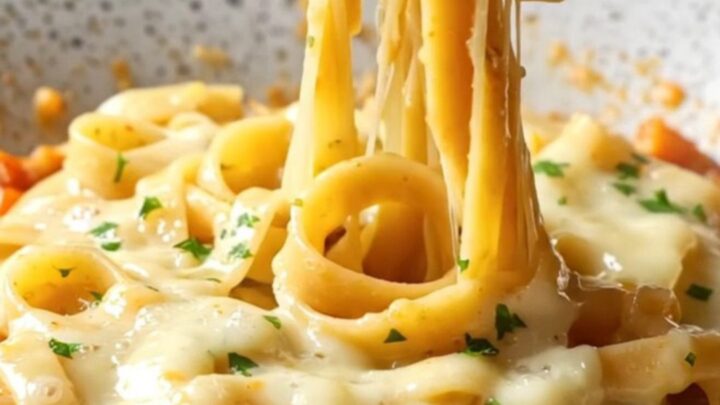
- Twirl and ServeLift a glossy pasta twirl with a fork, letting the cheese pull into long strands. Serve immediately in warm bowls, making sure each portion gets plenty of the cheesy ragù.Look for The cheese pulls stretchy and the pasta is glossy and well coated.Tip Use a large fork or tongs to create a neat twirl for serving.
After covering the skillet for 2 minutes, the mozzarella should be fully melted, with a bubbly, golden surface. The parsley will have wilted slightly, adding flecks of green. The cheese pull should be long and stretchy when you lift a twirl.
The dish is ready to serve immediately, with steam rising and the aroma of melted cheese and herbs. The texture should be creamy and indulgent, with the pasta still firm enough to hold its shape.
Common mistakes
A common mistake is adding too much water, which makes the sauce thin and watery. Start with 1 cup of boiling water and add more only if the pasta is not yet tender. Another pitfall is not covering the skillet when steaming the vegetables, which leads to uneven cooking and dry spots.
Also, avoid overcooking the pasta after the cheese is added; the residual heat can turn it mushy. Finally, don't skip peeling the skins — they become tough and chewy in the final dish.
How to tell it’s done
The dish is done when the tagliatelle is al dente — tender but still firm to the bite — and the sauce has thickened to coat the pasta generously. The cheese should be fully melted and bubbly, with a golden, slightly blistered surface in places.
The ragù should be thick and glossy, not watery, and the vegetables should have completely broken down into a cohesive sauce. Taste a strand of pasta to confirm it's cooked through. The cheese pull should be long and stretchy when you lift a twirl.
Up next · Part 3 of 3
4 variations · storage & make-ahead · 5 answers · printable card
Tips, FAQ & printable recipe (Part 3)← Back to the ingredients (Part 1)