Dinner · Part 2 of 3: Instructions
One-Pan Cheesy Steamed Vegetable Pasta Step-by-step instructions
- Prep
- Cook
- Total
- Serves
- 4
Before you start
Before you start, make sure you have a large skillet with a lid, a pair of tongs or tweezers for peeling, and a wooden spoon for stirring. Prep the vegetables: rinse the tomato, zucchini, and eggplant, and peel the onions. You don't need to chop anything—the vegetables go into the pan whole.
Measure out the olive oil, water, and boiling water (you can boil a kettle or heat water in the microwave). Have the pasta and shredded cheese ready to go. This recipe moves quickly once the vegetables are steaming, so it's helpful to have everything within reach.
Ingredients at a glance (10)
- 1 large ripe beefsteak tomato
- 1 whole green zucchini
- 1 whole slender eggplant
- 2 whole peeled onions
- 1/4 cup olive oil
- 1/2 cup water
- 10 oz tagliatelle pasta
- 1 cup boiling water
- 1 1/2 cups shredded kashar mozzarella cheese
- 1/4 cup chopped fresh parsley
Instructions
Steam and Peel
- Steam the VegetablesPlace the whole tomato, zucchini, eggplant, and onions in a large skillet. Add the olive oil and water, then cover with a lid. Set over medium heat and steam for 12 minutes, until the vegetables are fork-tender and their skins blister.Look for The skins will blister and pull away easily; a fork pierces the flesh without resistance.Tip Keep the lid on throughout steaming to trap the steam and cook the vegetables evenly.
- Peel the VegetablesRemove the lid and use culinary tweezers or tongs to peel away the blistered skins from the tomato, zucchini, eggplant, and onions. Discard the skins. Leave the vegetables whole or roughly break them up with the tongs, depending on preference.Look for The flesh is soft and the skins slip off effortlessly.Tip Work carefully—the vegetables are hot. Use tongs to hold them steady while peeling.
After 12 minutes of steaming, the vegetables should be fork-tender and their skins will have blistered and loosened. The tomato may have split, and the onions will be translucent. The liquid in the pan will be reduced and slightly colored. Lift the lid carefully—the steam is hot. Use tongs to peel away the skins; they should come off in large, easy strips. The flesh underneath will be soft and fragrant. At this point, the vegetables are cooked and ready to become the base of the sauce.
Cook the Pasta
- Add the Pasta and Boiling WaterAdd the tagliatelle pasta and 1 cup boiling water to the skillet with the peeled vegetables. Stir to combine, making sure the pasta is submerged in the liquid. Cook over medium heat, tossing frequently, until the pasta is al dente and has absorbed most of the liquid, about 8-10 minutes.Look for The pasta is tender but still has a slight bite; the sauce has thickened and clings to the noodles.Tip Stir often to prevent sticking. If the pan dries out before the pasta is done, add a splash more hot water.
- Finish the SauceContinue to toss the pasta with the vegetables until the sauce is glossy and coats every strand. The vegetables will break down slightly, creating a rustic, chunky sauce. Taste and adjust seasoning with salt and pepper if desired.Look for The sauce is thick enough to cling to the pasta without pooling at the bottom of the pan.Tip Use a wooden spoon to gently mash any large pieces of tomato or eggplant for a smoother sauce.
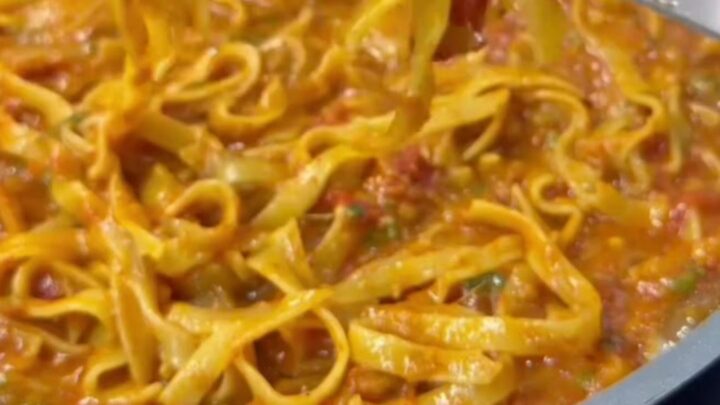
As the pasta cooks, the liquid will turn into a starchy, flavorful sauce. The tagliatelle will absorb the vegetable juices and become coated. You'll see the sauce thicken and cling to the noodles as you toss. The vegetables will start to break down, creating a chunky, rustic texture.
The pan should smell richly of olive oil and cooked vegetables. The pasta is ready when it's al dente—taste a strand to check for a slight resistance. If the pan looks dry before the pasta is done, add a splash of hot water.
Melt the Cheese
- Smother with Cheese and ParsleySprinkle the shredded kashar mozzarella cheese evenly over the pasta. Scatter the chopped fresh parsley on top. Cover the skillet with the lid and cook for 2 minutes, until the cheese is melted and bubbly.Look for The cheese is fully melted, bubbly around the edges, and the parsley adds a fresh green contrast.Tip Keep the heat low to avoid burning the cheese; the steam from the pan will melt it gently.
- Serve ImmediatelyLift a glossy twirl of pasta with tongs, letting the cheese pull into long, stretchy strands. Serve hot, straight from the skillet, with extra parsley if desired.Look for The cheese pulls like a dream and the pasta is slick with sauce.Tip Serve right away for the best cheese pull and texture.
After covering the skillet for 2 minutes, the cheese should be fully melted and bubbly. The top will be glossy and slightly golden in spots, with the parsley adding bright green flecks. When you lift the lid, you'll see steam rise and the cheese pull away from the sides of the pan. The dish is ready to serve immediately, while the cheese is still molten and stretchy. Give it a final toss if you like, but the cheese pull is best when it's served straight from the skillet.
Common mistakes
One common mistake is lifting the lid too often during the steaming phase, which lets the steam escape and lengthens the cooking time. Trust the process and keep the lid on. Another pitfall is adding the pasta without enough liquid—if the pan looks dry, add a splash more hot water.
On the flip side, too much liquid will leave you with a soupy sauce; cook uncovered at the end to thicken it. Finally, don't skip the step of peeling the vegetables—the skins can be tough and bitter, and removing them makes the sauce silky and smooth.
How to tell it’s done
The dish is done when the pasta is al dente—tender but still with a slight bite—and the sauce has thickened enough to cling to the noodles. The cheese should be fully melted and bubbly, with a golden, slightly blistered top in places.
To check, lift a strand of pasta with tongs and see if the cheese pulls into long, stretchy strands. If the pasta still looks loose and watery, cook it a minute or two longer, uncovered, to let the sauce reduce. The vegetables should be soft enough to break apart with a fork, but not mushy.
Up next · Part 3 of 3
4 variations · storage & make-ahead · 5 answers · printable card
Tips, FAQ & printable recipe (Part 3)← Back to the ingredients (Part 1)