Dinner · Part 2 of 3: Instructions
Old Bay Butter Sea Scallops Crockpot Dinner Step-by-step instructions
- Prep
- Cook
- Total
- Serves
- 4
Before you start
Before starting, make sure the scallops are dry-packed and the shrimp are peeled and deveined. If using frozen seafood, thaw it overnight in the refrigerator. Dice the bell peppers and onion, and slice the celery into thin ribbons. Melt the garlic herb butter in a small saucepan or microwave.
Have the Old Bay seasoning measured and ready. Set out a 6-quart slow cooker and a slotted spoon for serving. You will also want to cook the rice and prepare the lemon wedges just before serving, so they are ready when the seafood is done.
Ingredients at a glance (7)
- 1 lb dry-pack sea scallops
- 1 lb raw peeled jumbo shrimp
- 2 bell peppers (red and green), diced
- 1 Vidalia onion, diced
- 2 stalks celery, sliced into ribbons
- 1/2 cup garlic herb butter, melted
- 2 tbsp Old Bay seasoning
Instructions
Layer and Season
- Layer the Seafood and VegetablesPlace the sea scallops and shrimp in the bottom of a 6-quart slow cooker. Scatter the diced bell peppers, Vidalia onion, and celery ribbons over the seafood. Do not stir.Look for The seafood should be covered with the vegetables.Tip Keep the seafood in a single layer if possible for even cooking.
- Add the Butter and SeasoningPour the melted garlic herb butter evenly over the top. Sprinkle the Old Bay seasoning over everything.Look for The butter and seasoning should coat the top layer.Tip For less heat, reduce Old Bay to 1 tablespoon.
At the end of this phase, the slow cooker contains a colorful layer of raw seafood, bell peppers, onion, and celery, topped with melted garlic butter and a generous dusting of Old Bay.
The aroma is buttery and spicy, with the promise of a rich sauce. The ingredients are not mixed, but that is intentional—the layers will meld during cooking. Check that the butter is evenly distributed and the seasoning covers the top.
Slow Cook to Perfection
- Slow Cook on LowCover the slow cooker and cook on low for 2 hours, until the scallops are opaque and the shrimp are pink and firm. Do not stir during cooking.Look for The butter should be bubbling gently around the edges.Safe temperature 145°F (63°C) internal temperature (shellfish)Tip Resist lifting the lid—it lets out heat and slows cooking.
- Check for DonenessAfter 2 hours, check that the scallops are opaque and the shrimp are pink and curled. The internal temperature of the seafood should read 145°F (63°C) on an instant-read thermometer.Look for The seafood should be tender and easily pierced with a fork.Safe temperature 145°F (63°C) internal temperature (shellfish)Tip If not done, cook for 15 more minutes and check again.
After 2 hours on low, the slow cooker is gently bubbling around the edges, releasing a fragrant steam of garlic, butter, and Old Bay. The seafood is opaque and tender, and the vegetables have softened into the sauce. The liquid has reduced slightly, becoming a golden, savory butter sauce. Use a slotted spoon to lift a scallop and check that it is firm and cooked through, with an internal temperature of 145°F (63°C).
Serve and Enjoy
- Serve Over RiceUsing a slotted spoon, transfer the seafood and vegetables to plates with steamed rice. Spoon the garlic butter sauce over the top and serve with lemon wedges.Look for The sauce should be golden and aromatic.Tip The sauce is delicious sopped up with crusty bread.
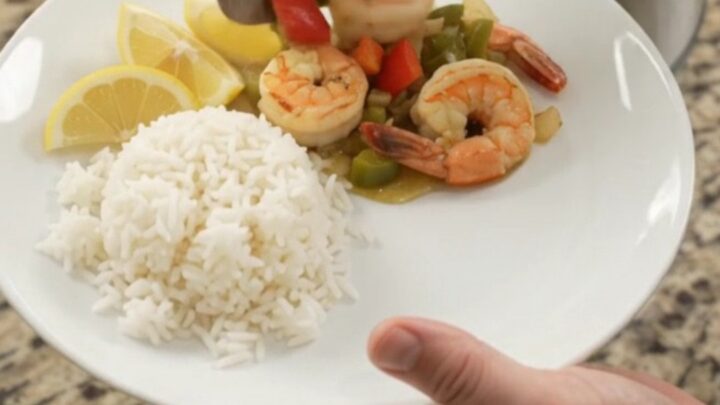
The seafood is plated over steamed rice, with the garlic butter sauce spooned over the top. The scallops are golden and juicy, the shrimp are pink and plump, and the bell peppers and onions retain a slight bite. Lemon wedges on the side add brightness. The dish looks and smells like a coastal feast, with a glossy, buttery sauce that coats every bite. Serve immediately while hot.
Common mistakes
One common mistake is stirring the pot during cooking, which can break up the scallops and make the shrimp tough. Another is using wet-packed scallops, which release too much liquid and dilute the sauce. Overcooking is easy to do—set a timer and check early.
Also, do not skip the Old Bay; it provides the signature flavor. If the sauce seems thin at the end, you can simmer it on the stovetop for a few minutes to reduce, but be careful not to overcook the seafood.
How to tell it’s done
The dish is done when the scallops are opaque and firm to the touch, and the shrimp are pink and curled into a loose C shape. The internal temperature should reach 145°F (63°C) on an instant-read thermometer inserted into the thickest part of a scallop or shrimp.
The butter sauce should be bubbling gently and the vegetables should be tender. Overcooking will make the seafood rubbery, so check at the 2-hour mark and then every 15 minutes if needed.
- Shellfish: 145°F (63°C) in the thickest part
Up next · Part 3 of 3
4 variations · storage & make-ahead · 5 answers · printable card
Tips, FAQ & printable recipe (Part 3)← Back to the ingredients (Part 1)