Desserts · Part 2 of 3: Instructions
Moistest Whole-Lemon Cake with Tart Glaze Step-by-step instructions
- Prep
- Cook
- Total
- Serves
- 10
Before you start
Heat the oven to 340°F (170°C) and position a rack in the center. Butter a 9x5-inch loaf pan and line it with parchment paper, leaving overhang on the long sides.
Wash the lemon thoroughly, then cut it into quarters and remove any seeds. Measure all ingredients and have them ready. The blender and mixing bowl should be clean and dry.
Ingredients at a glance (11)
- 1 whole fresh lemon, washed and seeded
- 3 large eggs
- 1 cup granulated sugar
- 1/2 cup vegetable oil
- 1/2 cup milk
- 2 1/2 cups all-purpose flour
- 1 packet baking powder (about 2 teaspoons)
- 1 packet vanilla sugar (about 1 1/2 teaspoons)
- 1 cup powdered sugar
- 2 tbsp fresh lemon juice
- 1 tbsp grated lemon zest
Instructions
Blend and Mix
- Blend the Whole Lemon BaseCut the washed lemon into quarters and remove any seeds. Place the lemon quarters in a blender. Add the eggs, granulated sugar, vegetable oil, and milk. Blend on high for 2 minutes until the mixture is completely smooth and creamy, with no visible pieces of lemon peel. The puree will be aromatic and pale yellow.Look for The puree is smooth, frothy, and smells intensely of fresh lemon.Tip Blending the whole lemon gives the cake its intense citrus flavor and ultra-moist crumb.
- Whisk the Dry IngredientsIn a large mixing bowl, combine the all-purpose flour, baking powder, and vanilla sugar. Whisk until evenly distributed. Pour the lemon puree into the dry ingredients and whisk just until no streaks of flour remain. The batter should be glossy and fall from the whisk in a thick ribbon.Look for The batter is smooth, glossy, and thick enough to hold a ribbon shape.Tip Do not overmix; stop as soon as the flour is incorporated to keep the cake tender.
The lemon puree is smooth, pale yellow, and frothy, with a bright citrus aroma.
After whisking in the dry ingredients, the batter is glossy and thick, falling from the whisk in a slow ribbon. It should be free of flour streaks and have a slightly airy texture.
Bake to Golden
- Prepare the Pan and OvenHeat the oven to 340°F (170°C). Butter a 9x5-inch loaf pan and line it with parchment paper, leaving some overhang on the long sides for easy lifting. Pour the batter into the prepared pan and smooth the top with a spatula.Look for The pan is lined and the batter is evenly spread.Tip The parchment overhang acts as handles to lift the cake out cleanly.
- Bake the CakePlace the pan in the oven and bake for 45 minutes, until the top is domed and deep golden brown. A toothpick inserted into the center should come out clean or with only a few moist crumbs. Let the cake cool in the pan for 10 minutes, then transfer to a wire rack.Look for The cake is golden, domed, and a toothpick comes out clean.Safe temperature 160°F (71°C) internal temperature (egg dishes)Tip If the top browns too quickly, tent loosely with foil for the last 10 minutes.
The cake rises into a domed, golden-brown top and fills the kitchen with a sweet, lemony scent. A toothpick inserted into the center comes out clean, and the edges pull slightly away from the pan. The cake feels springy when pressed gently.
Glaze and Serve
- Make the GlazeIn a small bowl, whisk the powdered sugar with the fresh lemon juice until smooth and pourable. The glaze should be thick but flow slowly from the whisk. If it is too thick, add a few drops of lemon juice; if too thin, add more powdered sugar.Look for The glaze is smooth, glossy, and pours in a thick ribbon.Tip For a thicker glaze, let it sit for a minute to thicken slightly.
- Glaze and Garnish the CakeWhile the cake is still warm (but not hot), drizzle the glaze evenly over the top, letting it cascade down the sides. Sprinkle the grated lemon zest over the glazed surface. Let the glaze set for a few minutes before slicing.Look for The glaze sets into a shiny, crackly coating.Tip Glazing while warm helps the glaze soak in slightly for extra moisture.
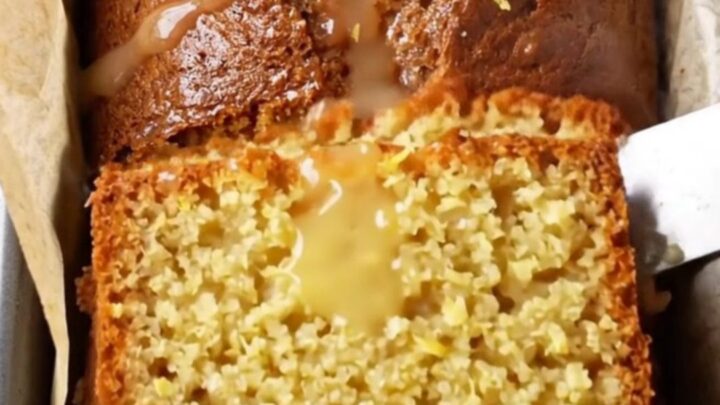
The warm cake is drizzled with a glossy white glaze that cascades down the sides, then showered with bright yellow zest. The glaze sets into a crackly, sweet-tart coating. Slicing reveals a tender, moist crumb with a delicate lemon perfume.
Common mistakes
Overmixing the batter can make the cake tough, so whisk just until the flour disappears. Not removing the seeds from the lemon will add bitterness.
Baking at too high a temperature can cause the top to brown before the center is cooked; use an oven thermometer to ensure accuracy. Glazing the cake while it is too hot can cause the glaze to melt and run off, so wait until it is warm but not hot.
How to tell it’s done
The cake is done when the top is deep golden brown and domed, and a toothpick inserted into the center comes out clean or with only a few moist crumbs. The internal temperature of the cake should register at least 160°F (71°C) in the center.
If the top browns too quickly, tent with foil for the last 10 minutes of baking. Let the cake cool in the pan for 10 minutes before transferring to a wire rack.
- Egg dishes: 160°F (71°C) in the thickest part
Up next · Part 3 of 3
4 variations · storage & make-ahead · 5 answers · printable card
Tips, FAQ & printable recipe (Part 3)← Back to the ingredients (Part 1)