Dinner · Part 3 of 3: Tips & recipe card
Miso Butter Seared Pacific Halibut Skillet Tips, FAQ & printable recipe
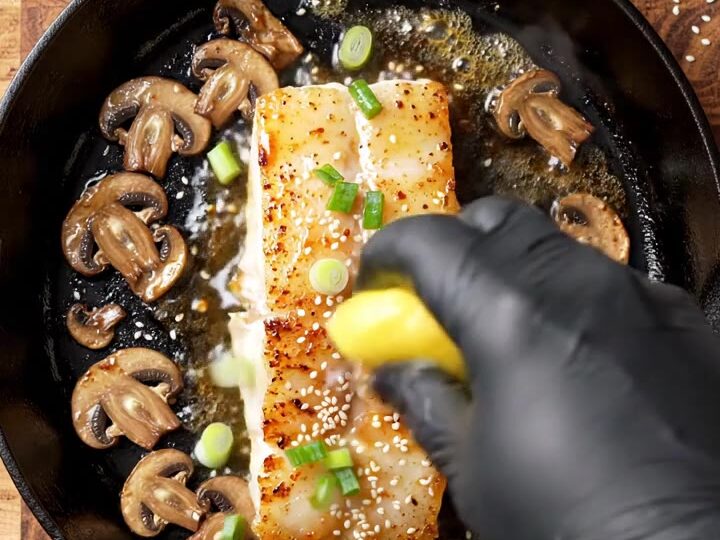
- Prep
- Cook
- Total
- Serves
- 2
Tips for success
To get the crispiest crust on the halibut, make sure the fillets are very dry before adding them to the pan. Use paper towels to pat them thoroughly, then season right before cooking.
The skillet should be hot enough that a drop of water sizzles and evaporates immediately. If you’re using a nonstick pan, keep the heat slightly lower to avoid overheating the coating.
The miso butter can be made ahead and kept in the refrigerator for up to a week. Let it soften slightly before using.
When basting, use a large spoon and tilt the pan so the butter pools on one side; this makes it easier to scoop up and pour over the fish. Don’t skip the toasted sesame seeds — they add a nutty crunch that balances the rich butter.
Variations
- Salmon with Miso Butter: Substitute salmon fillets for the halibut. Cook until the internal temperature reaches 145°F (63°C). The miso butter pairs beautifully with the richness of salmon.
- Spicy Miso Glaze: Add 1 teaspoon of sriracha or a pinch of red pepper flakes to the miso butter for a spicy kick. Adjust the amount to taste.
- Vegetarian Version: Omit the fish and sear extra-firm tofu or thick slices of king oyster mushroom instead. Cook until golden and heated through, then baste with the miso butter.
- Citrus Twist: Stir 1 teaspoon of grated orange zest into the miso butter. The bright citrus flavor cuts through the richness and complements the fish.
Storage and make-ahead
- Fridge
- Keep leftovers in an airtight container in the refrigerator for up to 2 days. Reheat gently in a skillet over low heat with a splash of water or broth.
- Freezer
- Freeze the miso butter in an ice cube tray for up to 1 month; thaw in the refrigerator before use.
- Reheat
- Reheat in a skillet over medium-low heat for 3 to 5 minutes, adding a splash of water or broth to loosen the sauce.
Store leftovers in an airtight container in the refrigerator for up to 2 days. Reheat gently in a skillet over low heat, adding a splash of water or broth to loosen the sauce. The fish will not be as crisp after reheating, but it will still be tender and flavorful.
The miso butter can be prepared up to a week in advance and stored in the refrigerator.
The vegetables can be sliced and the ginger grated a few hours ahead, but wait to score and season the fish until just before cooking. The dish is best served immediately after cooking.
Serving ideas
Serve the halibut and vegetables over steamed jasmine rice or soba noodles to soak up the miso butter sauce. A side of sautéed greens or a simple cucumber salad would also work well. The dish is rich, so keep the sides light and fresh.
For a more substantial meal, add a bowl of miso soup or a small salad with a ginger-sesame dressing.
The halibut can also be served with crusty bread to mop up every last bit of the butter. Leftover miso butter can be spread on bread or used to finish other seafood.
Frequently asked questions
Can this recipe be made with frozen halibut?
What can be used instead of white miso?
How can the dish be kept warm without overcooking the fish?
Is it necessary to score the fish?
Can the miso butter be made without butter?
Miso Butter Seared Pacific Halibut Skillet
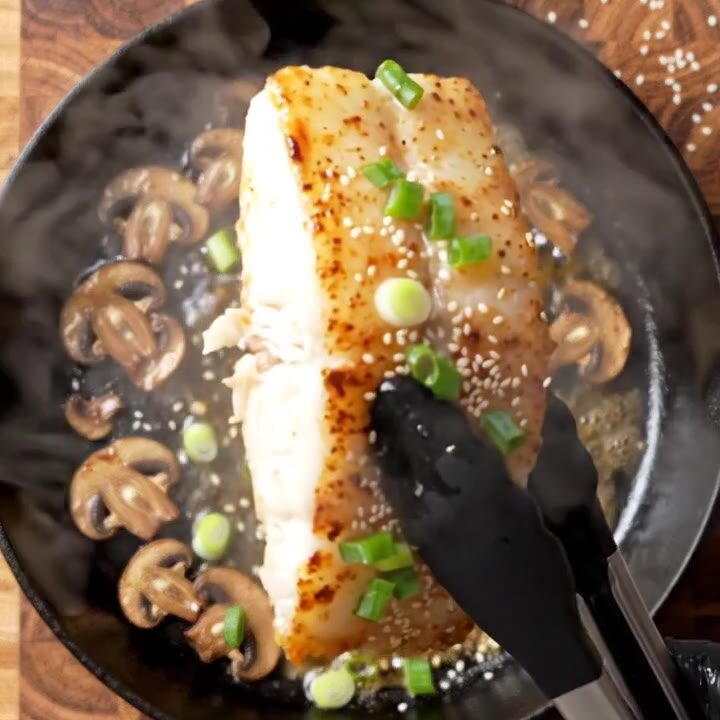
Ingredients
- 2 Pacific halibut fillets (6 oz each)
- 4 oz shiitake mushrooms, stems removed and sliced
- 4 baby bok choy, halved lengthwise
- 1 tbsp fresh ginger, grated
- 2 tbsp white miso paste
- 4 tbsp unsalted butter, softened
- 1 tbsp neutral oil (such as canola or grapeseed)
- 2 scallions, thinly sliced
- 1 tsp toasted sesame seeds
- kosher salt, to taste
- black pepper, to taste
Instructions
- Pat the halibut fillets dry with paper towels. Score the skin side or the flesh side in a crosshatch pattern, about 1/4 inch deep, without cutting through. Season both sides with kosher salt and black pepper. Slice the shiitake mushrooms into 1/4-inch thick pieces. Halve the baby bok choy lengthwise. Grate the ginger on a box grater into a small pile.
- In a small bowl, combine the softened butter and white miso paste. Mash with a fork until smooth and thoroughly blended. Set aside at room temperature.
- Heat a cast iron skillet over medium-high heat until very hot. Add the neutral oil and swirl to coat. Carefully place the halibut fillets, skin side down if skin-on, and add the sliced shiitake mushrooms in a single layer. Cook without moving for 3 to 4 minutes, until the fish is golden and releases easily from the pan. Flip the fish and continue cooking for another 2 to 3 minutes.
- Add the halved baby bok choy to the skillet, cut side down, along with the grated ginger. Cook for 1 to 2 minutes, until the bok choy begins to wilt and the ginger is fragrant. Stir gently to combine the mushrooms and bok choy.
- Reduce the heat to medium-low. Add the miso butter to the skillet in pieces. As it melts, tilt the pan slightly and use a spoon to baste the halibut fillets with the bubbling butter for 1 to 2 minutes, until the fish is cooked through and flakes easily.
- Scatter the sliced scallions and toasted sesame seeds over the halibut and vegetables. Remove the skillet from the heat. Use a spatula to lift a fillet onto each plate, spooning the mushrooms, bok choy, and pan butter over the top. Serve immediately.
Estimated nutrition per serving
- Calories
- 460
- Protein
- 34 g
- Carbohydrates
- 12 g
- Fat
- 30 g
Next recipe

Tuscan Salmon Scallops Vodka Cream Skillet
See the recipe → →This recipe is based on a short cooking video and is published under the pen name Clara Weller. It was checked before publication, but errors can slip through. Nutrition, when shown, is an estimate. Read more in our editorial policy and on our food safety page.
More recipes to try
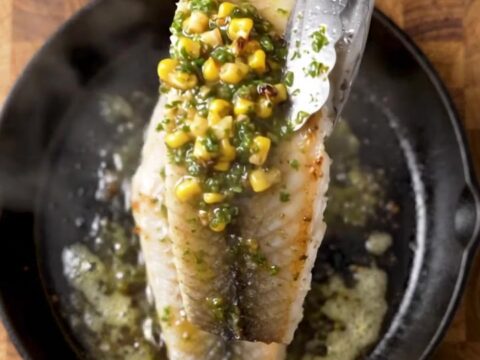
Chimichurri Sea Bass with Garlic Butter and Charred Corn
Total time: 30 min
Garlic Butter Mushrooms with Creamy Polenta and Fontina Pull
Total time: 40 min
Crispy Skillet Butternut Sage Lasagna with Brown Butter Fontina
Total time: 1 h 35 min
Crispy Skin Arctic Char with Garlic Herb Butter
Total time: 25 min
Skillet Zucchini Lasagna Rolls with Ricotta and Mozzarella
Total time: 45 min