Dinner · Part 2 of 3: Instructions
Million-Dollar Baked Spaghetti with a Creamy Hidden Layer Step-by-step instructions
- Prep
- Cook
- Total
- Serves
- 8
Before you start
Set up before the water boils, because the assembly moves fast once the pasta is ready. Take the cream cheese out of the refrigerator so it softens while everything else happens; cold cream cheese never beats smooth. Shred the mozzarella from a block and grate the Parmesan, then measure the sour cream and cottage cheese into the mixing bowl.
If the beef marinara sauce is homemade and chilled, warm it gently on the stove or in the microwave until it spreads easily, and give store-bought sauce a quick stir. Grease nothing: the cheese and sauce release cleanly from glass.
Ingredients at a glance (7)
- 14 oz spaghetti
- 8 oz cream cheese, softened
- 1/2 cup sour cream
- 2/3 cup cottage cheese
- 2 1/2 cups beef marinara sauce, store-bought or made ahead
- 2 1/2 cups shredded mozzarella, whole-milk
- 1/2 cup grated Parmesan
Instructions
Build the creamy base
- Boil the spaghettiHeat the oven to 375°F (190°C) and bring a large pot of well-salted water to a rolling boil. Add the spaghetti and stir once so it does not clump. Cook until al dente, one minute shy of the package time, so the noodles stay firm through the bake. Drain in a colander and let it steam-dry for a minute.Look for The strands should bend without breaking and show a thin white dot of pasta at the center when bitten.Tip Reserve a ladle of pasta water in case the cheese mixture needs loosening before it coats the noodles.
- Whip the creamy layerWhile the pasta cooks, beat the softened cream cheese, sour cream and cottage cheese in a large bowl with an electric hand mixer until completely smooth and fluffy, about 2 minutes. Scrape the bowl once so no streak of plain cream cheese hides at the bottom. The mixture should spread like thick frosting.Look for No lumps of cottage cheese remain and the mixture holds a soft peak when the beater lifts.Tip Cold cream cheese stays lumpy, so let the block sit out 30 minutes or soften it briefly in the microwave.
- Coat the noodlesAdd the drained hot spaghetti to the bowl with the creamy mixture. Toss with tongs or a rubber spatula, lifting from the bottom, until every strand is coated in the cheeselike sauce. The heat of the pasta loosens the cream cheese, so work quickly while the noodles are still warm and pliable.Look for The spaghetti looks evenly creamy with no dry strands clinging together at the bottom of the bowl.Tip If the mixture grips instead of spreading, add a spoonful of the reserved pasta water and toss again.
At the end of this phase the spaghetti sits fully coated in the whipped cream-cheese mixture, glossy and pale, with no dry strands and no visible lumps of dairy. The noodles should still hold their shape firmly, bending without breaking, because they will soften further in the oven.
Taste a strand: it should be seasoned from the pasta water and pleasantly tangy from the sour cream. If the mixture stiffened while the pasta cooked, loosen it with a spoonful of the reserved pasta water before tossing. Nothing should look wet or pooled at the bottom of the bowl; everything clings.
Layer the dish
- Spread the spaghetti baseTransfer the creamy spaghetti to the baking dish and spread it into an even layer with the spatula, pushing it into the corners. Level the surface so the next layers sit flat. A uniform base means every square slices with all three layers showing, which is the whole point of this dish.Look for The noodles form a compact, even bed about an inch thick with no bare spots of bare dish showing.Tip Spray the spatula with a little oil or wet it with warm water so the sticky noodles do not drag.
- Add the beef marinaraSpoon the beef marinara sauce over the spaghetti and spread it gently to the edges, keeping it in its own layer rather than stirring it in. The distinct strata are what make each forkful shift from creamy to meaty. Take the sauce all the way to the corners so no slice comes up short.Look for A thick, even red layer covers every strand of spaghetti and meets the walls of the dish.Tip Warm the sauce for 30 seconds first; cold sauce is stiff and drags the creamy layer out of place.
- Blanket with cheeseScatter the shredded mozzarella evenly over the marinara, then finish with the grated Parmesan. Cover the sauce edge to edge so the top browns into one golden crust instead of exposing sauce that can dry out. Press the cheese down very lightly with the back of the spatula.Look for No red sauce peeks through; the dish is fully covered in an even white blanket of cheese.Tip Shred the mozzarella from a block rather than using pre-shredded; it melts into longer, stretchier strings.
The assembled dish should now show three clean, unmixed bands when viewed from the side: creamy spaghetti on the bottom, a thick even blanket of red beef marinara sauce in the middle, and a full white cover of mozzarella and Parmesan on top. No sauce should peek through the cheese anywhere, and no creamy layer should have been dragged up into the sauce. The surface of the cheese should look level, with the shreds pressed just enough to make contact.
Bake, rest and serve
- Bake until bubblingBake at 375°F (190°C) for 30 minutes, until the edges bubble actively and the cheese turns golden brown in spots. Since the beef marinara sauce may be made ahead, verify the center of the dish reaches 160°F (71°C) on an instant-read thermometer so the meat sauce is heated through safely.Look for The sauce bubbles at the edges, the crust shows deep golden patches, and the dish smells toasty and savory.Safe temperature 160°F (71°C) internal temperature (ground meat)Tip Slide the dish onto a rimmed baking sheet to catch any bubble-over and protect the oven floor.
- Rest before slicingSet the dish on a wire rack and let it rest 10 minutes before cutting. The creamy layer and the sauce thicken as they settle, so the squares hold their shape instead of slumping on the plate. Skipping the rest is the most common reason this dish falls apart when served.Look for The bubbling stops and the cheese surface looks set rather than molten and loose.Tip Use the resting time to set the table and warm your serving spatula under hot tap water.
- Slice and serveCut into eight generous squares with a sharp knife, wiping the blade between cuts for clean edges. Lift each portion with a sturdy spatula so the long mozzarella strings stretch. Serve straight from the dish while the cheese still pulls and the creamy layer steams.Look for Each square shows spaghetti, creamy layer, marinara and crust in clean, distinct bands.Tip Cut with one confident stroke rather than sawing; a clean cut keeps the layers picture-perfect.
Out of the oven, the top should be golden brown in patches with actively bubbling sauce at the edges, and the center should register at least 160°F (71°C) on an instant-read thermometer. After the 10-minute rest, the bubbling subsides and the surface looks set rather than molten.
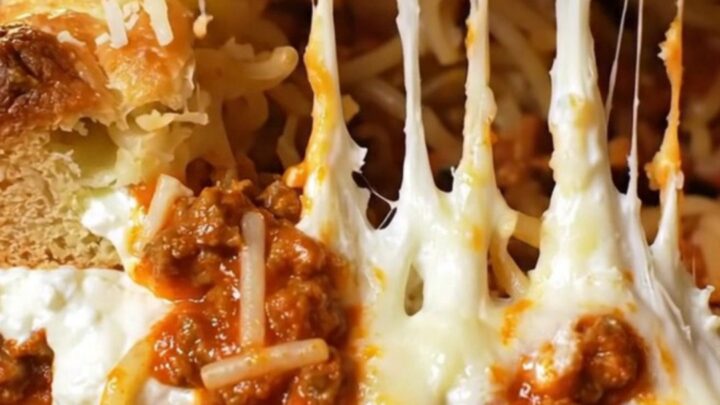
A sharp knife should glide through and come out with distinct layers clinging to it: pasta, creamy middle, marinara, crust. When a square is lifted, the mozzarella should stretch in long strings across the gap.
Common mistakes
The most frequent failure is overcooking the spaghetti. Noodles that reach full softness on the stove turn mushy after 30 minutes in the oven, so pull them a minute early, at true al dente. The second mistake is beating cold cream cheese: lumps never smooth out once the pasta goes in, so soften the block first.
Stirring the marinara into the creamy layer instead of layering it erases the contrast that defines the dish; spread it gently. Leaving bare sauce exposed at the edges dries it out, so let the cheese meet the walls.
How to tell it’s done
The bake is done when three signs line up: the sauce bubbles actively at the edges of the dish, the cheese crust shows deep golden-brown patches across the top, and an instant-read thermometer stuck into the center of the dish reads at least 160°F (71°C), which confirms the beef marinara sauce is heated through safely. The cheese should look fully melted and set at the edges, with the crust pulling slightly away from the glass.
- Ground meat: 160°F (71°C) in the thickest part
Up next · Part 3 of 3
4 variations · storage & make-ahead · 5 answers · printable card
Tips, FAQ & printable recipe (Part 3)← Back to the ingredients (Part 1)