Dinner · Part 1 of 3: Ingredients
Million-Dollar Baked Spaghetti with a Creamy Hidden Layer
- Prep
- Cook
- Total
- Serves
- 8
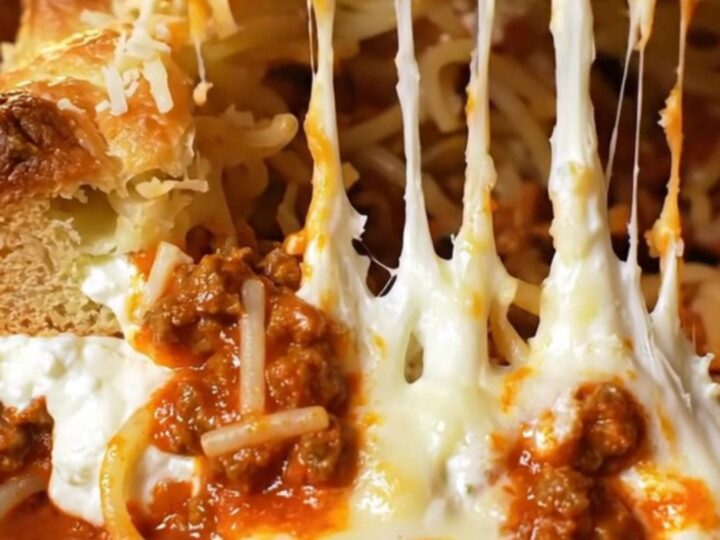
Beneath the golden cheese crust hides the reason this bake earned its name: a whipped layer of cream cheese, sour cream and cottage cheese that tastes like cheesecake tucked into spaghetti. Every square cuts through meaty marinara, stretchy mozzarella and that creamy middle in one forkful. It feeds eight generously, bakes in half an hour, and disappears even faster.
Million-dollar baked spaghetti takes everything people love about lasagna and spaghetti and stacks them into one dish that is far easier to pull off on a weeknight.
Spaghetti gets tossed directly with a whipped mixture of cream cheese, sour cream and cottage cheese, so the noodles themselves carry the creamy layer. A rich beef marinara sauce spreads over the top, and a full blanket of whole-milk mozzarella and Parmesan bakes into a bubbling, golden-brown crust.
The result slices into clean, dramatic squares: four distinct layers, long cheese pulls, and a contrast between tangy-creamy and savory that keeps everyone coming back for seconds. Nothing here is fussy. One pot for the pasta, one bowl for the cream, one dish to bake, and about an hour from pantry to table, most of it hands-off.
Ingredients
- 14 oz spaghetti
Creamy layer
- 8 oz cream cheese, softened
- 1/2 cup sour cream
- 2/3 cup cottage cheese
- 2 1/2 cups beef marinara sauce, store-bought or made ahead
Topping
- 2 1/2 cups shredded mozzarella, whole-milk
- 1/2 cup grated Parmesan
Why this recipe works
The method works because the cream cheese mixture does double duty. Whipping cream cheese with sour cream and cottage cheese turns three dairy ingredients into a single spreadable filling that clings to hot noodles, so the creamy layer and the pasta become one cohesive base instead of two slippery strata that slide apart when sliced.
The heat of the just-drained spaghetti softens the cheese exactly enough to coat every strand, which means the layer distributes evenly without any extra stirring later.
Baking at 375°F (190°C) for 30 minutes is the second key. That temperature is hot enough to drive moisture off the top of the cheese so it browns into a real crust, but gentle enough that the creamy layer warms through without curdling or weeping. Covering the marinara completely with cheese traps steam underneath, keeping the sauce from drying at the edges, while the glass dish conducts heat steadily so the center bubbles at the same time the top turns golden.
Notes and substitutions
Whole-milk mozzarella matters here. Part-skim shreds brown faster but release less fat, which means shorter cheese pulls and a drier crust. Block mozzarella shredded by hand melts into the long strings that make this dish dramatic.
Whole-milk cottage cheese blends smoother and creamier than leaner versions, and full-fat sour cream holds its texture through the bake. For the sauce, any thick, meaty beef marinara sauce works; if it is very loose, simmer it a few minutes to reduce so the layers stay defined.
A 9x13-inch glass baking dish shows the layers best and conducts heat evenly; metal works too but browns the edges a bit faster, so check five minutes early. An electric hand mixer makes the creamy layer genuinely smooth in two minutes, though a sturdy arm and a wooden spoon can get there. Soften the cream cheese fully before beating, and if the sauce is made ahead and chilled, warm it briefly so it spreads without dragging the pasta out of place.
- cottage cheese: Ricotta works in the same amount and gives the creamy layer a slightly sweeter, grainier texture; blend it smooth with the cream cheese if the grain bothers anyone at the table.
- beef marinara sauce: Any meaty red sauce you like, including a jarred spaghetti sauce with Italian sausage, keeps the recipe at weeknight speed; warm it slightly so it spreads easily over the creamy layer.
- sour cream: Plain whole-milk yogurt swaps in one for one and keeps the layer tangy; full-fat Greek yogurt thinned with a spoonful of milk is the closest match in texture.
Equipment
- 9x13-inch glass baking dish
- Large pot
- Colander
- Large mixing bowl
- Electric hand mixer
- Rubber spatula
- Instant-read thermometer
Up next · Part 2 of 3
9 steps · 40 min of cooking · what to look for at each stage
Step-by-step instructions (Part 2)