Desserts · Part 2 of 3: Instructions
Mango Coconut Passionfruit White Chocolate Bark with Nuts Step-by-step instructions
- Prep
- Cook
- Total
- Serves
- 12
Before you start
Gather all the ingredients and tools before you start, because the chocolate sets quickly once it is spread. Line a rectangular metal tray with parchment paper so the bark lifts out cleanly later. Set out the almonds, pecans, cashews, macadamia nuts, dried mango pieces and shredded coconut on a wooden cutting board, along with a long chef's knife.
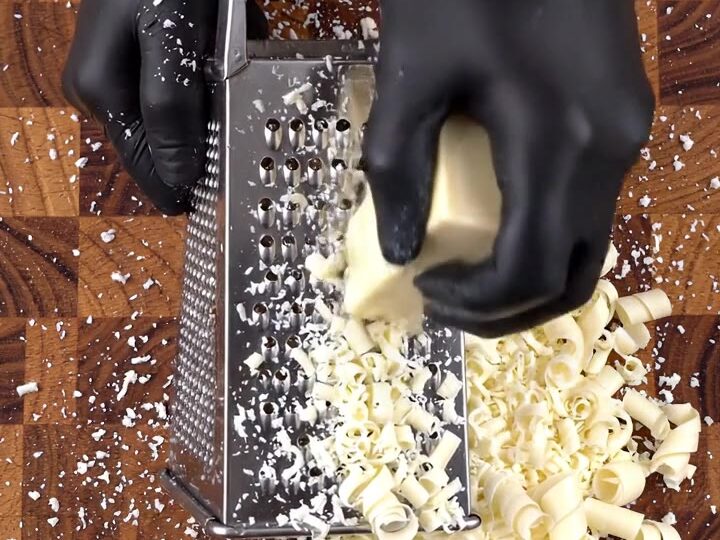
Have the stainless steel box grater ready above a bowl or the board to catch the curled white chocolate shavings. Pick up the passionfruit and halve each fruit over a small bowl, scooping out the pulp and seeds. Keep a spoon nearby for drizzling. Check that the tray sits flat on the counter or in the refrigerator, because an uneven surface gives an uneven bark. Working in this order keeps the chocolate from cooling before you add the topping.
Ingredients at a glance (8)
- 1/4 cup almonds, roughly chopped
- 1/4 cup pecans, roughly chopped
- 1/4 cup cashews, roughly chopped
- 1/4 cup macadamia nuts, roughly chopped
- 1/2 cup dried mango pieces, chopped
- 1/2 cup shredded coconut, chopped, plus extra for serving
- 12 oz white chocolate, grated and melted or softened
- 3 passionfruit, pulp and seeds
Instructions
Chop the nut and fruit mix
- Chop the nut and fruit mixPlace the almonds, pecans, cashews, macadamia nuts, dried mango pieces and shredded coconut on a cutting board. Chop them with a long knife until the pieces are roughly uniform in size, then set the mixture aside.Look for Pieces look roughly even, with no large nut halves left whole.Tip Keep the pieces medium-small so each bar holds a bite of nut and fruit.
- Grate the white chocolateGrate the white chocolate on the large holes of a stainless steel box grater. The curled shavings will fall onto the board, so gather them into a bowl and melt them gently until smooth.Look for Fine curls fall easily and no large chunks remain.Tip Grating first helps the chocolate melt evenly and quickly.
Once the almonds, pecans, cashews, macadamia nuts, dried mango and coconut are chopped, the pieces should look roughly the same size, with no large whole nut halves and no long strands of coconut. Gently sift through the mix with your fingers to check for any big chunks and cut them smaller. The mixture should look colourful and loose, with the dried mango pieces clearly visible among the nuts. Set the board aside within easy reach. Before moving on, confirm the grater is clean and the chocolate is ready to grate, so you can melt it straight away without waiting.
Melt and spread the chocolate
- Melt and spread the chocolateMelt the grated white chocolate in short bursts in the microwave, stirring between each, until smooth and glossy. Line a rectangular metal tray with parchment paper, then spread the chocolate evenly over the bottom.Look for The chocolate is smooth, glossy and spreads easily without lumps.Tip Stir well between bursts so the chocolate does not scorch or seize.
- Add passionfruit streaksWhile the chocolate is still soft, scoop the passionfruit pulp and seeds and drizzle them over the surface in streaks. Use the spoon to draw the pulp through the chocolate for a marbled look.Look for Pale yellow streaks show clearly through the white chocolate.Tip Work quickly so the streaks stay visible before the chocolate sets.
- Scatter the fruit and nutsScatter the chopped mango, coconut and nut mixture generously over the soft chocolate by hand. Press the pieces gently so they stick, and spread them evenly across the whole surface.Look for The chocolate is still soft enough that the pieces sink slightly into it.Tip Press lightly so the topping stays on the bark when you break it.
The grated white chocolate should melt into a smooth, glossy, pale ivory liquid that coats the back of a spoon evenly. If you see lumps or dull patches, stir in short bursts until the surface is uniform again. Spread the chocolate across the lined tray with a spatula so it reaches the corners and forms an even layer. Drizzle the passionfruit pulp and seeds in streaks while the surface is still soft and glossy. The streaks should look bright yellow against the white. Check that the chocolate has not started to firm at the edges before you add the topping.
Set the bark and cut the bars
- Set the barkSet the tray aside at room temperature, or refrigerate it, until the chocolate is completely firm. This usually takes about 1 hour in the refrigerator.Look for The surface is firm and no longer tacky when lightly touched.Tip Avoid lifting the bark before it is fully set, or the topping can shift.
- Cut into bars and serveLift the set bark from the tray using the parchment. Cut it into rectangular bars with a sharp knife, then arrange the bars on a platter and scatter extra coconut flakes and passionfruit seeds over the top before serving.Look for Bars break cleanly and show the glossy pale yellow surface.Tip Wipe the knife between cuts to keep the edges neat.
After the bark has rested, the surface should feel firm and dry to a light touch, with no tackiness on the chocolate and the nuts sitting firmly in place. The chocolate should look glossy and set, with clean, pale yellow streaks running through it.
Lift the parchment and check that the bark releases from the tray without sticking. Cut across the sheet with a sharp knife to make even rectangular bars, wiping the blade between cuts. Each bar should break cleanly and show an even distribution of fruit and nuts before you finish with the extra coconut and passionfruit seeds.
Common mistakes
The most common mistake is spreading the topping onto chocolate that has already set. If the chocolate firms before you add the nuts and fruit, they will not stick, and the bark will crumble when cut. Work in one steady flow from spreading to scattering. Another frequent problem is overheating the white chocolate.
White chocolate scorches and turns grainy if it is microwaved for too long, so melt it in short bursts and stir between each one. Chopping the mix too finely can also be a mistake, because the pieces lose their texture. Keep them medium-small instead. Finally, avoid cutting the bark while it is still soft, since the topping shifts and the bars lose their shape. Give it the full resting time before you cut it.
How to tell it’s done
The bark is done when the chocolate has fully set and feels firm and dry when lightly touched, with no tackiness on the surface. The nuts and dried mango should stay firmly embedded and not shift when you press them. A sharp knife should cut through the sheet cleanly, leaving neat edges and pale yellow streaks visible on each bar.
Because this recipe does not contain raw meat, poultry, fish or eggs, no internal cooking temperature is required. The chocolate should look glossy and smooth, and the bars should break with a clean snap. If the surface still looks soft or dull, return the tray to the refrigerator for a few more minutes and check again.
Up next · Part 3 of 3
4 variations · storage & make-ahead · 5 answers · printable card
Tips, FAQ & printable recipe (Part 3)← Back to the ingredients (Part 1)