Desserts · Part 1 of 3: Ingredients
Mango Coconut Passionfruit White Chocolate Bark with Nuts
- Prep
- Cook
- Total
- Serves
- 12
Glossy white chocolate, chewy dried mango, crunchy mixed nuts and a bright streak of passionfruit come together in one tray. This bark needs no oven, just a little chopping and a short wait for the chocolate to set, and it breaks into rectangular bars that look as good as they taste.
This mango coconut passionfruit white chocolate bark is built on a simple idea: a pale, creamy base of white chocolate carries a generous layer of crunchy nuts, chewy dried mango and toasted shredded coconut. Passionfruit pulp adds a sharp, perfumed note that cuts through the sweetness. You start by chopping the nuts and fruit on a board, grating the chocolate, and melting it until smooth.
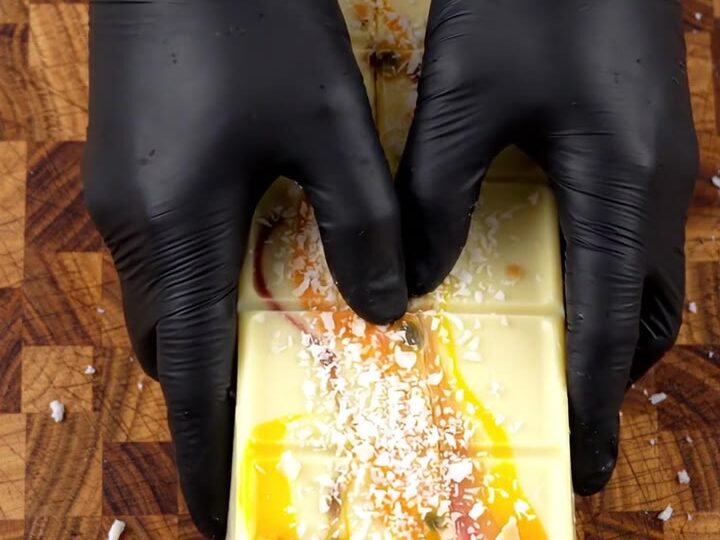
Then you spread it in a lined tray, drizzle the passionfruit, and scatter the topping while the chocolate is still soft. Once the bark is firm, you cut it into bars and finish with more coconut and passionfruit seeds. The method is quick and forgiving, and it suits a dessert table, a gift box or an easy afternoon treat.
Ingredients
Fruit and nut mix
- 1/4 cup almonds, roughly chopped
- 1/4 cup pecans, roughly chopped
- 1/4 cup cashews, roughly chopped
- 1/4 cup macadamia nuts, roughly chopped
- 1/2 cup dried mango pieces, chopped
- 1/2 cup shredded coconut, chopped, plus extra for serving
Bark
- 12 oz white chocolate, grated and melted or softened
- 3 passionfruit, pulp and seeds
Why this recipe works
White chocolate is the ideal base for this bark because it is naturally sweet and melts into a smooth, glossy layer that holds the topping firmly. Grating it before melting gives you small, even pieces that soften quickly, so you avoid overheating. Melting in short bursts with a stir in between keeps the chocolate silky and prevents it from turning grainy or seizing. The result is an even coat that sets with a clean snap.
Scattering the nut and fruit mixture while the chocolate is still soft is the key step. The pieces sink slightly into the surface, so they stay anchored when you cut and break the bark.
Chopping the nuts and dried mango to a roughly uniform size means every bar has a balanced mix of crunch and chew. Passionfruit is drizzled in streaks before the topping goes on, which creates the pale yellow marbling and a bright flavour that runs through each piece.
Notes and substitutions
Choose a white chocolate you enjoy eating on its own, because it is the main flavour of the bark. Dried mango pieces give the chewiest texture, and dried papaya or dried pineapple work well as a substitute.
Shredded coconut should be chopped a little so the flakes do not stay long and stringy. Use any mix of almonds, pecans, cashews and macadamia nuts that you have on hand, as long as the total weight matches the amounts listed.
You need a wooden cutting board and a long chef's knife for chopping the mix, plus a stainless steel box grater for the chocolate. A rimmed rectangular metal tray lined with parchment paper gives the bark an even thickness and makes it easy to lift out.
A microwave-safe bowl is enough for melting. Fresh passionfruit pulp is best, but store-bought pulp with seeds works if fresh fruit is not available, so look for an unsweetened product.
- Dried mango pieces: Dried papaya or dried pineapple, chopped to a similar size
- Macadamia nuts: Additional almonds or pecans, roughly chopped
- Fresh passionfruit pulp: Store-bought passionfruit pulp, with seeds, unsweetened if possible
Equipment
- Wooden cutting board
- Long chef's knife
- Stainless steel box grater
- Rimmed rectangular metal tray
- Parchment paper
- Microwave-safe bowl
Up next · Part 2 of 3
7 steps · 5 min of cooking · what to look for at each stage
Step-by-step instructions (Part 2)