Drinks · Part 3 of 3: Tips & recipe card
Lychee Raspberry Rose Coconut Snow Smoothie Cooler in Ten Minutes Tips, FAQ & printable recipe

- Prep
- Cook
- Total
- Serves
- 2
Tips for success
Chill every component before assembly: the fruit, the coconut block, the glasses and the cream. Cold ingredients keep the smoothie thick without diluting it with extra ice, and they help the layers stay sharp. A quick ten minutes in the freezer for the glasses makes a visible difference to the red base.
Taste the smoothie before pouring and adjust the sweetness with a spoonful of the raspberry syrup or a small amount of sugar, depending on how ripe the lychees and raspberries are. Lychees vary a great deal in sweetness, so tasting first saves a flat drink. Add ice gradually and blend in short pulses, which keeps the texture thick without turning it watery.
Variations
- Dairy-free topping: Replace the heavy cream with chilled coconut cream whipped to soft peaks. The swirl holds well, the flavour matches the coconut snow, and the whole cooler becomes free of milk ingredients while keeping its layered look and tropical taste.
- Frozen fruit version: Use frozen lychees and raspberries in place of fresh fruit, and reduce the ice to half a cup. The smoothie stays thick and cold, and it is a practical option for a warm day when fresh fruit is hard to find.
- Simple raspberry base: Skip the separate raspberry purée and stir a spoonful of sugar into a few fresh raspberries mashed in the bottom of each glass. The result is a fresher, more rustic red band that still gives the drink its striking two-tone look.
- Mango lychee swap: Swap half of the dragon fruit for ripe mango cubes for a deeper, more fragrant smoothie. The colour shifts toward a soft apricot pink, while the layered base, cream topping and coconut snow remain exactly as in the original recipe.
Storage and make-ahead
- Fridge
- Refrigerate the blended smoothie in a sealed container for up to one day, and keep the raspberry syrup, cream and coconut snow in separate covered containers.
- Freezer
- Freezing is not recommended for the assembled cooler because the cream and coconut snow lose their texture.
- Reheat
- No reheating applies to this cooler. Serve it cold, straight from the blender and assembled just before the glass goes to the table.
This cooler is best served the moment it is assembled. The smoothie separates and loosens as it sits, and the whipped cream begins to soften within about fifteen minutes at room temperature.
If you need to hold any part of the recipe, keep the components apart: store the blended smoothie in a sealed container in the refrigerator for up to one day, and keep the raspberry syrup, the whipped cream and the grated coconut snow in separate covered containers in the refrigerator.
Give the smoothie a quick stir or a brief pulse in the blender before pouring, and pipe fresh cream on each glass just before serving.
Several parts of this cooler can be prepared in advance without losing quality. Peel and pit the lychees, cut the dragon fruit and store the fruit in the refrigerator the day before. Grate the coconut block and keep the shavings in an airtight container in the refrigerator so they stay light and fine.
Make the raspberry syrup or purée a day ahead and keep it chilled. Whip the cream on the day of serving, because it firms best when fresh and cold. Blend the smoothie just before pouring, then assemble each glass in order: base, smoothie, cream and coconut snow.
Serving ideas
Serve each cooler in a tall crystal glass with a wide straw or a long spoon, so the drinker can reach the deep red base as well as the creamy pink middle. Present the glasses on a small tray or board so the layers are visible from above. Pipe the cream just before serving, and add the coconut snow at the last moment so it stays bright white on top.
For a relaxed afternoon table, set out the glasses with a small bowl of extra grated coconut and a bowl of fresh raspberries for guests to add themselves.
Keep the blender nearby so each drink can be made to order, which keeps the layers crisp and the ice from melting. The cooler works well as a warm-weather drink next to light appetizers or a fruit platter.
Frequently asked questions
Can this cooler be made without a blender?
How is the coconut snow made?
Why does the raspberry base sink to the bottom?
Can you skip the whipped cream topping?
Is this cooler suitable for children and older guests?
Lychee Raspberry Rose Coconut Snow Smoothie Cooler in Ten Minutes

Ingredients
- 1 pink dragon fruit, peeled and cut into cubes and wedges
- 8 oz fresh lychees, peeled and pitted
- 1 cup fresh raspberries
- 1 cup ice cubes
- 2 tbsp raspberry syrup or raspberry purée, for the glass base
- 1/2 cup heavy cream, whipped to soft peaks, for piping
- 2 oz firm white coconut block, for grating into coconut snow
Instructions
- Peel the dragon fruit and cut it into cubes and wedges with a chef's knife. Peel and pit the lychees and set them alongside the raspberries on the board. Keep the fruit cold until blending.
- Hold the firm white coconut block against the fine side of a box grater. Grate it over the board until fine white shavings and curled ribbons pile up. Set the coconut snow aside.
- Add the lychees, raspberries, dragon fruit and a generous handful of ice cubes to the glass blender jar. Secure the lid and blend until the mixture is thick, smooth and pale pink.
- Spoon the raspberry syrup or purée into the bottom of two tall crystal glasses so a deep red band forms. Pour the pink smoothie gently over the base to keep the layers distinct.
- Whip the heavy cream to soft peaks and spoon it into a piping bag fitted with a star tip. Pipe a tall swirl on top of each cooler. Finish with a sprinkle of the grated coconut snow and serve right away.
Estimated nutrition per serving
- Calories
- 260
- Protein
- 3 g
- Carbohydrates
- 48 g
- Fat
- 7 g
- Fiber
- 4 g
- Sugar
- 36 g
- Sodium
- 30 mg
Next recipe
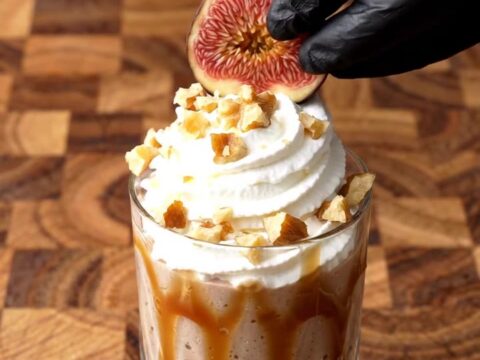
Fig Walnut Cinnamon Cream Smoothie Cooler for a Quick Chilled Drink
See the recipe → →This recipe is based on a short cooking video and is published under the pen name Clara Weller. It was checked before publication, but errors can slip through. Nutrition, when shown, is an estimate. Read more in our editorial policy and on our food safety page.
More recipes to try

Pink Guava Strawberry Yogurt Smoothie with Whipped Cream
Total time: 17 min
Salted Date Caramel Tahini Espresso Milkshake in Ten Minutes
Total time: 15 min
Watermelon Hibiscus Strawberry Lychee Slush Cooler with White Chocolate
Total time: 22 min
Apricot Saffron Pistachio Milk Cooler with White Chocolate
Total time: 17 min
Blueberry Cardamom Cashew Lassi Smoothie With White Chocolate
Total time: 17 min