Breakfast · Part 3 of 3: Tips & recipe card
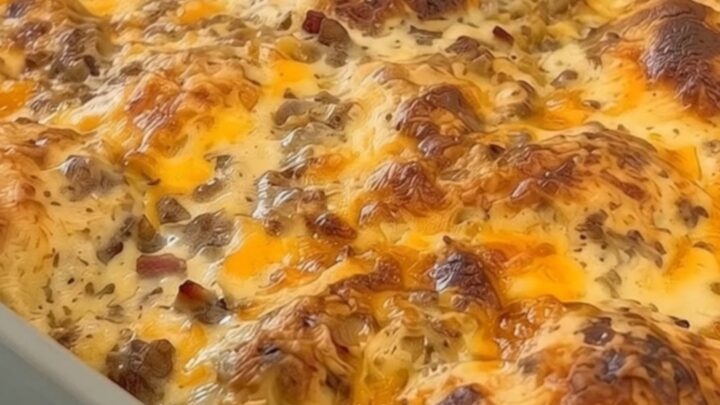
Loaded Biscuits and Sausage Gravy Breakfast Casserole Tips, FAQ & printable recipe
- Prep
- Cook
- Total
- Serves
- 8
Tips for success
For a deeper flavor profile, add a pinch of black pepper or red pepper flakes to the sausage while it browns. If you prefer a more intense cheese flavor, you can mix in a little extra sharp cheddar along with the Colby Jack for a more complex and savory crust.
When arranging the biscuit pieces, try to keep them in a single, even layer to ensure they bake at the same rate. If the cheese starts to brown too quickly before the biscuits are fully cooked, cover the dish loosely with a piece of aluminum foil to protect the top while the inside finishes baking.
Variations
- Spicy Sausage Version: Use spicy breakfast sausage instead of the mild variety. Add a teaspoon of diced jalapeños to the sausage while it cooks for an extra kick that complements the cheese.
- Veggie-Loaded Version: Add sautéed bell peppers, onions, and mushrooms to the sausage mixture. These vegetables add texture and flavor while incorporating more variety into the breakfast bake.
Storage and make-ahead
- Fridge
- Store in an airtight container for up to 3 days.
- Freezer
- Freeze in individual portions for up to 1 month; thaw overnight in the refrigerator before reheating.
- Reheat
- Reheat in a 350°F oven until warmed through or in the microwave in 30-second intervals until hot.
Allow the casserole to cool completely to room temperature for no more than two hours before covering it tightly with plastic wrap or transferring it to an airtight container.
Store it in the refrigerator to maintain freshness. When stored correctly, the leftovers will remain delicious for up to three days, making it an excellent option for quick weekday breakfasts.
The sausage can be browned up to 24 hours in advance and kept in the refrigerator. When ready to assemble, simply reheat the sausage slightly until it is warm, then proceed with the biscuit and cheese layering.
This significantly reduces the morning prep time, allowing for a fresh, hot breakfast with minimal effort and very little cleanup.
Serving ideas
Serve this casserole warm, directly from the baking dish, to ensure the cheese stays melted and the texture remains perfect.
It pairs perfectly with a side of fresh fruit or a light, crisp green salad to balance the richness of the sausage and cheese. The dish is hearty enough to serve as a standalone breakfast or brunch centerpiece.
Use a sturdy metal spatula to lift portions from the dish, ensuring each serving includes a good balance of biscuits, sausage, and melted cheese.
For an extra touch, garnish with a sprinkle of chopped fresh parsley or chives right before serving to add a pop of color and a touch of fresh flavor to the dish.
Frequently asked questions
Can this be made ahead of time?
What kind of biscuits work best?
How can the cheese be kept from burning?
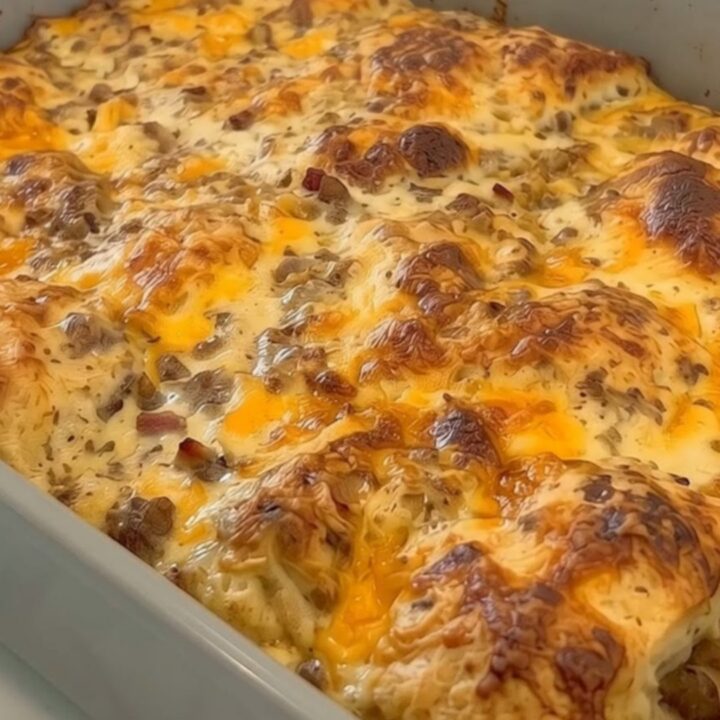
Loaded Biscuits and Sausage Gravy Breakfast Casserole
Ingredients
- 1 lb breakfast sausage
- 8 count refrigerated biscuit dough, store-bought or made ahead
- 2 cups shredded Colby Jack cheese
Instructions
- Brown the breakfast sausage in a large skillet over medium-high heat until fully cooked. Ensure the internal temperature reaches 160°F (71°C) to verify it is safe to eat.
- Cut the refrigerated biscuits into quarters and place them into the bottom of a greased 9x13 inch baking dish. Add the cooked sausage over the biscuit pieces. Sprinkle the shredded Colby Jack cheese generously over the top.
- Place the baking dish into a preheated 375°F oven and bake for 20 to 25 minutes until the biscuits are golden brown and the cheese is melted and bubbling. Remove from the oven and let the casserole rest for 5 minutes before slicing and serving warm.
Estimated nutrition per serving
- Calories
- 450
- Protein
- 16 g
- Carbohydrates
- 32 g
- Fat
- 28 g
- Fiber
- 0.5 g
- Sugar
- 3 g
- Sodium
- 850 mg
Next recipe
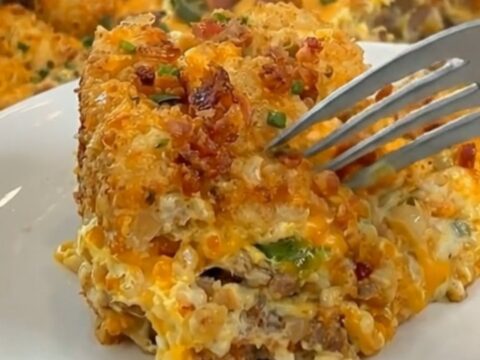
Loaded Tater Tot Breakfast Casserole
See the recipe → →This recipe is based on a short cooking video and is published under the pen name Clara Weller. It was checked before publication, but errors can slip through. Nutrition, when shown, is an estimate. Read more in our editorial policy and on our food safety page.
More recipes to try
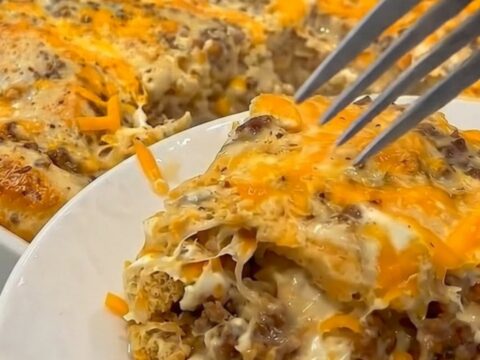
Easy Biscuits and Gravy Breakfast Casserole
Total time: 55 min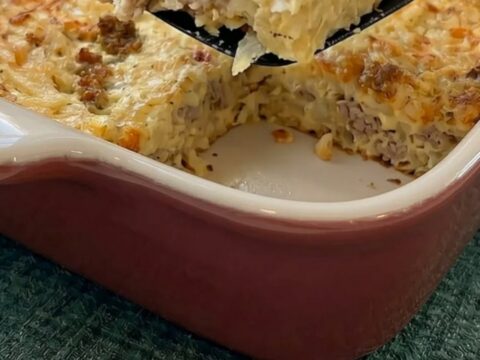
Sausage and Hash Brown Breakfast Casserole
Total time: 1 h
Easy Cheesy Breakfast Biscuit Casserole
Total time: 45 min
Easy Sausage and Tater Tot Breakfast Casserole
Total time: 1 h
Loaded Tater Tot Breakfast Casserole with Pepper Gravy
Total time: 1 h 5 min