Dinner · Part 2 of 3: Instructions
Loaded Baked Potato Chicken Casserole: Cheesy Comfort Step-by-step instructions
- Prep
- Cook
- Total
- Serves
- 6
Before you start
Before starting, gather all your ingredients and equipment. Preheat the oven to 350°F (175°C) when you're ready to bake. Wash and scrub the potatoes, then cut them into 1-inch chunks. Cut the chicken into similar-sized pieces.
Chop the bacon and onion, mince the garlic, and shred the cheddar cheese if using a block. Measure out the cream, broth, flour, and seasonings. Have a large pot for boiling potatoes, a large skillet for the sauce, and a 9x13-inch baking dish ready.
Ingredients at a glance (13)
- 4 large baking potatoes, scrubbed and cut into 1-inch chunks
- 2 lb boneless, skinless chicken breasts, cut into 1-inch pieces
- 8 slices bacon, chopped
- 2 cups shredded sharp cheddar cheese, divided
- 1 cup heavy cream
- 1 cup chicken broth
- 1 medium onion, finely chopped
- 3 cloves garlic, minced
- 3 tbsp all-purpose flour
- 2 tbsp unsalted butter
- 1 tsp kosher salt
- 1/2 tsp black pepper
- 2 tbsp chopped fresh chives, for garnish
Instructions
Prep and Cook the Base
- Cook Potatoes and BaconPlace the potato chunks in a large pot and cover with cold water. Bring to a boil over high heat, then reduce to a simmer and cook until just tender, about 10-12 minutes. Drain and set aside. Meanwhile, in a large skillet over medium heat, cook the chopped bacon until crisp, about 8 minutes. Use a slotted spoon to transfer the bacon to a paper towel-lined plate, leaving about 2 tablespoons of drippings in the skillet.Look for Potatoes are fork-tender but not falling apart; bacon is crispy and browned.Tip Don't overcook the potatoes—they will continue cooking in the oven.
- Sauté AromaticsAdd the butter to the skillet with the bacon drippings. Once melted, add the chopped onion and cook until soft and translucent, about 5 minutes. Add the minced garlic and cook for another minute until fragrant.Look for Onion is soft and translucent; garlic is fragrant but not browned.Tip Stir frequently to prevent the garlic from burning.
- Make the SauceSprinkle the flour over the onion mixture and stir to coat. Cook for 1-2 minutes to remove the raw flour taste. Slowly pour in the chicken broth and heavy cream, whisking constantly to avoid lumps. Bring to a simmer and cook until the sauce thickens, about 3-4 minutes. Season with salt and pepper.Look for Sauce is smooth and thickened enough to coat the back of a spoon.Tip Whisk constantly to ensure a lump-free sauce.
At the end of this phase, the potatoes are tender, the bacon is crispy, and the sauce is smooth and thickened. The aroma of garlic and onion fills the kitchen, and the sauce coats the back of a spoon.
The chicken is added and cooked until no longer pink on the outside, ready to be combined with the other ingredients.
Assemble the Casserole
- Combine Casserole IngredientsAdd the chicken pieces to the sauce and stir to coat. Cook for 5-7 minutes, stirring occasionally, until the chicken is no longer pink on the outside. Remove from heat. Add the drained potatoes and half of the shredded cheddar, along with the cooked bacon, and stir to combine everything evenly.Look for Chicken is opaque on the outside; ingredients are evenly coated with sauce.Safe temperature 165°F (74°C) internal temperature (poultry)Tip Cut chicken into uniform pieces for even cooking.
- Transfer to Baking DishPreheat the oven to 350°F (175°C). Transfer the mixture to a 9x13-inch baking dish and spread it into an even layer. Sprinkle the remaining cheddar cheese over the top.Look for Casserole is evenly spread; top is covered with cheese.Tip Grease the baking dish lightly to prevent sticking.
The casserole is assembled in the baking dish with all ingredients evenly distributed. The top is covered with a generous layer of shredded cheddar, creating a tempting sight. The dish is ready to go into the oven, with the cheese promising a golden, bubbly finish.
Bake and Finish
- Bake Until Hot and BubblyBake the casserole in the preheated oven for 25-30 minutes, until the cheese is melted and bubbly and the chicken is cooked through. The internal temperature of the chicken should reach 165°F (74°C). Let the casserole rest for 5 minutes before serving.Look for Cheese is golden and bubbling; edges are slightly browned.Safe temperature 165°F (74°C) internal temperature (poultry)Tip Letting the casserole rest helps it set and makes serving easier.
- Garnish and ServeSprinkle the chopped chives over the hot casserole and serve directly from the baking dish or scoop onto plates.Look for Chives add a fresh green contrast to the cheesy top.Tip Serve with a side salad or steamed vegetables for a complete meal.
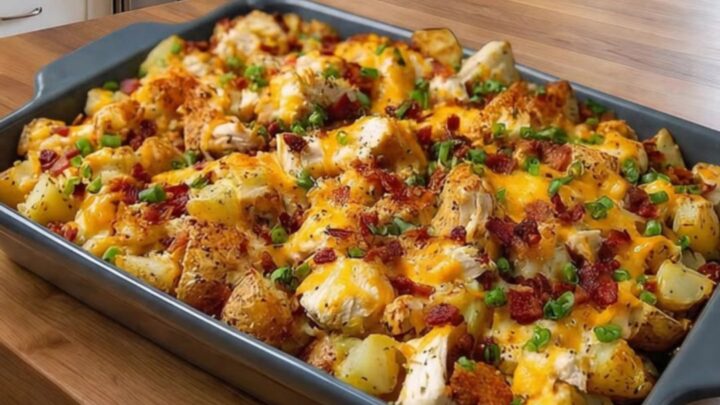
After baking, the casserole is bubbling and the cheese has melted into a golden crust. The kitchen smells of smoky bacon, melted cheese, and savory chicken. The casserole is allowed to rest, then garnished with fresh chives, adding a pop of color and freshness before serving.
Common mistakes
One common mistake is overcooking the potatoes during the initial boiling, which can make them mushy in the casserole. Boil them just until fork-tender, about 10-12 minutes. Another pitfall is not whisking the sauce enough, leading to lumps; whisk constantly while adding the liquid.
Avoid using pre-shredded cheese, as it often contains anti-caking agents that prevent smooth melting. Also, be careful not to undercook the chicken; always check the internal temperature.
How to tell it’s done
The casserole is done when the cheese on top is melted and bubbly, and the edges are slightly browned. To ensure the chicken is fully cooked, insert an instant-read thermometer into the thickest piece of chicken; it should read 165°F (74°C).
The sauce should be thickened and creamy, and the potatoes should be tender when pierced with a fork. Let the casserole rest for 5 minutes after baking to allow it to set slightly, making it easier to serve.
- Poultry: 165°F (74°C) in the thickest part
Up next · Part 3 of 3
4 variations · storage & make-ahead · 5 answers · printable card
Tips, FAQ & printable recipe (Part 3)← Back to the ingredients (Part 1)