Desserts · Part 2 of 3: Instructions
Lemon Loaf Cake with Citrus Glaze Step-by-step instructions
- Prep
- Cook
- Total
- Serves
- 10
Before you start
Before starting, bring the butter, eggs, and milk to room temperature. This ensures they cream together smoothly and emulsify properly, creating a light and airy batter. Preheat the oven to 350°F (175°C) and position a rack in the center.
Line a 9x5-inch loaf pan with parchment paper, leaving overhang on the two long sides for easy lifting. Measure out all the ingredients and have them ready. Zest and juice the lemons, and set aside. This preparation makes the baking process seamless and enjoyable.
Ingredients at a glance (14)
- 2 cups all-purpose flour
- 1 tsp salt
- 2 tsp baking powder
- 1 tbsp fresh lemon zest
- 1 1/4 cups granulated sugar
- 3/4 cup unsalted butter, softened (170g)
- 3 tbsp vegetable oil
- 4 large eggs, room temperature
- 1/2 cup whole milk
- 3 tbsp fresh lemon juice
- 1 tbsp vanilla bean paste
- 1 cup powdered sugar
- 2 tbsp fresh lemon juice
- 1 tbsp milk
Instructions
Prep and Mix
- Whisk Dry Ingredients and Rub Sugar with Lemon ZestIn a medium bowl, whisk together the flour, salt, and baking powder until well combined. In a large bowl, add the lemon zest to the granulated sugar and rub the mixture between your fingertips for about 1 minute, until the sugar is fragrant and pale yellow. This releases the citrus oils from the zest and infuses the sugar with lemon flavor.Look for The sugar should look slightly damp and smell intensely of lemon.Tip Rubbing the zest into the sugar is a key step — it makes the cake more aromatic.
- Cream Butter and SugarAdd the softened butter and vegetable oil to the lemon sugar. Using an electric mixer on medium speed, beat for 2 to 3 minutes until the mixture is light, fluffy, and pale in color. Scrape down the sides of the bowl as needed.Look for The mixture should be creamy and airy, with no large lumps of butter.Tip Ensure the butter is truly softened to room temperature for the best creaming.
- Add Eggs One at a TimeBeat in the eggs one at a time, mixing well after each addition until fully incorporated. Scrape down the bowl after the last egg. The batter should look smooth and glossy.Look for Each egg is fully absorbed before adding the next; the batter looks homogenous.Safe temperature 160°F (71°C) internal temperature (egg dishes)Tip Room-temperature eggs emulsify better and create a smoother batter.
- Add Milk, Lemon Juice, and VanillaPour in the whole milk, fresh lemon juice, and vanilla bean paste. Mix on low speed until just combined. The batter will look slightly curdled — that's normal and will smooth out once the flour is added.Look for The liquid is evenly distributed; the batter may look a little broken.Tip Don't overmix here; a few streaks are fine.
At the end of this phase, you should have a smooth, thick batter ready for the oven. The sugar should be fragrant with lemon, the butter and sugar mixture light and fluffy, and the wet and dry ingredients just combined. The batter should be pale yellow and glossy, with no streaks of flour. It should be thick enough to hold its shape when scooped but still pourable. The aroma should be sweet and citrusy, promising a delicious cake.
Bake to Golden Perfection
- Fold in Dry IngredientsAdd the dry flour mixture to the wet ingredients. Use a rubber spatula to fold gently, turning the bowl and scraping from the bottom, until no streaks of flour remain. The batter should be thick, smooth, and slightly glossy.Look for No dry patches remain; the batter is thick but scoopable.Tip Fold gently to avoid overdeveloping the gluten, which would make the cake tough.
- Pour Batter into Loaf PanLine a 9x5-inch loaf pan with parchment paper, leaving overhang on two sides. Pour the batter into the pan and smooth the top with a spatula. Tap the pan on the counter a few times to release any air bubbles.Look for The batter is evenly distributed in the pan.Tip Parchment paper makes lifting the loaf out effortless.
- Bake the LoafBake in a preheated oven at 350°F (175°C) for 50 minutes, or until a toothpick inserted into the center comes out clean or with a few moist crumbs. The top should be golden brown and domed. If the top browns too quickly, tent loosely with foil.Look for The cake is golden, springs back lightly when touched, and a toothpick comes out clean.Safe temperature 160°F (71°C) internal temperature (egg dishes)Tip Ovens vary; start checking at 45 minutes.
- Cool the LoafRemove the loaf from the oven and let it cool in the pan on a wire rack for 15 minutes. Then lift the loaf out using the parchment paper and let it cool completely on the rack before glazing.Look for The loaf is cool to the touch; no warmth remains in the center.Tip Cooling completely prevents the glaze from melting into the cake.
After baking, the loaf should be beautifully risen with a golden-brown, domed top. The kitchen will be filled with the warm, comforting scent of lemon and vanilla. A toothpick inserted into the center should come out clean, and the cake should feel firm to the touch. When you press lightly on the top, it should spring back. The loaf should have pulled away from the sides of the pan slightly, indicating it's fully baked.
Glaze and Finish
- Make the GlazeIn a small bowl, whisk together the powdered sugar, lemon juice, and milk until smooth and pourable. The glaze should be thick but flow off a spoon in a ribbon. If too thick, add a few drops of milk; if too thin, add more powdered sugar.Look for The glaze is smooth, glossy, and coats the back of a spoon.Tip Whisk thoroughly to eliminate any lumps of powdered sugar.
- Glaze the LoafDrizzle the glaze generously over the cooled loaf, allowing it to cascade down the sides. Let the glaze set for about 10 minutes before slicing. The glaze will firm up slightly but remain glossy.Look for The glaze has set but is still slightly tacky to the touch.Tip Place a sheet of parchment under the rack to catch drips for easy cleanup.
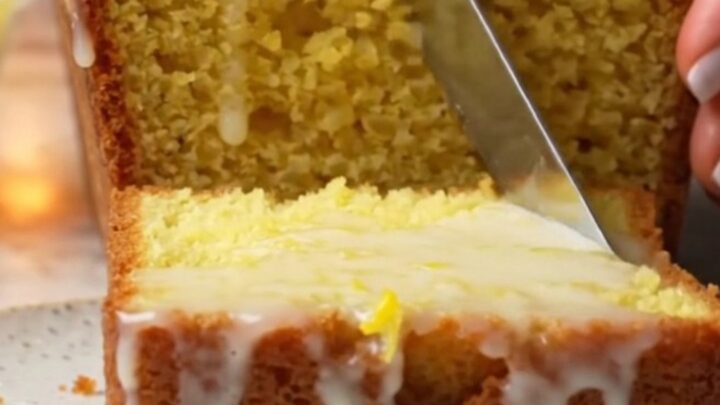
- Slice and ServeUse a serrated knife to slice the loaf into thick, even slices. Serve at room temperature. The crumb should be tender and moist, with a bright lemon flavor and a sweet, glossy topping.Look for Slices hold their shape; the crumb is yellow and moist.Tip A clean, sharp knife gives the neatest slices.
The final phase transforms the cake into a showstopper. The glaze, a smooth, pourable mixture of powdered sugar and lemon, is drizzled over the cooled loaf, creating a glossy, white crown that cascades down the sides.
As it sets, the glaze firms up slightly, forming a delicate, crackly shell. When sliced, the contrast between the bright white glaze and the yellow crumb is visually stunning. The finished loaf is moist, tender, and bursting with lemon flavor.
Common mistakes
Overmixing the batter, especially after adding the flour, can develop gluten and result in a dense, tough cake. Mix just until the flour is incorporated. Another common issue is opening the oven door during baking, which can cause the cake to sink in the middle.
If the cake is browning too fast, tent it with foil rather than lowering the oven temperature. Finally, ensure the loaf is completely cool before glazing; otherwise, the glaze will melt and soak into the cake, losing its shiny finish.
How to tell it’s done
The loaf is done when a toothpick inserted into the center comes out clean or with a few moist crumbs clinging to it. The top should be golden brown and spring back lightly when touched. An instant-read thermometer inserted into the center should register at least 200°F (93°C) for a fully baked cake.
If the top is browning too quickly, tent the loaf with foil for the last 15 minutes of baking. Let the loaf cool in the pan for 15 minutes before transferring to a wire rack to cool completely.
- Egg dishes: 160°F (71°C) in the thickest part
Up next · Part 3 of 3
4 variations · storage & make-ahead · 5 answers · printable card
Tips, FAQ & printable recipe (Part 3)← Back to the ingredients (Part 1)