Desserts · Part 2 of 3: Instructions
Lemon Blackberry Ricotta Puff Pastry Pinwheels in 30 Minutes Step-by-step instructions
- Prep
- Cook
- Total
- Serves
- 8
Before you start
Thaw the puff pastry in the refrigerator overnight, or follow the package directions, until it is cold and pliable but still firm enough to cut cleanly. Keep it cold until the moment you shape the pinwheels, because warm butter layers will melt into the dough and reduce the flaky rise. Preheat the oven to 400°F (200°C) and line a sheet pan with parchment paper.
Beat the egg with a tablespoon of water for the egg wash. Measure the ricotta and lemon curd into small bowls so they are ready to spoon. Wash and dry the blackberries and slice the lemon. Grate the white chocolate over the board and chill it briefly so the curls hold their shape. Setting up in advance keeps the pastry cold and the assembly quick.
Ingredients at a glance (8)
- 1 sheet store-bought puff pastry, thawed
- 1/2 cup whole-milk ricotta cheese
- 2 tbsp lemon curd, store-bought or made ahead
- 1 cup fresh blackberries, plus extra for the center
- 1 lemon, sliced, plus whole lemons for garnish
- 1 large egg, beaten with 1 tbsp water for egg wash
- 1/2 cup confectioners' sugar
- 2 oz white chocolate, for grating and drizzling
Instructions
Cut and fill the pastry
- Set up the board and pastryPlace the puff pastry on a wooden cutting board and cut it into rectangles with a sharp knife. Keep the pieces cold on a parchment-lined sheet pan. Arrange the lemon slices, blackberries and whole lemons alongside for garnish.Look for Pastry is cold, firm and cut into even rectanglesTip Cut with a single firm downward press so the layers stay sharp and rise evenly.
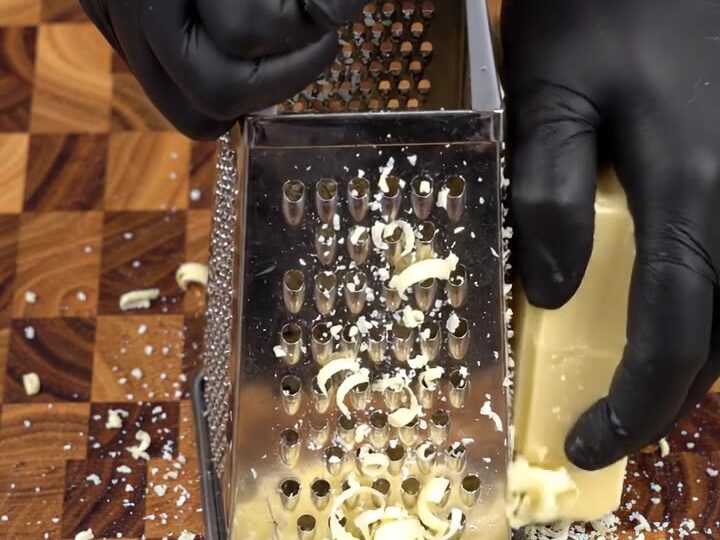
- Grate the white chocolateGrate the white chocolate with a box grater over the board, catching fine curls and shavings. Set the curls aside for the finish. Keep the grater nearby for the final garnish.Look for Fine curls and shavings collect on the boardTip Chill the chocolate for 10 minutes first so it grates into cleaner curls.
The pastry squares should be cold, sharp-edged and evenly sized, each holding a neat spoonful of ricotta and a dollop of lemon curd at the center. Check that the folded edges hold the filling without tearing, and that the pastry feels firm to the touch.
If the dough has softened and become sticky, return the tray to the refrigerator for about 10 minutes before brushing. The squares should look tidy and ready for the oven, with no filling spilling over the edges. Cold dough at this stage is what gives the finished danishes their lift and separate layers.
Brush and bake until golden
- Fill each pastry squareSpoon a portion of ricotta into the center of each pastry square. Top with a dollop of lemon curd. Fold or roll the edges inward into a pinwheel shape and press gently to hold.Look for Filling sits neatly in the center and edges are foldedTip Leave a small border of pastry so the filling does not spill during baking.
- Brush with egg washWhisk the egg with the water. Brush the tops of the pinwheels evenly with a pastry brush, reaching the folded edges without pooling egg in the creases.Look for Tops look glossy and evenly coatedSafe temperature 160°F (71°C) internal temperature (egg dishes)Tip Apply one thin coat; too much egg wash can glue the layers together.
- Bake until deeply goldenBake on the center rack until the pastry is deeply golden and flaky and the filling is set. Let the danishes rest on the pan for 10 minutes before finishing.Look for Pastry is deep golden and puffed around the fillingTip Rotate the pan halfway through for even browning.
After brushing with egg wash and baking, the pinwheels should be deeply golden and puffed, with the pastry edges crisp and separated into flaky layers. The filling should look set and warm, not wet or pale in the center. Smell for a toasted, buttery aroma; that signals the pastry is cooked through. If one side browns faster than the other, rotate the pan. Let the danishes rest on the pan for about 10 minutes so the bottoms firm up before you add the glaze and garnish.
Glaze and garnish the pinwheels
- Make and drizzle the white glazeWhisk the confectioners' sugar with a few drops of water until smooth and pourable. Drizzle thin lines over the danishes. Add blackberries to the center.Look for Glaze is smooth and falls in thin ribbonsTip Add water one teaspoon at a time so the glaze stays thick enough to draw lines.
- Finish with chocolate and ricottaSprinkle the pastries with the grated white chocolate and scatter fresh blackberries in the center. Serve with a dollop of ricotta on the side and extra grated chocolate beside them.Look for Curls of chocolate and berries are scattered over each pinwheelTip Add the chocolate just before serving so the curls stay crisp.
The glaze should be smooth and pourable, falling from the spoon in thin, even ribbons that set quickly on the warm pastry. The blackberries should look plump and bright in the center, and the grated white chocolate should be scattered in fine, dry curls. Check that the glaze has not run down the sides in pools and that the garnish sits neatly on top. Serve while the pastry is still crisp, and keep the extra ricotta and grated chocolate on the side for guests to add.
Common mistakes
The most common problem is dough that has warmed up during assembly. Soft puff pastry loses its layers, so the pinwheels bake flat and greasy instead of rising into flaky curls. Work with a few squares at a time and return the rest to the refrigerator as needed. Another mistake is overfilling.
Too much ricotta or lemon curd spills out during baking and burns on the pan, so keep the spoonfuls modest and leave a small border of pastry. Egg wash applied too thickly pools in the folds and can glue the layers together, so brush lightly. Finally, do not add the blackberries before baking, since they release juice and turn dark and soft in the oven. Add them after the danishes have rested.
How to tell it’s done
The pinwheels are ready when the pastry is deeply golden, puffed and crisp at the edges, with visible flaky layers, and the filling looks set and warm rather than pale or wet in the center. The egg wash should turn the surface glossy and amber. Pull the pan from the oven once the pastry reaches this color, usually after about 18 minutes at 400°F (200°C).
Because the filling contains egg in the egg wash and the baked filling sets fully, the danishes are cooked through when they are firm to the gentle press of a fingertip and the pastry no longer looks doughy at the base. Let them rest before finishing so the centers can firm up.
- Egg dishes: 160°F (71°C) in the thickest part
Up next · Part 3 of 3
4 variations · storage & make-ahead · 5 answers · printable card
Tips, FAQ & printable recipe (Part 3)← Back to the ingredients (Part 1)