Dinner · Part 2 of 3: Instructions
Slow-Cooker No-Boil Lasagna: Lazy Comfort Dinner Step-by-step instructions
- Prep
- Cook
- Total
- Serves
- 8
Before you start
Before starting, make sure the slow cooker is clean and dry. If using store-bought ragu, have it ready. Brown the ground beef and Italian sausage in a skillet over medium-high heat, breaking it into small crumbles, until fully cooked; drain any excess fat. Shred the mozzarella and provolone if not pre-shredded.
Measure the ricotta and have all ingredients within reach. Snap the no-boil lasagna sheets to fit the oval shape of your Crockpot — you'll need enough to cover the bottom and create layers. Set out the warm serving plate and fresh basil for the final serve.
Ingredients at a glance (9)
- 1 cup rich meat ragu (store-bought or homemade)
- 12 no-boil lasagna sheets
- 15 oz whole-milk ricotta
- 1 lb browned ground beef
- 1 lb browned Italian sausage
- 3 cups shredded mozzarella
- 1 cup shredded provolone
- 1/2 cup cold whole-milk ricotta
- 1/4 cup fresh basil leaves, ribboned
Instructions
Layer the Lasagna
- Layer the LasagnaSpread the 1 cup of rich meat ragu evenly across the bottom of the Crockpot. Snap the no-boil lasagna sheets to fit the oval shape, covering the sauce in a single layer. Dollop about one-third of the ricotta over the sheets and spread it gently. Sprinkle with one-third of the browned ground beef and one-third of the browned Italian sausage. Top with one-third of the shredded mozzarella and one-third of the shredded provolone. Repeat the layering two more times: sauce, sheets, ricotta, meats, mozzarella, provolone.Look for The layers should be neat and even, with the top fully covered by sauce and cheese.Tip Snap the sheets to fit snugly; overlapping slightly is fine, but avoid big gaps.
At the end of layering, the Crockpot is filled with neat, colorful layers: rich red ragu, cream-white ricotta, browned meat crumbles, and a blanket of shredded mozzarella and provolone on top. The sheets should be snug and fully covered by sauce and cheese. This is the foundation — make sure the top is well coated to prevent dry edges.
Slow-Cook on Low
- Slow-Cook on LowCover the Crockpot with the glass lid. Set the slow cooker to LOW and cook for 4 hours without lifting the lid. The lasagna is done when the pasta sheets are pillow-soft and the top layer of provolone and mozzarella bubbles into a golden blistered blanket around the ceramic walls. The internal temperature of the meat layers should reach at least 160°F (71°C) to ensure the ground beef and sausage are fully cooked.Look for The cheese is bubbling and golden at the edges, and a knife slides through the layers easily.Safe temperature 160°F (71°C) internal temperature (ground meat)Tip Resist opening the lid during cooking — the steam helps soften the pasta.
After 4 hours on low, the kitchen smells of garlic, herbs, and melted cheese. The top is a golden, blistered blanket of provolone and mozzarella, bubbling around the edges where it meets the ceramic walls.
The pasta is tender and the sauce is thick and savory. The internal temperature of the meat layers should read 160°F (71°C) on an instant-read thermometer.
Rest and Serve
- Rest and ServeTurn off the slow cooker and let the lasagna rest, uncovered, for 10 minutes. This allows the layers to set and makes slicing easier. Using a wide stainless spatula, slide a tall, saucy square onto a warm porcelain plate. Top each serving with a dollop of cold ricotta and a sprinkle of fresh basil ribbons. Serve hot.Look for The lasagna holds its shape when sliced, with visible layers and a saucy, cheesy top.Tip Letting it rest briefly prevents the layers from sliding apart on the plate.
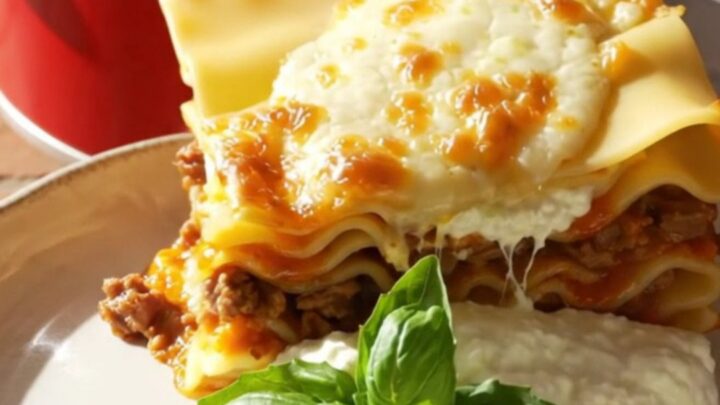
After resting, the lasagna is firm enough to slice into tall, tidy squares. Each piece shows distinct layers of pasta, ricotta, meat, and cheese. A dollop of cold ricotta and a sprinkle of fresh basil brighten the rich, hearty flavors. The top is still glossy and the edges are caramelized — a beautiful, rustic presentation.
Common mistakes
A common mistake is using regular lasagna noodles without boiling them first — they will remain hard and chewy. Stick with no-boil sheets. Another pitfall is lifting the lid during cooking, which releases steam and can lead to undercooked pasta.
Trust the 4-hour low setting. Overloading with too much sauce can make the lasagna soupy; use a thick ragu and spread it evenly. Finally, don't skip the resting time — cutting too soon causes the layers to slide apart.
How to tell it’s done
The lasagna is done when the pasta sheets are tender and easily pierced with a fork, and the top cheese is bubbling and golden brown at the edges. The internal temperature of the meat layers should reach 160°F (71°C) to ensure the ground beef and sausage are fully cooked.
Let the lasagna rest for 10 minutes before slicing; this allows the layers to set and makes serving easier. The lasagna should hold its shape when cut, with visible layers of sauce, meat, and cheese.
- Ground meat: 160°F (71°C) in the thickest part
Up next · Part 3 of 3
4 variations · storage & make-ahead · 5 answers · printable card
Tips, FAQ & printable recipe (Part 3)← Back to the ingredients (Part 1)