Desserts · Part 2 of 3: Instructions
Layered Chocolate Caramel Dessert: An Easy No-Bake Treat Step-by-step instructions
- Prep
- Cook
- Total
- Serves
- 8
Before you start
Before beginning the assembly, ensure all components are prepared and at the appropriate temperatures. The chocolate pudding should be fully set and chilled, while the caramel sauce should be smooth and pourable. Have the whipped cream ready to go, as it should be applied promptly to keep its airy structure.
Ensure the serving dish is clean and dry. Having all ingredients and the spatula within reach will streamline the process, allowing for a seamless transition between the layering steps and a more polished final result.
Ingredients at a glance (5)
- 2 cups chocolate pudding, store-bought or made ahead
- 1/2 cup caramel sauce, store-bought or made ahead
- 2 cups whipped cream
- 4 pieces chocolate squares
- 1/4 cup cookie crumbs
Instructions
Layering the Chocolate Foundation
- Layer the BaseSpread the chocolate pudding evenly into the bottom of a 9-inch glass square dish using an offset spatula. Ensure the surface is smooth to create a perfect foundation for the subsequent layers.Look for The pudding should form a solid, level base across the bottom of the dish.Tip Use a chilled dish to help the pudding set faster during the resting phase.
The chocolate pudding must be spread into an perfectly even layer at the bottom of the dish. Look for a smooth, flat surface that covers the entire base without any gaps. The pudding should be thick enough to support the weight of the caramel and cream layers without shifting or losing its structure during the assembly process.
Adding Caramel and Whipped Cream
- Add Caramel and CreamDrizzle the caramel sauce over the chocolate pudding layer in a zig-zag pattern. Carefully spread the whipped cream on top of the caramel, creating a light, fluffy second layer that hides the caramel underneath.Look for The whipped cream should completely cover the caramel layer without blending into the pudding.Tip If the whipped cream is too soft, refrigerate it for ten minutes before spreading to maintain the distinct layers.
The caramel should be drizzled in a consistent pattern to ensure every bite contains a hint of sweetness. The whipped cream must be spread gently to avoid displacing the caramel underneath. Check that the cream layer is uniform in thickness and covers the caramel completely, creating a clean, white top layer for the final garnishing stage.
Garnishing and Final Presentation
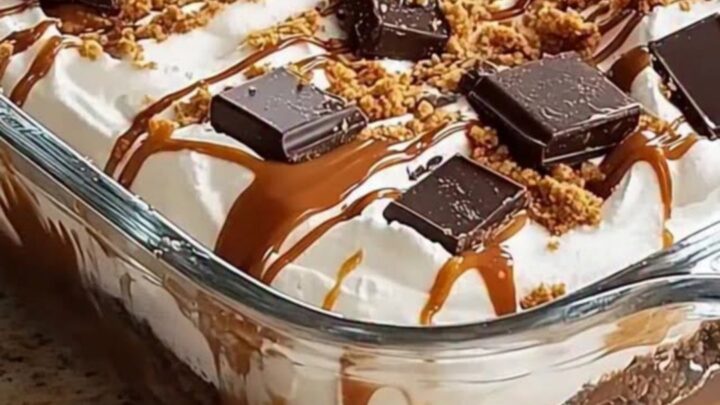
- Garnish and ServeTop the dessert with chocolate squares and a generous sprinkle of cookie crumbs. Heat the pudding base gently if necessary to ensure it reaches 160°F (71°C) to cook the eggs through. Slice into portions and transfer to a plate using a spatula. Serve immediately while cold for the best texture.Look for The crumbs and chocolate squares should be evenly distributed for an appealing presentation.Safe temperature 160°F (71°C) internal temperature (egg dishes)Tip For clean slices, wipe the knife with a damp cloth between each cut.
The chocolate squares and cookie crumbs should be placed strategically to add texture and visual interest. The final dish should look clean, with distinct layers visible through the sides of the glass.
Before serving, ensure the dessert is cold and that the garnishes are evenly distributed, providing a professional and inviting appearance for the table.
Common mistakes
A common mistake is using warm pudding, which causes the other layers to melt and blend together, destroying the visual appeal of the dessert. Another error is applying the caramel in too thick a layer, which can make the dessert overly sweet and difficult to slice.
Over-mixing the layers while spreading can also muddy the appearance. Finally, failing to chill the dessert sufficiently before serving can result in a messy presentation, as the internal layers may not have had enough time to firm up properly.
How to tell it’s done
The dessert is ready when all layers are firmly set and chilled throughout. The pudding should hold its shape when a slice is removed, and the caramel should be visible as a distinct, slightly viscous layer between the chocolate and the cream.
The whipped cream should look light and fluffy, showing no signs of collapse or weeping. When testing, a gentle touch on the cream should feel firm yet soft, indicating that the dessert has reached the ideal consistency for slicing and immediate serving. The egg-based pudding must reach 160°F (71°C).
- Egg dishes: 160°F (71°C) in the thickest part
Up next · Part 3 of 3
2 variations · storage & make-ahead · 3 answers · printable card
Tips, FAQ & printable recipe (Part 3)← Back to the ingredients (Part 1)