Dinner · Part 3 of 3: Tips & recipe card
Korean Corn-Cheese Stuffed Crust Bulgogi Pizza Tips, FAQ & printable recipe
- Prep
- Cook
- Total
- Serves
- 4
Tips for success
For the best crust, use a high-protein pizza dough or a store-bought dough that's designed for high-heat baking. If you have a pizza stone, place it in the oven while it preheats and transfer the pizza directly onto it—this gives an even crispier bottom.
If you're using a cast-iron skillet, make sure it's well-oiled to prevent sticking. Don't be afraid to use a kitchen torch; it's the easiest way to get that charred, blistered effect on the crust without overcooking the cheese.
Let the pizza rest for a full 5 minutes before slicing. This allows the cheese to set and the juices from the beef to redistribute, making each slice hold together beautifully. When slicing, use a sharp pizza cutter or a chef's knife, and cut with a gentle sawing motion to avoid dragging the toppings.
Serve the pizza hot, with extra sliced scallions on the side for garnish. The combination of textures—crispy crust, creamy filling, tender beef—is best enjoyed fresh out of the oven.
Variations
- Spicy Gochujang Twist: Add a tablespoon of gochujang (Korean chili paste) to the corn-cheese filling for a spicy kick. You can also drizzle a little gochujang mixed with honey over the bulgogi before baking for a sweet-heat glaze.
- Chicken Bulgogi Version: Swap the beef for thinly sliced chicken breast or thigh, marinated in the same bulgogi sauce. Cook to an internal temperature of 165°F (74°C) instead of 145°F. The chicken will be slightly leaner but just as flavorful.
- Vegetarian Delight: Omit the bulgogi and add extra vegetables like sautéed mushrooms, bell peppers, or zucchini. Use a plant-based mozzarella alternative to make it dairy-free. The corn-cheese filling can be made with vegan mayo and vegan cheese for a fully plant-based version.
- Double Cheese Crust: Add a layer of shredded cheddar or provolone to the corn-cheese filling for a more complex cheese flavor. You can also sprinkle extra cheese on top of the bulgogi before baking for a cheesy, golden top.
Storage and make-ahead
- Fridge
- Store leftover pizza in an airtight container in the refrigerator for up to 3 days. Reheat in a 350°F oven for 10 minutes to restore crispness.
- Freezer
- Freeze the baked pizza for up to 2 months. Wrap tightly in plastic wrap and foil. Reheat from frozen in a 375°F oven for 15-20 minutes.
- Reheat
- Reheat slices in a skillet over medium heat for 5 minutes, covered, for a crispy bottom and melted cheese. Or use a toaster oven.
Leftover pizza can be stored in an airtight container in the refrigerator for up to 3 days. To reheat, place the pizza on a baking sheet and warm it in a 350°F (175°C) oven for about 10 minutes, or until the crust is crisp and the cheese is melted.
Avoid microwaving, as it will make the crust soggy. The stuffed crust may lose some of its crispness upon reheating, but the flavors will still be delicious.
The corn-cheese filling can be prepared up to 2 days in advance and stored in the refrigerator. The bulgogi beef can also be marinated a day ahead. When ready to assemble, simply roll out the dough, stuff the crust, and top with the beef. This makes it a great option for entertaining—you can have everything ready to go and pop it in the oven when your guests arrive.
Serving ideas
Serve this pizza as a main dish for dinner, alongside a simple green salad dressed with a light vinaigrette to cut through the richness. It also makes a fantastic party appetizer—cut it into smaller slices and serve as a finger food.
The combination of sweet corn, savory beef, and melted cheese is universally appealing, and the golden, blistered crust is sure to be a conversation starter.
For a complete Korean-inspired meal, pair the pizza with a side of kimchi or pickled vegetables. The tangy, spicy flavors will complement the sweet and savory pizza beautifully. You can also offer a drizzle of gochujang sauce or sriracha for those who want an extra kick. This pizza is best enjoyed hot, so serve it immediately after slicing.
Frequently asked questions
Can this pizza be made with store-bought pizza dough?
What is Kewpie mayo and can it be substituted?
How do you prevent the stuffed crust from leaking?
Can this pizza be cooked on a grill?
Is it necessary to torch the crust?
Korean Corn-Cheese Stuffed Crust Bulgogi Pizza
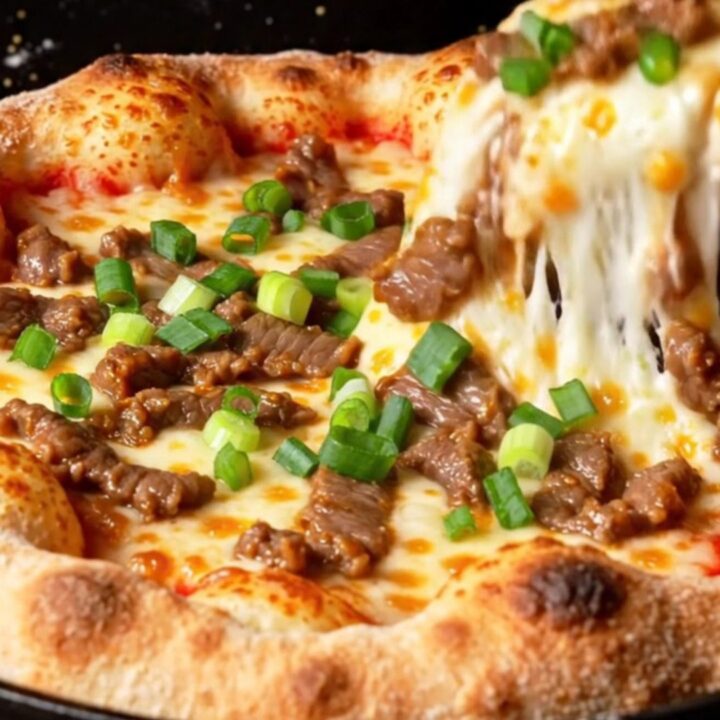
Ingredients
- 1 lb pizza dough
- 1 cup sweet corn kernels (fresh or frozen, thawed)
- 1/4 cup Kewpie mayonnaise
- 1 cup shredded mozzarella cheese
- 8 oz bulgogi beef (thinly sliced)
- 2 tbsp sliced scallions
Instructions
- In a medium bowl, combine the sweet corn kernels, Kewpie mayonnaise, and shredded mozzarella. Mix until the corn is evenly coated and the mixture holds together. Set aside.
- On a lightly floured surface, roll the pizza dough into a 12-inch round. Sprinkle the corn-cheese mixture along the outer edge, leaving a 1-inch border. Fold the edge over the filling and press to seal, creating a stuffed crust. Transfer the dough to a cast-iron skillet or pizza stone.
- Arrange the bulgogi beef evenly over the surface of the pizza, leaving the stuffed crust exposed. Press the beef gently into the dough so it adheres.
- Preheat the oven to 475°F (245°C). Place the pizza in the oven and bake for 12-15 minutes, until the crust is golden brown and the cheese is blistered and bubbly. The beef should be cooked through and reach an internal temperature of 145°F (63°C). Let it rest for 3 minutes before slicing.
- Remove the pizza from the oven. If desired, use a kitchen torch to caramelize the stuffed crust edges until they are blistered and golden. Sprinkle the sliced scallions over the hot pizza.
- Let the pizza rest for 5 minutes before slicing. This allows the cheese to set slightly and prevents the filling from oozing out. Slice and serve hot.
Estimated nutrition per serving
- Calories
- 680
- Protein
- 32 g
- Carbohydrates
- 58 g
- Fat
- 35 g
Next recipe

Crispy Mortadella Burrata Focaccia Sandwich
See the recipe → →This recipe is based on a short cooking video and is published under the pen name Clara Weller. It was checked before publication, but errors can slip through. Nutrition, when shown, is an estimate. Read more in our editorial policy and on our food safety page.
More recipes to try
Philly Cheesesteak Stuffed Crust Pizza
Total time: 50 min
Crispy Stuffed Pizza Baguette Boat
Total time: 27 min
Hot Dog Stuffed Crust Pizza with Mustard-Cheddar Glaze
Total time: 55 min
Braided Chicken Alfredo Pizza Bread: Comfort Bake
Total time: 1 h
Crispy Waffle Iron Pizza Pockets
Total time: 33 min