Dinner · Part 1 of 3: Ingredients
Four-Cheese Stuffed Crust Pizza with Gorgonzola, Fontina, Parmesan & Mozzarella
- Prep
- Cook
- Total
- Serves
- 8
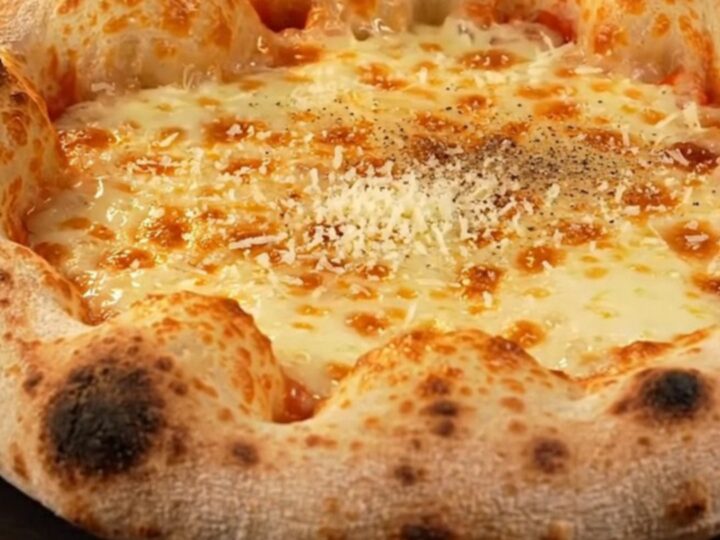
Imagine tearing into a golden, blistered pizza crust and watching a velvety waterfall of gorgonzola, fontina, parmigiano, and mozzarella flow out. This four-cheese stuffed crust pizza delivers exactly that: a crisp, crackly exterior hiding a molten, creamy center of four Italian cheeses.
Baked on a 500°F stone until deeply blistered, the crust becomes irresistibly crunchy while the cheese stays gloriously gooey. Finished with a shower of Parmigiano-Reggiano, cracked black pepper, and a sweet fig glaze, every bite balances rich, salty, and sweet.
This stuffed crust pizza takes the classic cheesy edge to a new level by packing it with a quartet of Italian cheeses: creamy gorgonzola dolce, nutty fontina, fresh mozzarella, and sharp Parmigiano-Reggiano. The dough is rolled thin, the edges are stuffed with the cheese blend, and the whole pizza is baked on a screaming-hot stone until the crust puffs, blisters, and turns deeply golden.
The result is a pizza with a crackling exterior and a molten cheese core that spills out with every slice. A final drizzle of fig glaze adds a touch of sweetness that cuts through the richness, making this a memorable centerpiece for pizza night.
Ingredients
- 1 lb pizza dough, at room temperature
- 4 oz gorgonzola dolce, crumbled
- 4 oz fontina, shredded
- 4 oz fresh mozzarella, torn into small pieces
- 2 oz Parmigiano-Reggiano, grated (plus more for finishing)
- 1 tbsp olive oil, for brushing
- cracked black pepper, for serving
- fig glaze, for drizzling, to taste
Why this recipe works
The method of stuffing the crust before baking ensures that the cheese stays sealed inside the dough, melting into a creamy pocket rather than leaking onto the stone.
The high heat of a 500°F stone creates rapid oven spring, giving the crust a light, airy interior and a deeply blistered, crispy exterior. This combination of textures—crisp outside, soft inside, molten cheese in between—is what makes stuffed crust so satisfying.
Using a blend of four cheeses provides a complex flavor profile: gorgonzola dolce offers a mild, creamy blue note; fontina melts beautifully with a nutty taste; fresh mozzarella adds stretch and moisture; and Parmigiano-Reggiano contributes a sharp, salty finish. The fig glaze, applied after baking, introduces a sweet contrast that balances the salty cheeses, elevating the pizza from simple comfort food to a more refined dish.
Notes and substitutions
For the best results, use high-quality cheeses. Gorgonzola dolce is a younger, sweeter blue cheese; if unavailable, a mild Gorgonzola piccante or even a young Roquefort can work.
Fontina from Italy melts exceptionally well; if you cannot find it, provolone or young Asiago are good substitutes. Fresh mozzarella is preferred for its moisture and stretch, but low-moisture mozzarella can be used in a pinch, though it will be less creamy.
The pizza dough should be at room temperature before rolling to prevent shrinking. If using store-bought dough, let it sit out for 30 minutes. A pizza stone is ideal for achieving a blistered crust, but a heavy cast-iron skillet or baking sheet preheated in the oven can also work. The fig glaze is a key finishing touch; if you cannot find it, a drizzle of honey or balsamic glaze provides a similar sweet-savory contrast.
- gorgonzola dolce: Use another creamy blue cheese like mild gorgonzola piccante or a young Roquefort for a sharper bite.
- fontina: Replace with provolone or young Asiago for a similar nutty, meltable quality.
- fresh mozzarella: Low-moisture mozzarella works if fresh is unavailable; it will be less creamy but still delicious.
- fig glaze: A drizzle of honey or balsamic glaze offers the same sweet-savory contrast.
Equipment
- pizza stone or cast-iron skillet
- pizza peel or rimless baking sheet
- rolling pin
- pastry brush
- chef's knife
- cutting board
- large bowl
- kitchen towel
Up next · Part 2 of 3
9 steps · 15 min of cooking · what to look for at each stage
Step-by-step instructions (Part 2)