Desserts · Part 2 of 3: Instructions
Korean Candied Sweet Potatoes with Crispy Sugar Shell Step-by-step instructions
- Prep
- Cook
- Total
- Serves
- 4
Before you start
Before you start, set up your workspace. Fill a large bowl with cold water for soaking the sweet potatoes. Have a clean kitchen towel ready for drying. Measure all ingredients: the frying oil, vegetable oil, sugar, corn syrup, and black sesame seeds.
Line a baking sheet or large plate with parchment paper for cooling the finished sweet potatoes. Set up a deep-fry thermometer and attach it to the pot. Make sure your non-stick skillet is clean and dry. This preparation ensures a smooth cooking process without scrambling.
Ingredients at a glance (7)
- 2 large Korean sweet potatoes (about 600g), peeled and cut into irregular wedges
- 500 ml frying oil (such as vegetable or canola)
- 3 tbsp vegetable oil
- 4 tbsp sugar
- 2 tbsp corn syrup or honey
- 1 tbsp black sesame seeds
- Cold water, for soaking, to taste
Instructions
Prep and Fry
- Prep and SoakPeel the sweet potatoes and cut them into irregular bite-sized wedges using a rolling cut (rangiri): rotate the potato a quarter turn between cuts. Place the wedges in a bowl of cold water and soak for 10 minutes to remove excess starch. Drain and pat thoroughly dry with a clean kitchen towel.Look for The water becomes cloudy with starch; the wedges are dry to the touch.Tip Drying well prevents oil splatter and helps achieve a crisp exterior.
- First FryHeat the frying oil in a large pot to 170°C (338°F). Carefully add the sweet potato wedges in batches, without crowding. Fry for about 7 minutes until the sweet potatoes are tender and just starting to color. Remove with a slotted spoon and drain on paper towels.Look for The wedges are fork-tender but not brown; they float and sizzle gently.Tip Maintain the oil temperature; adjust the heat to keep it steady.
- Second FryIncrease the oil temperature to 190°C (375°F). Return the sweet potato wedges to the hot oil in batches and fry for 2 minutes until the exterior is golden and crunchy. Remove and drain on paper towels.Look for The wedges are deeply golden and sound crispy when tapped.Tip The second fry creates a sturdy crust that holds up to the caramel.
After the first fry, the sweet potato wedges should be tender but not browned, with a pale golden color. After the second fry, they should be deeply golden, crunchy on the outside, and emit a pleasant fried aroma.
The kitchen will smell of sweet potatoes and hot oil. Tap a wedge with tongs to hear a crisp sound. The potatoes should be fully cooked through but not falling apart.
Caramel Coat
- Make CaramelIn a non-stick skillet or pan, combine the vegetable oil, sugar, and corn syrup (or honey). Heat over medium heat without stirring. Let the mixture melt and bubble until it becomes a clear, golden syrup. Swirl the pan gently if needed to ensure even melting.Look for The syrup is clear, bubbly, and light golden, with no sugar crystals remaining.Tip Do not stir; stirring can cause crystallization. Swirl only if necessary.
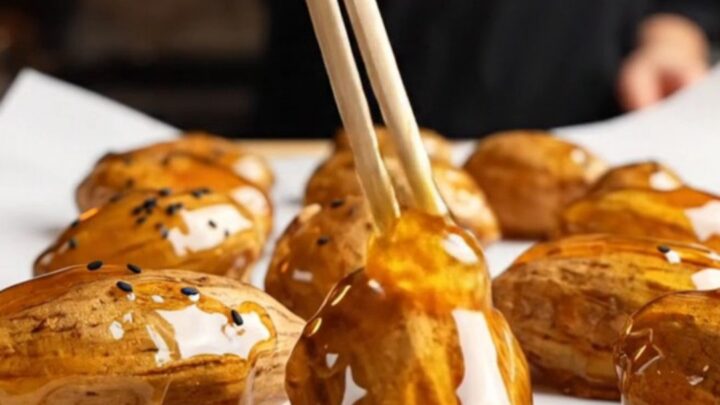
- Coat Sweet PotatoesAdd the fried sweet potato wedges to the skillet with the caramel. Toss rapidly with a spatula or tongs to coat each wedge evenly with the syrup. Sprinkle in the black sesame seeds and continue tossing until all wedges are glazed.Look for Each wedge is shiny and coated with a thin, even layer of caramel.Tip Work quickly; the caramel hardens fast once it cools.
The caramel should be a clear, bubbly, golden syrup that coats the back of a spoon. When you add the sweet potatoes, the syrup should cling to them evenly, creating a shiny, glossy layer. The black sesame seeds should be distributed throughout. The mixture will be very hot, so work carefully. The caramel will start to harden as it cools, so toss quickly to coat all pieces.
Cool and Crisp
- Separate and CoolImmediately transfer the coated sweet potato wedges to a sheet of parchment paper, spreading them out in a single layer so they do not stick together. Let them cool for a few minutes until the sugar shell hardens and becomes crisp.Look for The caramel turns from glossy to matte and makes a crackling sound when tapped.Tip Separating promptly prevents clumping; use two forks if needed.
Spread the coated sweet potatoes on parchment paper in a single layer. Within a few minutes, the caramel will harden into a brittle shell. Tap one piece with a fork to hear a distinct crackle. The surface should be matte, not sticky. The sweet potatoes should be separate and easy to pick up. If any pieces stick together, gently break them apart with your fingers once cool.
Common mistakes
One common mistake is stirring the caramel while it heats, which can cause the sugar to crystallize and become grainy. Instead, let it melt undisturbed, swirling the pan only if needed. Another pitfall is overcrowding the frying pot, which drops the oil temperature and leads to soggy potatoes.
Fry in small batches and allow the oil to return to temperature between batches. Finally, don't skip the soaking step—it removes excess starch that can make the potatoes stick together and turn gummy. Thoroughly drying the potatoes before frying also prevents dangerous oil splatters.
How to tell it’s done
The sweet potatoes are done when they are deeply golden and crispy on the outside, and a skewer inserted into the center meets no resistance. The caramel is ready when it turns a clear, light golden color and bubbles steadily.
After coating, the sugar shell should harden within a few minutes; tap one wedge to hear a distinct crackle. If the caramel is too thick and clumpy, it may have cooked too long; if it's too thin and runny, it needs more time. The finished dish is best enjoyed shortly after cooling, while the shells are still crisp.
Up next · Part 3 of 3
4 variations · storage & make-ahead · 5 answers · printable card
Tips, FAQ & printable recipe (Part 3)← Back to the ingredients (Part 1)