Dinner · Part 1 of 3: Ingredients
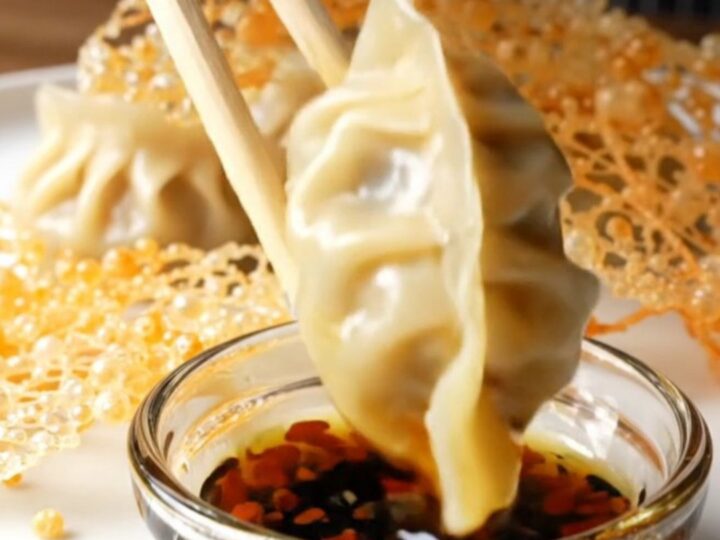
Japanese Crispy Pork Gyoza with Golden Lace Skirt
- Prep
- Cook
- Total
- Serves
- 4
Golden, shatter-crisp lace connects every juicy pork dumpling in this showstopping gyoza recipe. The magic happens in one pan: sear the dumplings until their bottoms are deeply caramelized, then pour in a simple flour-water slurry and cover to steam.
As the liquid evaporates, it transforms into a paper-thin, crunchy lattice that holds all sixteen gyoza together. When inverted onto a platter, the effect is dramatic—and the crunch is even better.
Gyoza are Japanese pan-fried dumplings, typically filled with juicy pork, cabbage, and aromatics, then pleated into neat half-moons. The signature feature here is the golden lace skirt—a crispy, lacy crust that forms when a flour-water slurry is poured into the hot pan and cooked until dry.
This technique not only adds incredible texture but also connects the dumplings into one stunning, shareable piece. The recipe comes together quickly, with about 20 minutes of prep and 10 minutes of cooking, making it perfect for a weeknight dinner or a party appetizer. The key is to use a non-stick skillet and follow the steps in order: sear, steam, then crisp the skirt.
Ingredients
- 16 gyoza wrappers
Filling
- 250 g ground pork
- 1 cup finely shredded cabbage, salted and squeezed
- 2 green onions, minced
- 1 tbsp soy sauce
- 1 tsp sesame oil
- 1 tsp minced ginger
- 1 clove garlic, grated
Skirt
- 1 tbsp all-purpose flour
- 100 ml water
For serving
- gyoza dipping sauce, for serving
Why this recipe works
The filling follows the classic Japanese balance of savory pork, sweet cabbage, and pungent aromatics. Salting and squeezing the cabbage removes excess water, which keeps the filling dense and prevents soggy wrappers. Mixing everything by hand ensures the seasonings are evenly distributed, and the soy sauce and sesame oil add depth without overpowering the meat.
The flour-water slurry is the secret to the lace skirt. When poured into the hot pan, the starch gelatinizes and then crisps as the water evaporates, creating a delicate, golden lattice.
Steaming the dumplings with the lid on cooks the filling through gently, while the final uncovered phase allows the skirt to become dry and crunchy. The result is a textural contrast of crispy bottom, tender wrapper, and juicy filling.
Notes and substitutions
For the best texture, use fresh gyoza wrappers—they are more pliable and pleat neatly. If you can only find frozen ones, thaw them in the refrigerator overnight. The cabbage should be finely shredded and squeezed very dry after salting; this is crucial for a firm filling. You can substitute green cabbage with napa cabbage for a slightly sweeter flavor.
A non-stick skillet is essential for this recipe, as it allows the gyoza to release easily and the skirt to form without sticking. Use a lid that fits well to trap steam during the cooking process.
If you don't have a lid, you can use a baking sheet or another pan as a cover. The dipping sauce can be store-bought or homemade—just a simple mix of soy sauce, rice vinegar, and chili oil.
- ground pork: ground chicken or turkey (cook to 165°F/74°C)
- gyoza wrappers: wonton wrappers (thinner, adjust pleating)
- soy sauce: tamari for a gluten-free option (use gluten-free wrappers)
- green onions: chives or finely chopped leek (white part only)
Equipment
- Large non-stick skillet with lid
- Mixing bowl
- Cutting board and knife
- Measuring spoons and cups
- Spatula
- Serving platter
Up next · Part 2 of 3
6 steps · 10 min of cooking · what to look for at each stage
Step-by-step instructions (Part 2)