Dinner · Part 2 of 3: Instructions
Impossible Pizza Pie with a Golden Crispy Crust Step-by-step instructions
- Prep
- Cook
- Total
- Serves
- 6
Before you start
Set out everything before the oven finishes preheating, because the assembly moves quickly. Take the eggs and milk out of the refrigerator so the batter mixes smoothly and the cold dairy does not slow the set of the crust. Check that the mozzarella is shredded and the pepperoni slices are separated, since slices pulled straight from the stack stick together and never crisp.
Grease the pie pan thoroughly, including the rim, because the batter climbs the sides as it puffs and sticks to any dry spot. Have the strainer ready over a bowl for draining the beef, and keep the pie server and a sharp knife by the cutting board for the end.
Ingredients at a glance (10)
- 1 lb ground beef, 85% lean
- 1/2 tsp garlic powder
- 1 tsp Italian seasoning, divided
- 1/2 tsp kosher salt
- 1/4 tsp black pepper
- 3 oz pepperoni slices
- 1 1/2 cups shredded mozzarella
- 1 cup all-purpose baking mix
- 1 cup milk
- 2 large eggs
Instructions
Heat, brown and drain
- Heat the oven and grease the panPosition a rack in the center of the oven and heat it to 400°F (200°C). Grease a 9-inch pie pan with butter or a light film of oil, working it into the corners and up the sides so the crust releases cleanly after baking.Look for The oven should reach 400°F before the batter goes in; a fully preheated oven is what sets the crust quickly.Tip A metal pie pan browns the crust more deeply than glass; if using glass, check the pie a few minutes early.
- Brown the ground beefHeat a 10-inch skillet over medium-high and add the ground beef, breaking it up with a wooden spoon as it browns. Cook until no pink remains, 6 to 8 minutes, then stir in the garlic powder, salt, black pepper and half of the Italian seasoning.Look for The beef should look deeply browned with no pink spots and should smell toasty, not grey and steamed.Safe temperature 160°F (71°C) internal temperature (ground meat)Tip The beef is fully cooked when it reaches 160°F (71°C) on an instant-read thermometer.
- Drain the fatPour the browned beef into a fine strainer set over a heatproof bowl and let the fat drain off for a minute, gently shaking the pan. Return the drained beef to the skillet off the heat so it stays warm while the pan is prepared.Look for The beef should look crumbly and glossy, not swimming in liquid fat that would pool under the crust.Tip Draining well keeps the bottom crust from turning greasy where it meets the beef layer.
At the end of this phase the kitchen smells like a burger joint in the best way: the beef should be deeply browned, crumbly and dry to the eye, with every visible trace of pink gone and the fat collected in the bowl below rather than the skillet.
The seasonings should be stirred through evenly, so the meat looks flecked with herbs and pepper rather than streaked. Before moving on, taste a small pinch of the beef; it should be pleasantly seasoned on its own, since the batter dilutes it slightly as it bakes. If it tastes flat, add a pinch more salt now, while it can still be corrected.
Layer and pour
- Layer the fillingSpread the warm beef evenly over the bottom of the greased pie pan, pressing it into a flat, even layer with the back of the spoon. Scatter the pepperoni slices over the beef, then shower the whole surface with the shredded mozzarella.Look for The cheese should cover the pepperoni in an even blanket so every slice pulls a full cheesy layer.Tip Keep the filling slightly below the rim of the pan so the rising batter has room to climb without spilling.
- Whisk the crust batterIn a medium mixing bowl, whisk the eggs with the milk until the yolks break and the mixture turns a uniform pale yellow. Add the all-purpose baking mix and the remaining Italian seasoning and whisk just until no dry streaks remain; a few small lumps are fine.Look for The batter should pour like thin pancake batter, smooth enough to flow between the cheese shreds.Tip Stop mixing once the dry bits disappear; overworking the batter can make the crust tougher after baking.
- Pour and bakeSlowly pour the batter evenly over the filling in the pie pan, letting it seep down through the cheese and pepperoni. Transfer the pan to the center rack and bake at 400°F (200°C) for 30 to 35 minutes, until the top is deep golden and set.Look for The crust should puff around the edges and turn a rich, even gold, with no wet-looking patches in the center.Tip Rotate the pan halfway through baking if the oven browns one side faster than the other.
This phase ends when the assembled pie goes into the oven, and it should look tidy and promising: an even bed of beef pressed flat across the pan, pepperoni slices overlapping in a single layer with their edges just visible, a full blanket of mozzarella with no beef peeking through, and batter poured slowly enough that it has seeped down rather than pooling on top. The surface should show a thin film of batter over the cheese but not a deep puddle at one side. Give the pan a gentle quarter turn on the counter to level the batter before it goes in.
Bake, rest and slice
- Rest the piePull the pie from the oven and set it on a wire rack for 5 minutes. The crust settles slightly and firms as it cools, which is what lets each slice come out clean instead of slumping apart on the server.Look for The puffed edges relax and the surface stops steaming; the pan should feel warm, not hot, through the base.Tip Rushing the rest is the most common reason slices break; 5 minutes is the minimum, 10 is even better.
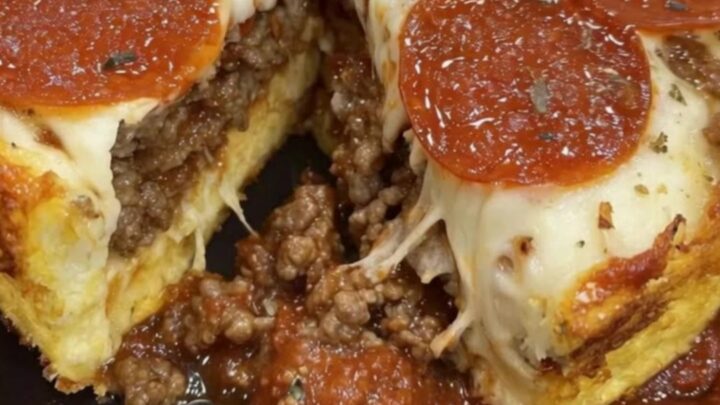
- Slice and serveRun a knife around the edge, then lift each slice with a pie server straight onto plates. The crust should hold firm, the mozzarella should stretch in long pulls, and the pepperoni should show its crisp, curling edges on every piece.Look for A clean slice shows three distinct layers: golden crust, rich beef, and a glossy melted cheese top.Tip Sprinkle the top with a pinch of the remaining Italian seasoning just before serving for extra aroma.
The finished pie comes out of the oven deeply golden, with a crust that has puffed above the rim and settled back into place during the 5-minute rest. The surface should look dry and lightly blistered, the pepperoni edges curled and crisp, and the cheese just starting to brown in spots.
When the pan is nudged, the center should not wobble; the whole pie should move as one firm disc. A knife run around the edge should release it with a whisper, not a scrape. Lift the first slice with the pie server and check the cross-section: three distinct layers, crust at the bottom, beef in the middle, cheese on top, holding together without sliding.
Common mistakes
The most common trouble is a pale, gummy bottom crust, and it almost always traces back to two causes: the oven was not fully preheated, or the wet beef went into the pan before the batter did. Brown the beef until it is truly browned, not merely grey, and drain it well.
The second issue is slices that fall apart, which comes from cutting too soon; the pie needs those 5 minutes on the rack for the crust to firm. Overmixing the batter makes the crust tough, so stop whisking as soon as the dry streaks disappear. Finally, piling the cheese higher than the rim invites overflow; keep the layers level and the bake stays tidy.
How to tell it’s done
The pie is done when the top is a deep, even golden brown with no pale or wet-looking patches, and the center no longer wobbles when the pan is nudged. The edges will have puffed above the rim and pulled slightly away from the sides, which is exactly what a clean release looks like. Because the recipe contains ground beef, the beef must reach a safe internal temperature of 160°F (71°C); browning it fully before layering takes care of that, and a thermometer run into the center of the baked pie should read at or above 160°F (71°C) as well.
- Ground meat: 160°F (71°C) in the thickest part
Up next · Part 3 of 3
4 variations · storage & make-ahead · 5 answers · printable card
Tips, FAQ & printable recipe (Part 3)← Back to the ingredients (Part 1)