Dinner · Part 1 of 3: Ingredients
Honey Gochujang Shrimp and Charred Octopus Skillet in 30 Minutes
- Prep
- Cook
- Total
- Serves
- 2
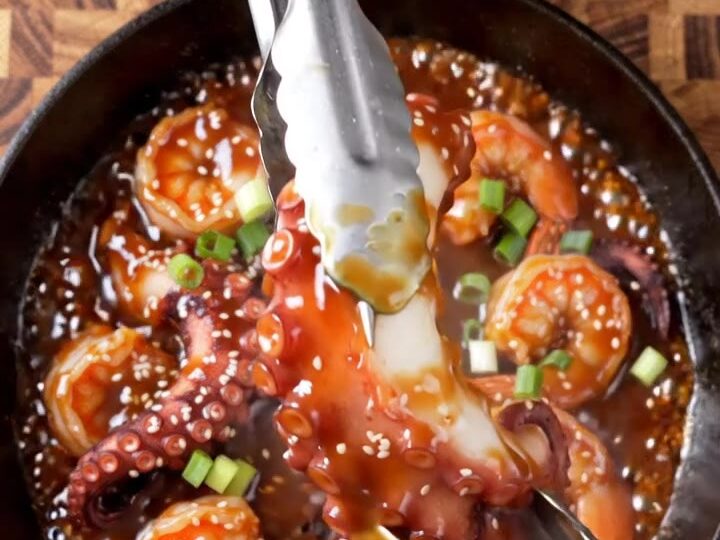
Sticky honey gochujang glaze clings to prawns that have just turned pink, while octopus tentacles char and caramelize at the edges in a hot cast iron skillet. This seafood dinner comes together in one pan, with a sweet-spicy finish of green onions and toasted sesame seeds.
This skillet brings together two seafood textures in a single pan. Tender prawns pick up the honey gochujang glaze quickly, while octopus needs a hot surface to develop charred, crisp edges that contrast with its soft interior. The whole dish takes roughly half an hour from start to finish, mostly for prep, which makes it practical for a weeknight dinner that still feels special.
Everything is cooked in the same cast iron skillet, so the browned bits from the seafood become part of the glaze and the flavor builds without any extra steps. Serve it straight from the pan at the table, with plenty of crusty bread or steamed rice to soak up the sauce.
Ingredients
- 8 oz raw octopus, tentacles cut into sections
- 8 oz raw prawns, peeled and deveined
- 3 green onions, sliced
- 4 cloves garlic, peeled and minced
- 1 tsp fresh ginger, finely grated
- 2 tbsp neutral oil, such as vegetable oil
Honey gochujang glaze
- 3 tbsp honey
- 2 tbsp gochujang (Korean red chile paste)
- 1 tbsp sesame seeds, toasted
Why this recipe works
Cast iron holds heat well, which is exactly what octopus needs. When the pan is properly hot, the tentacles release moisture quickly and begin to brown instead of stewing.
That contact browning produces the charred, caramelized flavor that makes this dish taste like a restaurant plate rather than a simple stir-fry. Preheating the skillet before the oil goes in is the step that makes the difference between charred edges and grey, rubbery pieces.
Honey and gochujang work together because the honey adds sweetness and sticky body, while the gochujang brings fermented depth, mild heat and a deep red color. As the sauce bubbles and reduces, the sugars caramelize slightly and the glaze tightens around the seafood. Adding the glaze after the octopus has already browned keeps the sugar from burning before the protein has developed its color, so the finished dish is glossy rather than bitter.
Notes and substitutions
Buy octopus that is already cleaned and cut into tentacles if you can, which saves time at the cutting board. Choose prawns that are peeled and deveined, since they cook evenly and absorb the glaze easily.
Gochujang is sold in tubs or squeeze tubes in most American supermarkets and Asian grocery stores; its heat and sweetness vary by brand, so taste the glaze before adding salt. Fresh ginger and garlic should be grated or minced fine so they distribute through the glaze rather than burning in larger pieces.
The recipe calls for a 12-inch cast iron skillet, which gives enough surface area to sear the octopus without crowding. A fine metal grater produces the pale pulp that blends into the glaze.
A sharp chef's knife and a sturdy cutting board make the octopus easy to portion, and a ladle and tongs keep the glaze moving so nothing sticks. A nonstick skillet can work in a pinch, but it will not develop the same deep browning on the octopus, so use cast iron when you can.
- Gochujang: Use the same amount of sambal oelek plus 1/2 tsp smoked paprika for heat and color, though the flavor will be less fermented and sweet.
- Raw octopus: Use frozen, fully thawed octopus tentacles, patted very dry, which take the same time to char.
- Neutral oil: Use avocado oil or light sesame oil, but keep the heat moderate if using sesame oil.
Equipment
- 12-inch cast iron skillet
- Sharp chef's knife
- Cutting board
- Fine metal grater
- Ladle
- Tongs
Up next · Part 2 of 3
5 steps · 12 min of cooking · what to look for at each stage
Step-by-step instructions (Part 2)