Appetizers · Part 1 of 3: Ingredients
Honey Garlic Pork Belly Burnt Ends: Crispy Meat Candy
- Prep
- Cook
- Total
- Serves
- 6
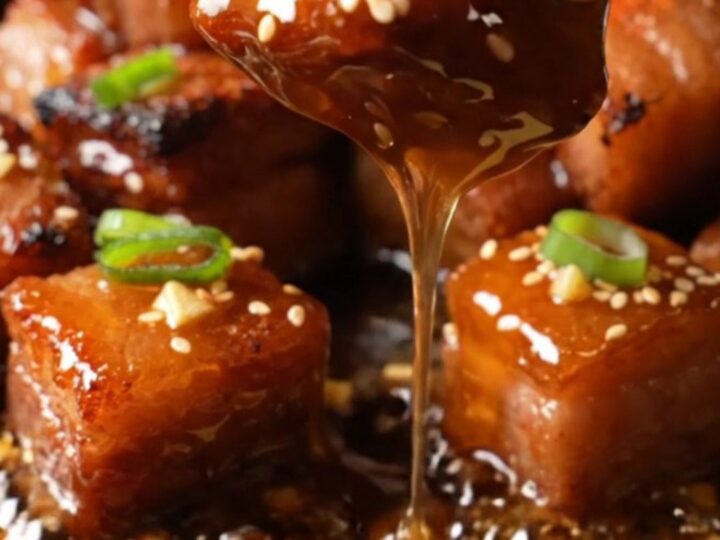
Imagine cubes of pork belly roasted until the fat renders and the edges turn shatteringly crisp, then tossed in a bubbling honey garlic butter glaze that caramelizes into a sticky, glossy coating. Each bite delivers a contrast of textures: a crackling exterior that gives way to a butter-soft, melt-in-your-mouth center. These honey garlic pork belly burnt ends are the ultimate meat candy—sweet, savory, and utterly addictive.
Pork belly burnt ends have become a barbecue favorite, but this version skips the smoker and uses the oven and a cast-iron skillet instead. The process is simple: coat the pork in a smoky-sweet rub, roast until crispy, then finish in a sticky honey garlic glaze.
The result is a dish that looks and tastes like it came from a high-end smokehouse, yet requires minimal effort. Whether served as a main with rice or as a party appetizer, these burnt ends are guaranteed to impress. The key is the two-step cooking method: a dry roast for crispiness, then a wet caramelization for that irresistible glaze.
Ingredients
- 3 lb skinless pork belly
- 3 tbsp brown sugar
- 1 tbsp smoked paprika
- 1 tbsp garlic powder
Glaze
- 1/2 cup honey
- 6 cloves garlic, minced
- 1/4 cup soy sauce
- 3 tbsp butter
Garnish
- 1 tbsp toasted sesame seeds
- 2 tbsp sliced scallions
Why this recipe works
The two-stage cooking method is what makes these burnt ends special. Roasting the pork belly on a wire rack at 375°F allows the fat to render slowly and the surface to dry out, creating a crispy exterior.
This initial dry heat is essential—it transforms the raw, flabby pork into firm, golden cubes with crackling edges. Without this step, the meat would be greasy and soft, lacking the textural contrast that makes burnt ends so crave-worthy.
The second stage, caramelizing the pork in a honey garlic butter sauce at a higher temperature, builds layers of flavor. The honey and brown sugar in the glaze undergo the Maillard reaction, creating deep, complex notes of toffee and roasted garlic.
The soy sauce adds umami and balance, while the butter enriches the sauce and helps it cling to every nook and cranny of the pork. The result is a glossy, sticky coating that is both sweet and savory, with a slight tang from the soy.
Notes and substitutions
Choose a high-quality, skinless pork belly with good marbling. The fat is essential for flavor and moisture, so don't trim it away. If your pork belly has skin, remove it before cubing, or ask your butcher to do it. The brown sugar and smoked paprika create a sweet and smoky crust, while garlic powder adds savory depth. Use fresh garlic in the glaze for the best flavor—mince it finely so it melts into the sauce.
A cast-iron skillet is ideal for the caramelization step because it retains heat well and promotes even browning. If you don't have one, use a heavy oven-safe skillet or a baking dish.
The wire rack for roasting is important—it allows air to circulate around the pork, ensuring even crispiness. If you don't have a wire rack, you can roast the pork directly on the baking sheet, but you may need to flip the cubes halfway through.
- skinless pork belly: Boneless pork shoulder (cut into 1.5-inch cubes) can be used, though it will be less rich and may need a few extra minutes to become tender.
- soy sauce: Coconut aminos or tamari can replace soy sauce for a gluten-free option (use tamari for gluten-free; coconut aminos will be slightly sweeter).
- brown sugar: Coconut sugar or maple sugar can be used in the same amount for a less refined sweetness.
- smoked paprika: Regular paprika plus a pinch of liquid smoke can mimic the smoky flavor, though the intensity will differ.
Equipment
- Chef's knife
- Cutting board
- Large bowl
- Rimmed baking sheet
- Wire rack
- Cast-iron skillet
- Tongs
Up next · Part 2 of 3
5 steps · 55 min of cooking · what to look for at each stage
Step-by-step instructions (Part 2)