Dinner · Part 2 of 3: Instructions
Honey Garlic Crispy Salmon Avocado Mango Rice Bowl Step-by-step instructions
- Prep
- Cook
- Total
- Serves
- 4
Before you start
Before you start, make sure the salmon is patted dry with paper towels—this helps it sear rather than steam. Grate the ginger and carrot, mince the garlic, and whisk the glaze ingredients together so everything is ready to go.
Cook the rice according to package directions or use leftover rice. Have all your toppings sliced and ready, because the salmon cooks quickly and the glaze can burn if you step away.
Ingredients at a glance (11)
- 1 1/2 lb raw salmon fillet
- 1 tbsp fresh ginger root, grated
- 1 cup shredded carrot (from about 1 large carrot)
- 2 tbsp neutral oil (such as canola or grapeseed)
- 1/4 cup honey
- 3 cloves garlic, minced
- 2 tbsp soy sauce
- 4 cups cooked white rice
- 1 ripe avocado, sliced
- 1 cup mango chunks (from 1 ripe mango)
- 1/4 cup mayonnaise
Instructions
Prep and heat
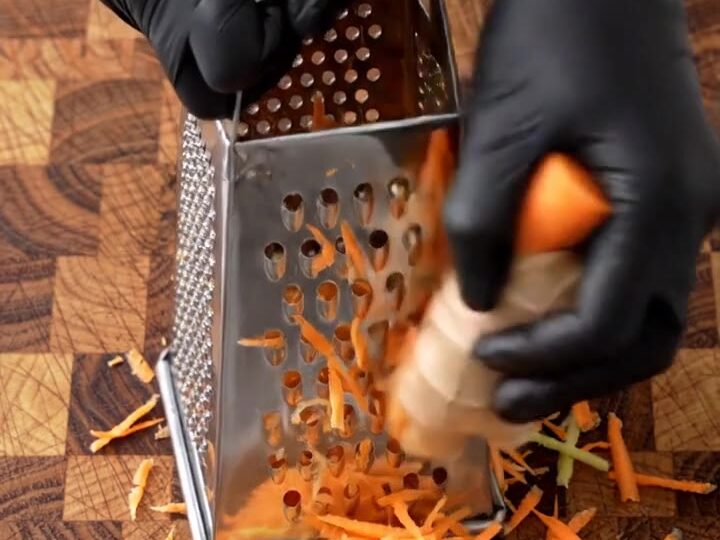
- Prep the salmon and vegetablesSlice the salmon fillet lengthwise into strips, then cut the strips into bite-size cubes. Grate the ginger and the carrot on a box grater; keep the shredded carrot in a small bowl. In a separate small bowl, whisk together the honey, minced garlic, and soy sauce to make the glaze.Look for The salmon cubes are even and about 1-inch pieces; the carrot is finely shredded.Tip Pat the salmon cubes dry with paper towels before cooking to help them crisp.
- Heat the oilPlace a large skillet over medium-high heat and add the neutral oil. Swirl the pan to coat the bottom evenly. The oil should shimmer but not smoke.Look for The oil shimmers when it is hot enough.Tip If the oil smokes, lower the heat slightly and wait a few seconds.
You should have salmon cubes ready, ginger and carrot grated, and the glaze mixed. The oil is shimmering in the pan, ready for the salmon. The kitchen smells of fresh ginger and garlic. At this point, everything is in place to start cooking.
Sear and glaze
- Sear the salmonCarefully add the salmon cubes to the hot pan in a single layer. Let them sizzle without moving for 2–3 minutes until the bottoms are golden and crisp. Then turn the cubes and cook for another 2–3 minutes, until the salmon is cooked through and reaches 145°F (63°C) in the thickest part.Look for The salmon is golden brown on all sides and flakes easily.Safe temperature 145°F (63°C) internal temperature (fish)Tip Do not overcrowd the pan; cook in batches if needed.
- Add the honey garlic glazePour the honey garlic glaze over the crispy salmon cubes. Stir gently to coat each piece. Let the glaze bubble and caramelize for 1–2 minutes, stirring constantly, until the salmon is glossy and the glaze clings to the bites.Look for The glaze is thick, sticky, and coats the salmon evenly.Safe temperature 145°F (63°C) internal temperature (fish)Tip Keep the heat medium so the honey does not burn.
The salmon cubes are golden and crisp on all sides, and the glaze has turned into a glossy, sticky coating that clings to each piece.
The pan has a sweet, savory aroma. The salmon is cooked through and flakes easily. Be careful not to let the glaze burn.
Assemble and serve
- Assemble the bowlsDivide the cooked rice among four bowls. Spoon the honey garlic salmon bites into the center of each bowl. Arrange the avocado slices and mango chunks on top, and sprinkle with the shredded carrot. Drizzle with mayonnaise just before serving.Look for Each bowl is colorful with salmon, avocado, mango, and carrot.Tip For a neat drizzle, transfer the mayo to a small zip-top bag and snip a corner.
The bowls are filled with rice, topped with the glazed salmon, avocado slices, mango chunks, and shredded carrot, and finished with a drizzle of mayonnaise. The colors are vibrant—orange, green, yellow, and pink. The dish is ready to serve immediately.
Common mistakes
One common mistake is overcrowding the pan, which lowers the temperature and causes the salmon to steam instead of crisp. Cook in batches if necessary.
Another is adding the glaze too early or over high heat—honey burns quickly. Keep the heat medium and stir constantly once the glaze is added. Also, don’t skip drying the salmon; excess moisture prevents browning.
How to tell it’s done
The salmon is done when it flakes easily with a fork and reaches an internal temperature of 145°F (63°C) in the thickest part. The glaze should be thick and sticky, clinging to the salmon.
The exterior should be golden brown and slightly caramelized. If you don’t have a thermometer, cut into one piece to check that the flesh is opaque and flakes easily.
- Fish: 145°F (63°C) in the thickest part
Up next · Part 3 of 3
4 variations · storage & make-ahead · 5 answers · printable card
Tips, FAQ & printable recipe (Part 3)← Back to the ingredients (Part 1)