Dinner · Part 2 of 3: Instructions
Herb-Crusted Salmon with Roasted Vegetables and Creamy Dill Sauce Step-by-step instructions
- Prep
- Cook
- Total
- Serves
- 2
Before you start
Before beginning, ensure all vegetables are washed and dried thoroughly. Chop the potatoes into uniform, one-inch pieces to promote consistent cooking. Prepare the fresh herbs by removing any tough stems and chopping them finely. Preheating the oven is critical, so start the oven at least twenty minutes before you plan to cook.
Organize your workspace by gathering the baking sheet, a sharp knife for prep, and your serving plates. Having all ingredients measured and ready to go streamlines the process, allowing you to focus on the roasting times and ensuring the fish reaches the optimal temperature without any stress.
Ingredients at a glance (5)
- 2 salmon fillets, skin-on or off
- 1 lb baby potatoes, halved
- 2 cups broccoli florets
- 2 tbsp fresh mixed herbs, finely chopped
- 1/2 cup creamy dill sauce, store-bought or made ahead
Instructions
Vegetable preparation
- Prepare vegetablesPreheat the oven to 400°F (200°C). Place the halved baby potatoes and broccoli florets onto a baking sheet, spreading them evenly in a single layer to ensure proper roasting. Roast in the preheated oven for 15 minutes before adding the fish to the sheet.Look for Vegetables should begin to soften and brown slightly at the edges.Tip Cut potatoes into uniform sizes to ensure they cook through at the same rate as the broccoli.
At the end of the first phase, the potatoes and broccoli should look slightly softened with the edges beginning to show signs of golden-brown color. The kitchen should smell faintly of roasted vegetables. This stage is crucial because the vegetables require more time to cook than the fish, so ensuring they are well-spaced and seasoned now sets the foundation for the final flavor and texture of the entire meal.
Crust and bake
- Crust and cook salmonPress the chopped fresh herbs onto the top of each salmon fillet to form an even crust. Shift the roasted vegetables to the sides of the baking sheet and position the salmon fillets in the center. Bake for another 10 to 12 minutes until the fish reaches 145°F (63°C).Look for The salmon should be opaque and flake easily when pressed with a fork.Safe temperature 145°F (63°C) internal temperature (fish)Tip Pressing the herbs firmly into the fish helps them adhere during the cooking process.
By the end of this phase, the salmon should be perfectly opaque and the herb crust should appear fragrant and slightly toasted. The vegetables should be tender all the way through, with a crisp outer layer. Check the internal temperature of the thickest part of the salmon to ensure it has reached 145°F (63°C). The aroma of fresh herbs and roasted fish should be prominent and appetizing, signaling the completion of the main cooking stage.
Plating and finishing
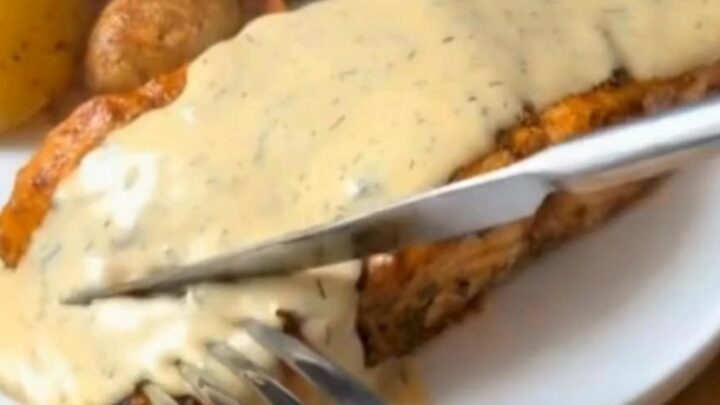
- Plating and servingRemove the baking sheet from the oven and allow the salmon to rest for 5 minutes. Transfer the fillets and roasted vegetables to a serving plate. Spoon the creamy dill sauce generously over the salmon and serve immediately while warm.Look for The sauce should hold its shape when dolloped over the warm fish.Tip Resting the fish ensures the juices redistribute, keeping every bite tender and moist.
At this final stage, the food should be ready to be moved to the plate. The salmon should be moist and flaky, while the roasted vegetables should be vibrant and well-seasoned.
When you add the creamy dill sauce, it should sit nicely on top of the fish without running off the plate. The overall presentation should be clean, with the colors of the vegetables and the fresh sauce making the dish look appealing and ready for immediate service.
Common mistakes
A common mistake is failing to preheat the oven properly, which leads to uneven roasting and soggy vegetables. Another error is overcrowding the baking sheet, which prevents the air from circulating and stops the vegetables from developing a golden, crisp exterior.
Ensure the salmon is placed in the oven only after the vegetables have had a head start, or you risk the fish becoming dry while the potatoes are still raw. Finally, neglecting to let the salmon rest for five minutes can result in the loss of juices when you cut into it.
How to tell it’s done
To determine if the salmon is fully cooked, look for a light pink, opaque color throughout the center of the fillet. Use a fork to gently press the thickest part of the fish; it should flake easily and separate along the natural white lines of the muscle.
For safety, use a food thermometer to ensure the thickest part of the salmon reaches an internal temperature of 145°F (63°C). Once this temperature is achieved, remove the tray from the oven immediately to prevent residual heat from overcooking the delicate flesh.
- Fish: 145°F (63°C) in the thickest part
Up next · Part 3 of 3
2 variations · storage & make-ahead · 3 answers · printable card
Tips, FAQ & printable recipe (Part 3)← Back to the ingredients (Part 1)