Dinner · Part 1 of 3: Ingredients
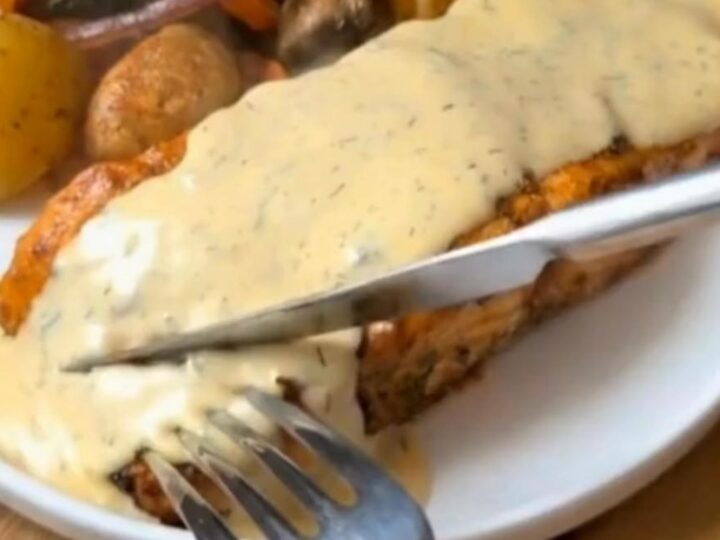
Herb-Crusted Salmon with Roasted Vegetables and Creamy Dill Sauce
- Prep
- Cook
- Total
- Serves
- 2
Discover the secret to a restaurant-quality meal in your own kitchen with this simple herb-crusted salmon. By combining fresh, vibrant herbs with perfectly roasted vegetables and a cooling, tangy dill sauce, this dish transforms basic ingredients into a sophisticated dinner.
It is the ideal method for busy evenings when you want something that feels special without requiring hours of effort or complex techniques. Follow these steps to achieve a perfectly flaky finish every single time you cook this classic combination.
This herb-crusted salmon recipe focuses on simplicity and high-quality preparation. By roasting the salmon alongside baby potatoes and broccoli, you create a cohesive, one-pan meal that minimizes cleanup. The crust provides a fragrant, savory layer that protects the delicate flesh of the fish, while the creamy dill sauce adds a bright, herbaceous note that cuts through the richness.
Whether you are cooking for a weeknight dinner or a casual weekend gathering, this recipe offers a reliable way to prepare a balanced, flavorful plate that highlights the natural sweetness of the salmon and the earthiness of the roasted vegetables.
Ingredients
Main
- 2 salmon fillets, skin-on or off
- 1 lb baby potatoes, halved
- 2 cups broccoli florets
Crust
- 2 tbsp fresh mixed herbs, finely chopped
Sauce
- 1/2 cup creamy dill sauce, store-bought or made ahead
Why this recipe works
Roasting salmon at a moderate temperature allows the heat to penetrate evenly, resulting in a moist, tender fillet that does not dry out. The herb crust acts as a protective barrier, keeping the internal juices trapped while infusing the fish with aromatic oils from the fresh greenery. This approach ensures the salmon remains flaky and succulent, avoiding the common pitfalls of overcooking or uneven searing that often occur with stovetop methods.
Cooking the vegetables on the same sheet pan allows them to soak up the juices released by the salmon during the roasting process, enhancing their natural flavor.
The high heat of the oven creates a caramelized exterior on the potatoes and a crisp-tender texture on the broccoli, providing a satisfying crunch that contrasts beautifully with the soft, delicate flakes of the fish. This method simplifies the cooking process by synchronizing the timing of the proteins and sides.
Notes and substitutions
When selecting salmon, look for fillets that appear bright and vibrant with a firm texture. If the salmon has the skin on, it can help hold the fillet together during the roasting process, though skinless fillets work just as well. For the herbs, a combination of parsley, dill, and chives works perfectly, though any tender fresh herb can be used. Ensure the herbs are dried thoroughly after washing to prevent them from steaming instead of roasting.
The choice of equipment is minimal, but a heavy-duty, rimmed baking sheet is essential for even heat distribution. Avoid overcrowding the pan; if the vegetables are packed too tightly, they will steam instead of roast, resulting in a mushy texture.
If you find the salmon is cooking faster than the vegetables, simply move the fish to a cooler part of the oven or cover it loosely with foil to prevent the herbs from burning while the vegetables finish.
- baby potatoes: sweet potato cubes or chopped parsnips
- creamy dill sauce: a mix of Greek yogurt, fresh dill, and lemon juice
Equipment
- baking sheet
- spatula
- serving plate
- fork
Up next · Part 2 of 3
3 steps · 25 min of cooking · what to look for at each stage
Step-by-step instructions (Part 2)