Dinner · Part 3 of 3: Tips & recipe card
Guinness Onion Garlic Butter Chuck Roast: Easy Slow Cooker Tips, FAQ & printable recipe
- Prep
- Cook
- Total
- Serves
- 6
Tips for success
For the best flavor, use a good-quality stout—Guinness is the classic choice, but any dark beer with roasted notes will work. If you want a thicker gravy, mix 2 tablespoons of cornstarch with 2 tablespoons of cold water and stir it into the liquid during the last 30 minutes of cooking.
Let it bubble and thicken before serving. You can also strain the gravy and reduce it in a saucepan for a more concentrated sauce, but the slow cooker version is already rich enough for most tastes.
To make the cowboy butter ahead, mix softened butter with minced garlic, chopped fresh herbs, and a pinch of salt. Roll it into a log using plastic wrap, chill it, and slice off medallions as needed.
The butter keeps in the fridge for up to a week or in the freezer for a month. If you're using frozen pearl onions, there's no need to thaw them first—just add them straight to the pot. They'll cook perfectly in the time it takes the roast to become tender.
Variations
- Add Mushrooms: Add 8 ounces of sliced cremini mushrooms along with the onions. They'll soak up the stout and butter, adding an earthy depth that pairs beautifully with the beef.
- Spicy Kick: Add 1 teaspoon of smoked paprika and 1/2 teaspoon of cayenne pepper to the cowboy butter before placing it on the roast. The heat balances the richness and adds a smoky layer.
- Herb Swap: Replace the herbs in the cowboy butter with 1 teaspoon of dried thyme and 1 teaspoon of dried rosemary. These classic roast herbs complement the stout's malty notes.
- Vegetable Addition: Add 3 large carrots, cut into 2-inch chunks, and 2 celery stalks, sliced, along with the onions. They'll become tender and sweet as they cook, making it a one-pot meal.
Storage and make-ahead
- Fridge
- Store in an airtight container for up to 4 days. The gravy will thicken when chilled; add a splash of broth when reheating.
- Freezer
- Freeze in a freezer-safe container for up to 3 months. Thaw overnight in the fridge before reheating.
- Reheat
- Reheat gently on the stovetop over medium-low heat, stirring occasionally, until hot. Add a little beef broth if the gravy is too thick.
Store leftover shredded beef and gravy in an airtight container in the refrigerator for up to 4 days. The flavors will continue to meld, and the gravy may thicken as it cools. Reheat gently on the stovetop or in the microwave, adding a splash of beef broth or water if needed to loosen the gravy. The beef also freezes well for up to 3 months; thaw overnight in the refrigerator before reheating.
You can assemble the entire dish in the slow cooker insert the night before: place the roast, onions, stout, and butter in the insert, cover, and refrigerate. In the morning, simply place the insert into the slow cooker base and set it to cook.
If you're using a ceramic insert, let it sit at room temperature for 30 minutes before heating to avoid cracking. The cowboy butter can be made up to a week ahead and kept refrigerated, so you can have everything ready to go.
Serving ideas
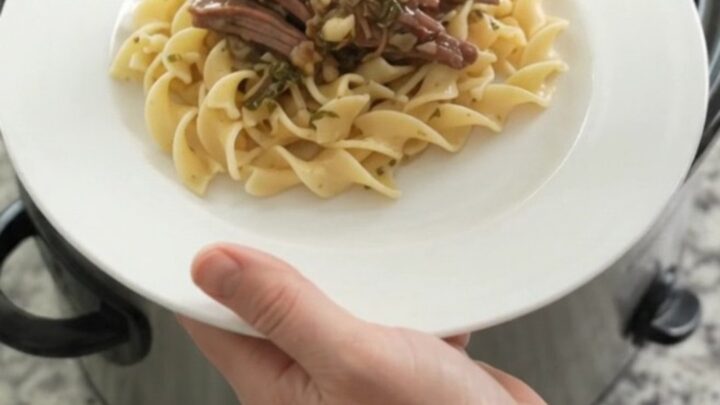
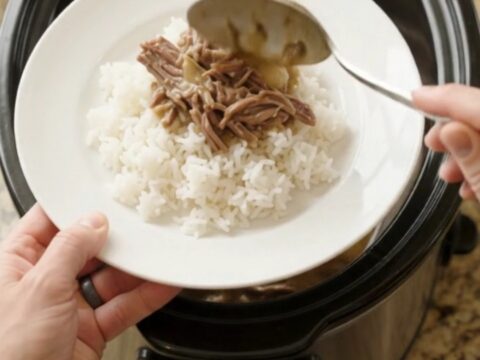
This roast is best served over a bed of warm buttered egg noodles, which soak up the rich gravy beautifully. You can also serve it over mashed potatoes, creamy polenta, or alongside crusty bread for dipping. The pearl onions are a delicious bonus—they're sweet, tender, and infused with the stout and butter flavors. For a complete meal, add a simple green salad or steamed green beans on the side.
For a festive presentation, shred the beef and pile it high on a platter, then spoon the onions and gravy over the top. Sprinkle with fresh chopped parsley for a pop of color.
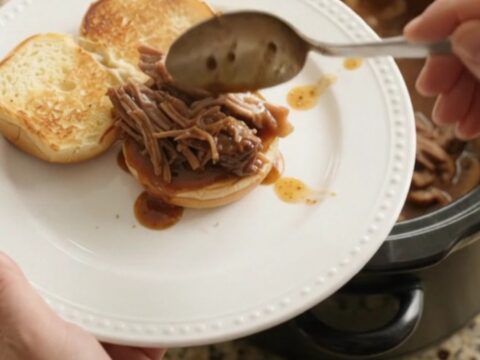
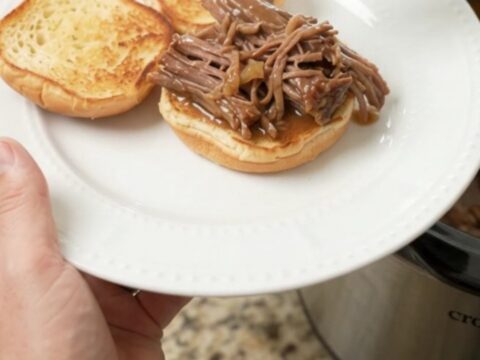
Leftovers make incredible sandwiches—pile the beef on toasted rolls with a little horseradish or pickled onions. You can also use the leftover gravy as a sauce for roasted vegetables or potatoes. This recipe is versatile and forgiving, so don't be afraid to make extra.
Frequently asked questions
Can this recipe be made without alcohol?
Why is chuck roast the best cut for this recipe?
Can the cooking time be shortened?
How should the leftovers be reheated?
Can this recipe be doubled?
Guinness Onion Garlic Butter Chuck Roast: Easy Slow Cooker
Ingredients
- 3 1/2 lb beef chuck roast
- 1 lb pearl onions, peeled
- 1 bottle (12 oz) Guinness stout
- 4 tbsp cowboy garlic butter, cut into medallions
- 12 oz buttered egg noodles, for serving
Instructions
- Place the beef chuck roast in the center of a 7-quart slow cooker. Scatter the peeled pearl onions around the roast, tucking some underneath and some on top. Pour the Guinness stout over the roast and onions, allowing it to pool in the bottom of the slow cooker.
- Place the four medallions of cowboy garlic butter evenly across the top of the roast. They will melt and baste the meat as it cooks, infusing the gravy with garlic and herb flavor.
- Cover the slow cooker and cook on LOW for 8 to 10 hours, or on HIGH for 5 to 6 hours, until the roast is fall-apart tender. The meat should shred easily with a fork and the onions should be soft and caramelized in the stout gravy. Let it rest for 3 minutes before slicing.
- Turn off the slow cooker and let the roast rest in the hot liquid for at least 10 minutes. This allows the juices to redistribute throughout the meat, keeping it moist and tender. After resting, the internal temperature should read at least 145°F (63°C) for food safety.
- Using two forks, shred the roast directly in the slow cooker, mixing it with the onions and gravy. The meat should pull apart into thick, juicy strands. Stir gently to coat every piece with the rich stout gravy.
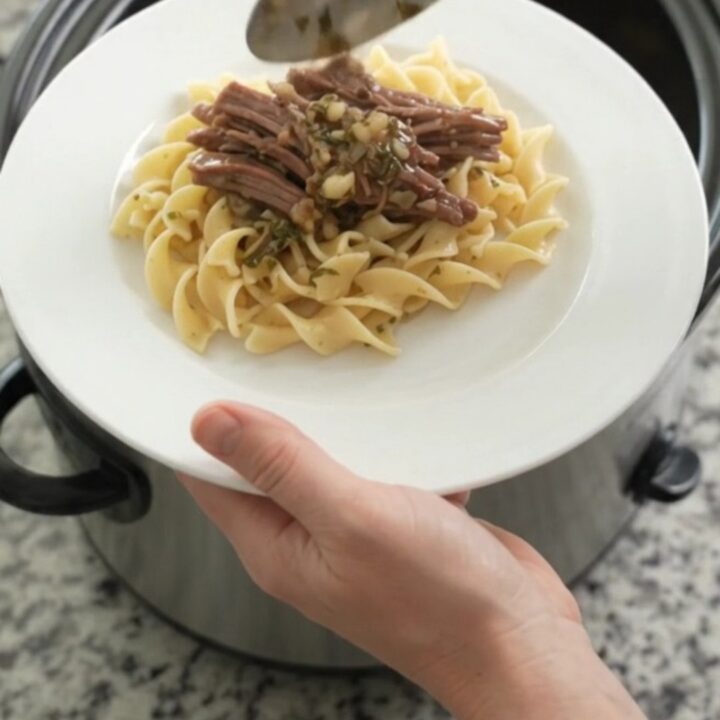
- Spoon the hot buttered egg noodles onto serving plates. Top with a generous portion of the shredded beef and onions, and ladle the garlic-butter gravy over everything. Serve immediately while hot.
Estimated nutrition per serving
- Calories
- 680
- Protein
- 55 g
- Carbohydrates
- 30 g
- Fat
- 35 g
Next recipe
Slow-Cooker Guinness Onion Dijon Chuck Roast
See the recipe → →This recipe is based on a short cooking video and is published under the pen name Clara Weller. It was checked before publication, but errors can slip through. Nutrition, when shown, is an estimate. Read more in our editorial policy and on our food safety page.
More recipes to try
Three-Packet Brown Gravy Chuck Roast: Easy Crockpot Dinner
Total time: 8 h 10 min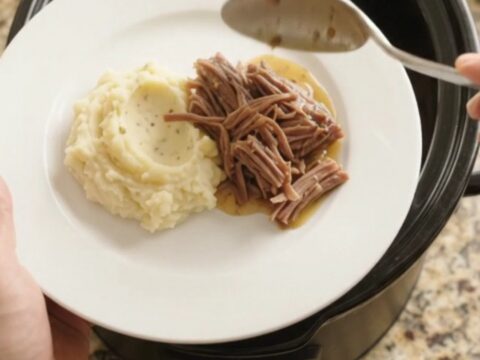
Slow-Cooker Guinness Onion Butter Chuck Roast
Total time: 8 h 10 min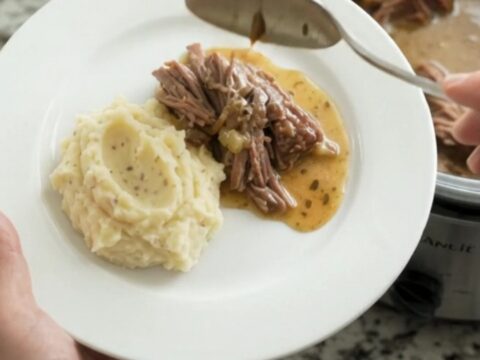
Three-Packet Butter Chuck Roast: 5-Ingredient Slow Cooker Dinner
Total time: 8 h 20 min
Three-Packet Dijon Cream Chuck Roast (Slow Cooker)
Total time: 8 h 20 min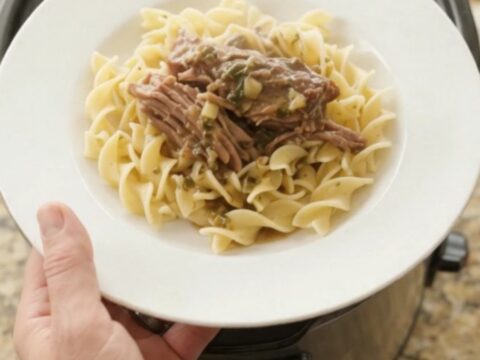
Three-Packet Garlic Butter Chuck Roast
Total time: 8 h 20 min