Dinner · Part 1 of 3: Ingredients
Slow-Cooker Guinness Onion Dijon Chuck Roast
- Prep
- Cook
- Total
- Serves
- 6
This Slow-Cooker Guinness Onion Dijon Chuck Roast is the ultimate set-it-and-forget-it dinner. A well-marbled chuck roast turns meltingly tender in a rich, malty gravy made with Guinness, pearl onions, sour cream, and whole-grain Dijon.
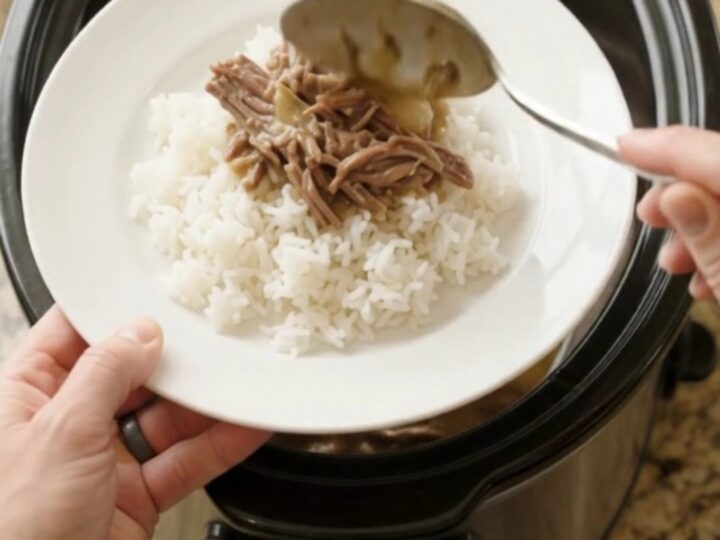
Just dump everything into the slow cooker in the morning, and by evening you'll have a hearty, comforting meal that tastes like you simmered it all day on the stove. Serve it over steamed rice or with crusty bread to soak up every last bit of the velvety sauce.
This recipe celebrates the beauty of low-and-slow cooking. Chuck roast is a tough, flavorful cut that becomes incredibly tender when braised for hours. The Guinness adds deep, roasty notes, while the pearl onions turn sweet and soft.
The sour cream and Dijon create a creamy, tangy gravy that clings to every strand of beef. It's a one-pot wonder that requires minimal prep and delivers maximum flavor. Perfect for busy weeknights or lazy weekends, this roast is sure to become a family favorite.
Ingredients
- 3 1/2 lb beef chuck roast
- 1 cup pearl onions, peeled
- 1 cup Guinness stout
- 1/2 cup sour cream
- 2 tbsp whole-grain Dijon mustard
- 1 cup au jus
Why this recipe works
The magic of this dish lies in the slow cooker's ability to break down the collagen in chuck roast, transforming a tough cut into fork-tender perfection.
The low heat and long cooking time allow the connective tissue to melt into gelatin, creating a rich, unctuous texture that can't be rushed. The Guinness adds complexity and depth, while the sour cream and Dijon cut through the richness with a bright, tangy note.
The layering method is key: placing the roast in the center and surrounding it with onions ensures even cooking and flavor distribution. Pouring the Guinness around, not over, the toppings keeps the sour cream and mustard on top, where they slowly melt into the gravy. The result is a cohesive, deeply flavorful sauce that tastes like it simmered for hours—because it did, with almost no effort.
Notes and substitutions
Chuck roast is the ideal cut for this recipe because it has plenty of marbling and connective tissue, which breaks down during long cooking. Look for a roast that is well-marbled and about 3 1/2 pounds.
Pearl onions add a mild, sweet flavor and a pretty presentation, but you can substitute a chopped yellow onion if needed. Whole-grain Dijon provides texture and a robust mustard flavor; smooth Dijon works in a pinch.
Guinness is a dry Irish stout that adds a roasted, slightly bitter note that balances the creaminess. If you prefer not to use alcohol, replace it with beef broth and add a teaspoon of molasses for color and depth. Au jus can be found in jars near the gravy section of most supermarkets; beef broth is a fine substitute. Sour cream can be swapped with plain Greek yogurt, though the flavor will be tangier.
- Guinness stout: Use any dark stout or porter, or substitute with beef broth for a non-alcoholic version.
- Sour cream: Plain Greek yogurt can replace sour cream, but the sauce will be slightly tangier.
- Whole-grain Dijon mustard: Smooth Dijon mustard works, but the texture will be less rustic.
- Au jus: Use beef broth with a splash of Worcestershire sauce if you don't have au jus.
Equipment
- 6-quart slow cooker
- Tongs
- Measuring cups
- Measuring spoons
- Serving spoon
- Cutting board
- Chef's knife
Up next · Part 2 of 3
5 steps · 8 h of cooking · what to look for at each stage
Step-by-step instructions (Part 2)