Dinner · Part 2 of 3: Instructions
Guinness Onion Brown Gravy Pork Shoulder: Slow-Cooker Pulled Pork Step-by-step instructions
- Prep
- Cook
- Total
- Serves
- 8
Before you start
Before cooking, pat the pork shoulder dry with paper towels and trim any excess fat if desired. Peel the pearl onions if using fresh; to make peeling easier, blanch them in boiling water for a minute, then slip off the skins.
Measure out the Guinness and gravy. Have the butter ready. No need to brown the meat first—the slow cooker does all the work. Set out a 6-quart slow cooker and a cutting board for shredding later.
Ingredients at a glance (5)
- 4 lb boneless Boston butt pork shoulder roast
- 2 cups peeled white pearl onions
- 1 bottle (12 oz) Guinness draught stout
- 2 cups rich brown gravy
- 4 tbsp unsalted butter, cut into pats
Instructions
Layer and Cook
- Layer the RoastPlace the pork shoulder roast in the center of the slow cooker. Scatter the pearl onions around the roast. Pour the Guinness stout over the meat and onions, then pour the brown gravy over the top. Dot the butter pats over the surface.Look for The roast sits in a dark, aromatic liquid with onions scattered around.Tip For even cooking, choose a roast that fits comfortably in your slow cooker without touching the sides.
- Cover and Cook LowCover the slow cooker and cook on low for 8 to 10 hours, until the pork is fork-tender and easily pulls apart. The internal temperature should register at least 145°F (63°C), but for shredding, cook until it reaches 200°F (93°C) for best texture. Let it rest for 3 minutes before slicing.Look for The liquid is gently bubbling and the meat is tender when pierced.Safe temperature 145°F (63°C) internal temperature (steaks, chops and roasts)Tip Resist lifting the lid during cooking—each peek adds 20 minutes of cook time.
At the end of this phase, the slow cooker should be filled with a dark, aromatic liquid, and the pork should be submerged. The onions are scattered around, and the butter has melted into the sauce.
The cooker is bubbling gently, and the aroma of stout and gravy fills the kitchen. The pork is still whole but will be tender enough to shred easily.
Shred and Coat
- Shred the PorkTransfer the roast to a cutting board. Let it rest for at least 3 minutes, then use two forks to shred the meat into bite-sized ribbons. Discard any large pieces of fat. Return the shredded pork to the slow cooker and stir gently to coat with the gravy.Look for The meat pulls apart easily and is moist and tender.Tip If the gravy seems thin, simmer it on the stovetop for a few minutes to reduce.
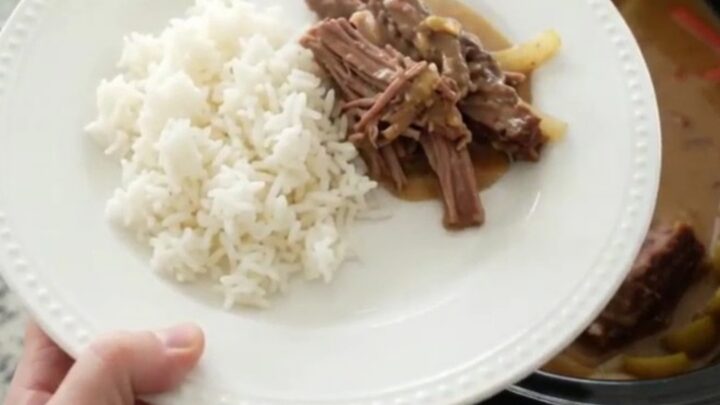
The pork has been transferred to a cutting board and rested. It pulls apart into moist, tender ribbons with little effort. The gravy in the slow cooker is rich and glossy, and the onions are soft and sweet. When returned to the pot, the shredded meat soaks up the sauce, turning every bite flavorful.
Serve
- Serve on Brioche BunsToast the brioche slider buns, if using. Pile the shredded pork and onions onto the buns and spoon extra gravy over the top. Serve hot.Look for The pork is glistening with gravy and the buns are toasted.Tip For a fork-and-knife meal, skip the buns and serve over mashed potatoes or egg noodles.
The shredded pork is piled onto toasted brioche buns, with extra gravy spooned over the top. The meat is glistening and tender, and the buns are crisp. The dish looks like a gourmet pub sandwich and smells irresistibly savory. Serve immediately while hot.
Common mistakes
A common mistake is lifting the lid to check on the roast, which releases heat and extends the cooking time. Trust the process and keep the lid on. Another issue is using a lean cut like pork loin, which will dry out—stick with shoulder.
Overcrowding the slow cooker can also cause uneven cooking, so choose a roast that fits comfortably. Finally, don't skip the rest time after cooking; it keeps the meat juicy.
How to tell it’s done
The pork is done when it is fork-tender and easily shreds with a fork. The internal temperature should register at least 145°F (63°C) for food safety, but for optimal shredding, cook until it reaches 200°F (93°C).
The meat will have a rich, dark color and the gravy will be thick and glossy. If the meat resists shredding, cook for another 30 minutes and check again. Let the roast rest for at least 3 minutes before shredding to allow the juices to redistribute.
- Steaks, chops and roasts: 145°F (63°C) in the thickest part, then a 3-minute rest
Up next · Part 3 of 3
4 variations · storage & make-ahead · 5 answers · printable card
Tips, FAQ & printable recipe (Part 3)← Back to the ingredients (Part 1)