Dinner · Part 1 of 3: Ingredients
Grilled Bone-In Ribeye Steak with a Perfect Charred Crust
- Prep
- Cook
- Total
- Serves
- 2
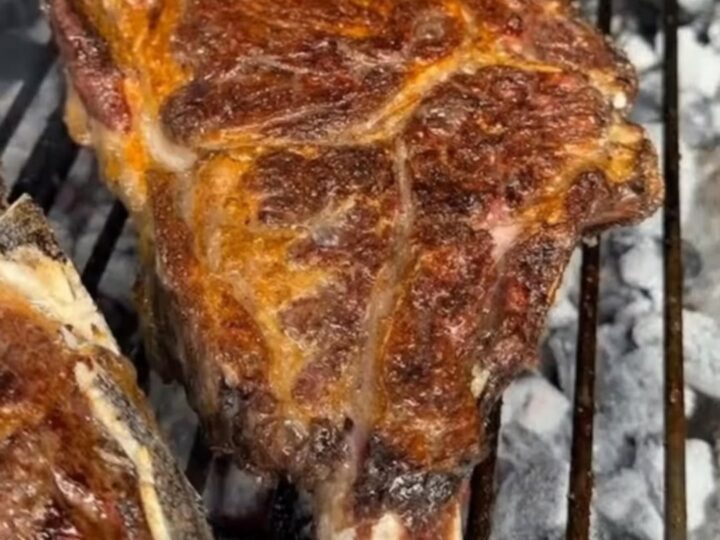
A thick bone-in ribeye needs little more than salt, pepper and a hot grill to become the best steak cooked at home. The bone adds flavor and helps the meat stay juicy while the exterior builds a deep, crackling crust. This recipe keeps the method simple: dry the surface well, season generously, grill over two heat zones, and pull the steak at exactly the right temperature. A short rest and a slice against the grain finish the job.
Ribeye is the cut to reach for when the goal is maximum flavor from a plain grill fire. Heavy marbling melts as the steak cooks, basting the meat from within, and the bone slows the heat near its side so the interior stays rosy while the surface chars. This version leans on that natural richness rather than a complicated marinade: a dry surface, generous kosher salt, cracked pepper and a two-zone fire.
Everything happens in about twenty-five minutes of actual cooking, most of it hands-off. An instant-read thermometer is the only tool that matters here — it turns guesswork into repeatability, so the steak comes off the grill at the same point every time. Slice against the grain and serve immediately, while the crust still crackles.
Ingredients
- 2 lb bone-in ribeye steak (1 large or 2 smaller), about 1 1/2 inches thick
- 2 tsp kosher salt
- 1 tsp coarsely ground black pepper
- 1 tbsp vegetable oil
Why this recipe works
The crust on a great grilled steak is pure chemistry: high heat plus a dry surface triggers the Maillard reaction, browning proteins and sugars into hundreds of new flavor compounds. Every step that precedes the sear protects that reaction.
Blotting with paper towels removes surface water that would otherwise have to evaporate before browning can start, and coarse salt draws just enough moisture to the outside to concentrate flavor without turning the meat briny. Because ribeye carries abundant marbling, those intramuscular fat streaks render over direct heat and baste the meat continuously, which is why ribeye tolerates a hard sear better than leaner cuts like sirloin or strip.
Two heat zones solve the central problem of grilling a thick steak: the outside chars before the inside finishes. Direct heat builds the crust; the cooler side finishes the center gently and rescues the steak from flare-ups.
Pulling the meat at 145°F (63°C) — the temperature the USDA recommends for whole cuts of beef — leaves room for carryover cooking during the rest, which nudges the interior a few degrees higher without any further flame. The rest matters as much as the sear: cutting straight off the grill spills the juices onto the board, while a five-minute pause lets them settle back into the muscle so every slice stays moist.
Notes and substitutions
Choose a bone-in ribeye at least 1 1/2 inches thick; thinner steaks race to well done before a crust can form. A single steak around 2 pounds feeds two generously. Look for even marbling and bright red flesh with creamy white fat. Kosher salt is worth seeking out — its large flakes distribute evenly and cling to the surface better than fine table salt, which can over-salt the crust. Coarsely ground black pepper adds texture; grind it fresh if possible, since pre-ground pepper loses its bite quickly on the shelf.
Any grill works: gas for convenience and easy zone control, charcoal for smoke and hotter coals. Long-handled tongs outperform a fork, which punctures the crust and releases juice. An instant-read thermometer is the single most useful purchase for grilling; insert it sideways into the thickest part of the muscle.
If no grill is available, a cast-iron skillet over high heat works well — see the variation below. Neutral oil such as vegetable or avocado stands up to direct flame; delicate oils scorch and turn acrid.
- bone-in ribeye steak: Boneless ribeye works; reduce direct-heat time by about 1 minute per side and watch the thermometer closely.
- kosher salt: Fine sea salt can be used; use about half the amount so the crust does not over-salt.
- vegetable oil: Avocado or grapeseed oil handles high heat equally well; avoid extra-virgin olive oil over direct flame.
- gas grill: A charcoal grill adds smoke flavor; bank the coals to one side to create the two-zone setup.
Equipment
- gas or charcoal grill with two heat zones
- instant-read thermometer
- long-handled tongs
- paper towels
- cutting board
- chef's knife
- basting brush
Up next · Part 2 of 3
8 steps · 12 min of cooking · what to look for at each stage
Step-by-step instructions (Part 2)