Dinner · Part 3 of 3: Tips & recipe card
Grated Onion Meatball Stew (Sulu Köfte) Tips, FAQ & printable recipe

- Prep
- Cook
- Total
- Serves
- 4
Tips for success
For the most flavorful meatballs, let the onion-garlic mixture sit for a few minutes before adding the beef. This allows the flavors to meld. When shaping the meatballs, keep them uniform in size so they cook evenly.
If the mixture feels too sticky, wet your hands with cold water to make rolling easier. You can also refrigerate the mixture for 15 minutes to firm it up.
To make the stew even more robust, you can add a bay leaf or a pinch of red pepper flakes along with the tomato paste. For a thicker broth, mash a few of the potato cubes against the side of the skillet before serving.
If you prefer a smoother sauce, you can puree a portion of the vegetables and stir it back in. Taste and adjust the seasoning just before serving.
Variations
- Spicy Sulu Köfte: Add 1/2 teaspoon of red pepper flakes or a pinch of cayenne pepper to the meatball mixture, and stir a teaspoon of Turkish biber salçası (spicy pepper paste) into the tomato broth for extra heat.
- Vegetable-Packed Stew: Add a cup of frozen peas or green beans along with the potatoes and carrots. You can also add a handful of chopped spinach during the last 5 minutes of cooking.
- Lamb Meatballs: Substitute ground lamb for the beef. Lamb pairs beautifully with the cumin and tomato. You may need to drain a little excess fat after searing if the lamb is very fatty.
- Herb-Infused Broth: Add a bay leaf and a sprig of fresh thyme to the broth while simmering. Remove before serving. Or stir in a teaspoon of dried oregano along with the tomato paste.
Storage and make-ahead
- Fridge
- Store leftovers in an airtight container in the refrigerator for up to 3 days. Reheat gently on the stovetop, adding a splash of water if needed.
- Freezer
- The stew freezes well for up to 3 months. Cool completely, then transfer to a freezer-safe container. Thaw overnight in the refrigerator before reheating.
- Reheat
- Reheat in a saucepan over medium-low heat, stirring occasionally, until bubbling and hot throughout. Add a little water or broth to loosen the sauce if needed.
Store any leftovers in an airtight container in the refrigerator for up to 3 days. The flavors will continue to develop. To reheat, place the stew in a saucepan over medium-low heat, adding a splash of water or broth if it has thickened too much. Stir occasionally until heated through.
You can prepare the meatballs up to a day in advance and keep them covered in the refrigerator. You can also chop the vegetables ahead of time and store them in a sealed container.
When ready to cook, sear the meatballs and proceed with the recipe. The stew itself can be made fully and reheated gently, though the potatoes may soften further.
Serving ideas
Serve the stew in deep bowls with plenty of broth. It pairs beautifully with crusty bread for dipping, or over a bed of rice or bulgur pilaf. A dollop of plain yogurt on top adds a cool, tangy contrast, though it's optional. A simple green salad with lemon vinaigrette makes a light and fresh side.
For a more substantial meal, add a side of warm pita bread or a simple cucumber and tomato salad. The stew is also delicious with a sprinkle of sumac or a drizzle of olive oil before serving.
Leftovers can be turned into a quick lunch by reheating and serving with a fried egg on top. Enjoy this comforting dish any night of the week.
Frequently asked questions
Can this stew be made ahead of time?
Why are the meatballs falling apart?
Can this recipe be made gluten-free?
Can this be cooked in a slow cooker?
What is the best way to grate the onion?
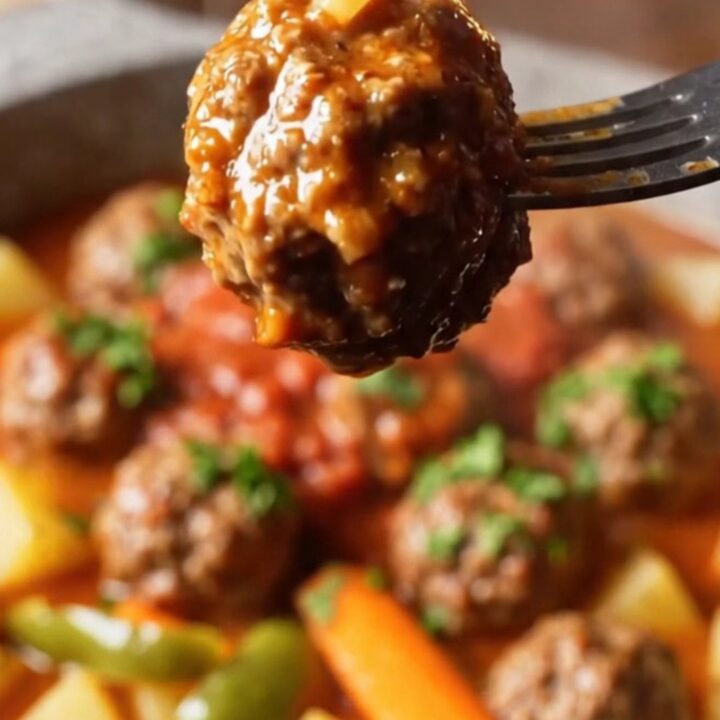
Grated Onion Meatball Stew (Sulu Köfte)
Ingredients
- 1 lb ground beef (80% lean)
- 1 onion, grated
- 1 clove garlic, minced
- 2 tbsp plain breadcrumbs
- 1/2 tsp ground cumin
- 1/4 tsp black pepper, freshly ground
- 1 tsp salt, divided
- 2 tbsp olive oil
- 2 Yukon Gold potatoes, peeled and cubed
- 2 carrots, sliced
- 2 green bell peppers, sliced
- 1 1/2 tbsp tomato paste
- 2 cups warm water
- Fresh parsley, chopped for garnish, to taste
Instructions
- In a large bowl, combine the ground beef, grated onion, minced garlic, breadcrumbs, cumin, black pepper, and 1/2 teaspoon of the salt. Use your hands to knead the mixture until everything is evenly distributed and the mixture feels slightly sticky. Roll the mixture between your palms into bite-sized meatballs, about 1 inch in diameter. Set them aside on a plate.
- Heat the olive oil in a deep skillet over medium heat. Carefully place the meatballs in the skillet in a single layer. Sear for 4 minutes, shaking the pan occasionally to turn them, until they are evenly browned on all sides. Do not overcrowd the pan; work in batches if necessary. Remove the meatballs to a plate and set aside.
- To the same skillet, add the cubed potatoes, sliced carrots, and sliced green peppers. Stir to coat them in the oil and any browned bits left from the meatballs. Cook for 2-3 minutes, stirring occasionally, until the vegetables begin to soften slightly.
- In a small bowl, whisk the tomato paste into the warm water until fully dissolved. Stir in the remaining 1/2 teaspoon of salt. Pour the tomato broth over the vegetables in the skillet.
- Return the meatballs to the skillet, nestling them into the vegetables and broth. Bring the liquid to a gentle simmer. Cover the skillet with a lid and reduce the heat to medium-low. Simmer for 20 minutes, or until the potatoes are fork-tender and the meatballs are cooked through.
- Remove the skillet from the heat. Taste the broth and adjust seasoning with additional salt or pepper if needed. Ladle the stew into deep bowls, making sure each serving gets meatballs, vegetables, and plenty of broth. Garnish with fresh chopped parsley and serve hot.
Estimated nutrition per serving
- Calories
- 420
- Protein
- 28 g
- Carbohydrates
- 30 g
- Fat
- 22 g
Next recipe

Torched Wagyu on Crispy Garlic Rice: 8-Second Blowtorch Bite
See the recipe → →This recipe is based on a short cooking video and is published under the pen name Clara Weller. It was checked before publication, but errors can slip through. Nutrition, when shown, is an estimate. Read more in our editorial policy and on our food safety page.
More recipes to try

Golden Crispy Chicken Shawarma Wrap with Garlic Toum
Total time: 40 min
Cheesy Chicken Alfredo Garlic Bread
Total time: 45 min
Crispy Pan-Fried Beef Tacos with Fresh Pico and Creamy Taco Sauce
Total time: 45 min
Crispy Oven-Baked Chicken Tacos with Creamy Cilantro Crema
Total time: 22 min
Spicy Honey Chipotle Garlic Fried Chicken Sandwich
Total time: 45 min