Desserts · Part 1 of 3: Ingredients
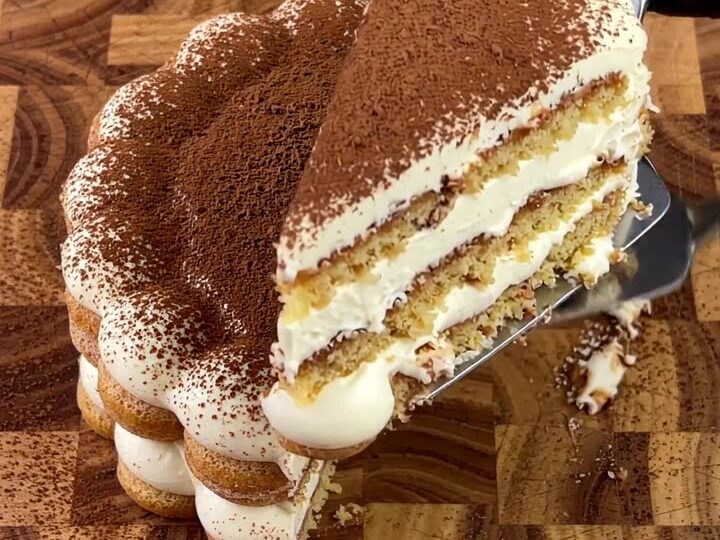
Golden Skillet Tiramisu Cake with Espresso Mascarpone
- Prep
- Cook
- Total
- Serves
- 8
This skillet tiramisu cake takes the classic Italian dessert and turns it into a warm, golden, bubbling skillet cake. Espresso-soaked ladyfingers are layered with a creamy mascarpone filling, then baked until the top is golden and the edges are rich and bubbling.
Served hot with a dusting of cocoa, each thick wedge is a comforting blend of coffee, cream, and soft cake. It’s a showstopping dessert that comes together in under an hour, perfect for a cozy gathering or a special weeknight treat.
Tiramisu meets skillet cake in this inventive dessert that’s as beautiful as it is delicious. Instead of a chilled, no-bake dessert, this version is baked in a cast-iron skillet, giving it a golden, slightly crisp top and a warm, creamy interior.
The ladyfingers soak up the espresso and soften into a cake-like texture, while the mascarpone filling bakes into a rich, custardy layer. Finished with a dusting of cocoa, this cake is served hot, straight from the skillet, in thick, satisfying wedges. It’s a dessert that feels both familiar and new, and it’s sure to become a favorite.
Ingredients
- 24 ladyfingers (savoiardi)
- 1 1/2 cups freshly brewed espresso, cooled
- 16 oz mascarpone cheese, at room temperature
- 3/4 cup granulated sugar
- 3 large eggs, separated
- 1 tsp vanilla extract
- 1 cup all-purpose flour
- 1 1/2 tsp baking powder
- 1/4 tsp fine salt
- 4 tbsp unsalted butter, melted, plus more for the skillet
for finishing
- 2 tbsp unsweetened cocoa powder, for dusting
Why this recipe works
The method of dipping ladyfingers in espresso and layering them with mascarpone is the heart of tiramisu. When baked, the ladyfingers absorb the espresso and release their starch, creating a soft, cake-like texture that contrasts beautifully with the creamy mascarpone.
The heat of the skillet helps the flavors meld and intensify, turning the classic dessert into a warm, comforting cake.
Baking in a cast-iron skillet ensures even heat distribution, which helps the cake cook uniformly and develop a golden, slightly caramelized top. The skillet also retains heat, keeping the cake warm for serving, which enhances the rich, bubbling edges. The result is a dessert that is both rustic and elegant, with a texture that is uniquely satisfying.
Notes and substitutions
Mascarpone is a creamy Italian cheese that is essential to this recipe. It has a rich, tangy flavor and a smooth, spreadable texture. If you can’t find mascarpone, you can substitute an equal amount of full-fat cream cheese blended with a little heavy cream, but the flavor will be slightly different. For the best results, let the mascarpone come to room temperature before mixing.
Freshly brewed espresso is ideal for this recipe, but strong coffee works well too. Use a dark roast for the most robust coffee flavor. The ladyfingers should be dipped quickly in the espresso—just enough to moisten them without making them soggy.
If they are too wet, they will become mushy during baking. The cocoa powder for dusting should be unsweetened, and it adds a bitter contrast to the sweet, creamy filling.
- mascarpone: Use an equal amount of full-fat cream cheese blended with 2 tablespoons heavy cream for a similar tangy richness.
- espresso: Brew 1 1/2 cups of strong coffee using 3 tablespoons of finely ground dark roast coffee.
- ladyfingers: Substitute with 2 cups of coarsely crumbled sponge cake or pound cake, though the texture will be softer.
- unsalted butter: Use salted butter and reduce the added salt to a pinch.
Equipment
- 10-inch cast-iron skillet
- box grater
- mixing bowls
- whisk
- spatula
- measuring cups and spoons
- serrated knife
Up next · Part 2 of 3
7 steps · 25 min of cooking · what to look for at each stage
Step-by-step instructions (Part 2)