Dinner · Part 2 of 3: Instructions
Golden Potato Bazlama Flatbread: Tear-and-Share Comfort Step-by-step instructions
- Prep
- Cook
- Total
- Serves
- 6
Before you start
Before starting, gather all ingredients and equipment. Make sure the potatoes are peeled and cubed, the onion is finely chopped, and the dill is chopped. Measure the flour, yeast, sugar, and salt into a bowl. Warm the water to about 110°F (43°C).
Have the olive oil ready. Clear a floured surface for kneading and rolling. Prepare a clean kitchen towel for covering the dough. Have a large skillet and a spatula ready for cooking. If using a stand mixer, fit it with the dough hook for kneading.
Ingredients at a glance (13)
- 3 1/2 cups all-purpose flour
- 2 1/4 tsp instant yeast
- 1 tsp sugar
- 1 1/2 tsp salt
- 1 1/4 cups warm water (110°F/43°C)
- 2 tbsp olive oil
- 1 1/2 lb potatoes, peeled and cubed
- 1 medium onion, finely chopped
- 1/4 cup fresh dill, chopped
- 1 tsp paprika
- 1/2 tsp salt
- 1/4 tsp black pepper
- 1 tbsp melted butter
Instructions
Dough and Filling
- Make the doughIn a large bowl, whisk together the flour, instant yeast, sugar, and salt. Add the warm water and olive oil. Stir with a wooden spoon until a shaggy dough forms, then turn out onto a lightly floured surface and knead for 8–10 minutes until smooth and elastic. Place the dough in a lightly oiled bowl, cover with a clean towel, and let rise in a warm spot for about 1 hour, or until doubled in size.Look for The dough should be soft, smooth, and spring back when pressed with a finger.Tip If the dough is too sticky, add a little extra flour, one tablespoon at a time.
- Cook the potato fillingPlace the peeled and cubed potatoes in a medium saucepan and cover with cold water. Bring to a boil over high heat, then reduce to a simmer and cook for 12–15 minutes until fork-tender. Drain well and return to the pot. Mash the potatoes with a potato masher until mostly smooth. Add the chopped onion, fresh dill, paprika, salt, and black pepper. Stir to combine thoroughly. Set aside to cool slightly while you shape the dough.Look for The potatoes should be soft enough to mash easily, with no lumps.Tip Cool the filling slightly before using so it doesn't make the dough sticky.
At the end of this phase, the dough should be smooth, elastic, and doubled in size. The potato filling should be creamy and well-seasoned, with the onion softened and the dill fragrant. The kitchen will smell of yeast and herbs.
The dough should spring back when pressed with a finger, and the filling should hold its shape when scooped. This is the foundation for the flatbreads, so take time to get the texture right.
Shaping and Filling
- Divide and roll the doughOnce the dough has doubled, punch it down and turn it out onto a lightly floured surface. Divide the dough into 6 equal portions, about 4 ounces each. Roll each portion into a ball, then use a rolling pin to flatten each ball into a 6-inch round, about 1/4 inch thick. Keep the remaining dough covered with a towel while working.Look for Each round should be even in thickness to ensure even cooking.Tip If the dough springs back, let it rest for 5 minutes before rolling again.
- Fill and seal the flatbreadsPlace a generous scoop of the potato filling, about 1/4 cup, in the center of each dough round. Gather the edges of the dough up over the filling like a purse, pinching the top tightly to seal. Flatten the sealed bundle gently with your palm, then use a rolling pin to roll it into a smooth, round flatbread about 1/2 inch thick. Repeat with the remaining dough and filling.Look for The filling should be fully enclosed, with no tears in the dough.Tip Pinch the seams well to prevent the filling from leaking during cooking.
The dough rounds should be evenly rolled to 1/4 inch thick, and the filled flatbreads should be smooth and round, about 1/2 inch thick. The seams should be tightly pinched to prevent leaks. The flatbreads should feel soft and pliable. If any filling is visible, patch the dough with a small piece of extra dough. The shaped flatbreads can be placed on a floured surface, covered with a towel, while you cook them.
Cooking and Finishing
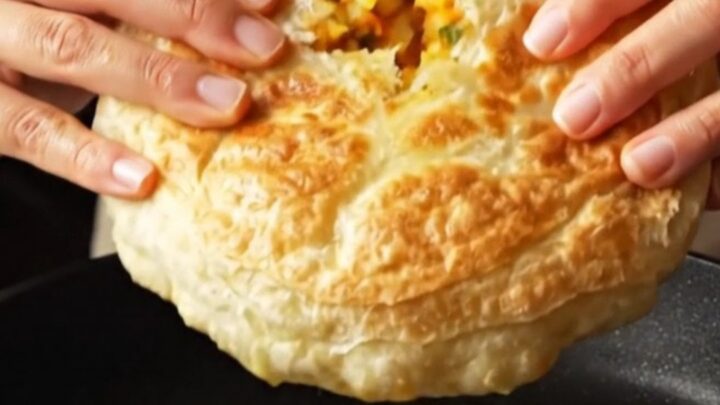
- Cook the flatbreadsHeat a dry, non-stick skillet over medium heat. Place one stuffed flatbread in the skillet and cook for 2–3 minutes until the bottom is golden and blistered. Flip with a spatula and cook the other side for another 2–3 minutes, until puffed and cooked through. Transfer to a plate and immediately brush the top with melted butter. Repeat with the remaining flatbreads, adjusting the heat if needed.Look for The flatbread should puff dramatically and have deep golden spots on both sides.Tip Do not overcrowd the skillet; cook one at a time for best results.
The flatbreads should be golden brown with blistered spots on both sides and puffed up in the center. When brushed with butter, they should glisten and smell rich and toasty. The filling should be hot and creamy. The flatbreads should be soft to the touch but slightly crisp on the outside. Serve immediately, while warm and steamy, for the best texture.
Common mistakes
One common mistake is overfilling the flatbreads, which makes them difficult to seal and can cause the filling to leak during cooking. Use about 1/4 cup of filling per flatbread. Another mistake is rolling the dough too thin, which can cause it to tear.
Roll to about 1/2 inch thickness. Not letting the dough rise enough will result in dense, heavy flatbreads; ensure it doubles in size. Cooking over too high heat can burn the outside before the inside is done—use medium heat and adjust as needed.
How to tell it’s done
The flatbreads are done when they are golden brown on both sides, puffed up, and cooked through. The internal temperature should reach at least 200°F (93°C) to ensure the dough is fully baked. When tapped on the bottom, they should sound hollow.
The filling should be hot and creamy. If the flatbreads are browning too quickly, reduce the heat to avoid burning the exterior while the inside remains undercooked. Let them rest for a minute before serving to allow the steam to settle.
Up next · Part 3 of 3
4 variations · storage & make-ahead · 5 answers · printable card
Tips, FAQ & printable recipe (Part 3)← Back to the ingredients (Part 1)