Dinner · Part 3 of 3: Tips & recipe card
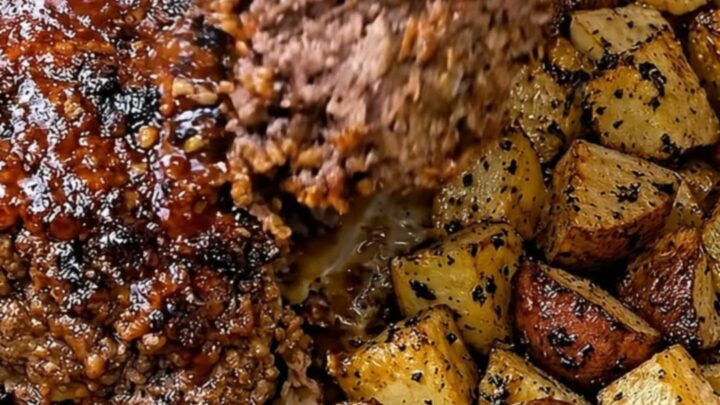
Glazed Beef Meatloaf and Roasted Potatoes Tips, FAQ & printable recipe
- Prep
- Cook
- Total
- Serves
- 6
Tips for success
To achieve the most consistent results, press the meatloaf mixture firmly into the pan to ensure it holds its shape during baking. This also helps in creating a smooth surface for the glaze to adhere to.
If you prefer a more intense flavor, consider adding a pinch of dried herbs like thyme or rosemary to the meat before shaping, which will infuse the beef with aromatic notes.
For those who enjoy a deeper, more complex flavor, ensure the glaze is applied evenly across the top, as this creates a protective layer that helps lock in the moisture during the roasting process. Always monitor the oven temperature to ensure it remains steady, as fluctuations can affect the cooking time and the final texture of both the meatloaf and the roasted potatoes.
Variations
- Herb-Crusted: Add fresh rosemary and thyme to the potato cubes before roasting to infuse them with a fragrant, earthy flavor that complements the beef.
- Root Vegetable Mix: Replace half of the potatoes with cubed carrots or parsnips for a sweeter, more colorful side dish that roasts beautifully alongside the meat.
Storage and make-ahead
- Fridge
- Keep leftovers in an airtight container for up to 3 days. Cool to room temperature for no more than 2 hours before refrigerating.
- Freezer
- Freeze slices individually for up to 2 months; thaw in the fridge before reheating.
- Reheat
- Reheat in a preheated oven at 350°F (175°C) until warmed through, or use the microwave for a quicker option.
Store any leftover meatloaf and potatoes in an airtight container in the refrigerator to maintain freshness. They will keep well for up to three days.
Ensure the food has cooled to room temperature for no more than 2 hours before placing it into the container to prevent excess condensation, which can affect the texture of the crispy potato crust when you decide to reheat it later.
You can prepare the meatloaf and potatoes in the pan up to 24 hours in advance and keep it covered in the refrigerator until you are ready to bake. This is an excellent way to save time on busy days while still enjoying a fresh, home-cooked meal that tastes just as good as if it were prepared immediately. Simply remove from the fridge and bake as directed.
Serving ideas
Serve the meatloaf in thick slices alongside a generous portion of the roasted potatoes. The contrast between the savory, tender meat and the crispy, golden potatoes creates a satisfying plate.
You can garnish the dish with a sprinkle of fresh herbs if desired, which adds a touch of brightness and color to the plate, making the meal look even more inviting and professional when served.
For a complete meal, consider pairing this dish with a simple green salad or steamed seasonal vegetables. The freshness of the greens balances the heartiness of the beef and potatoes, providing a well-rounded dining experience.
Ensure that each plate includes a slice of the glazed meatloaf and a portion of the potatoes to capture all the flavors developed during the slow roasting process in the oven.
Frequently asked questions
Can this be made ahead?
Why is the meatloaf falling apart?
How can the potatoes be made crispier?
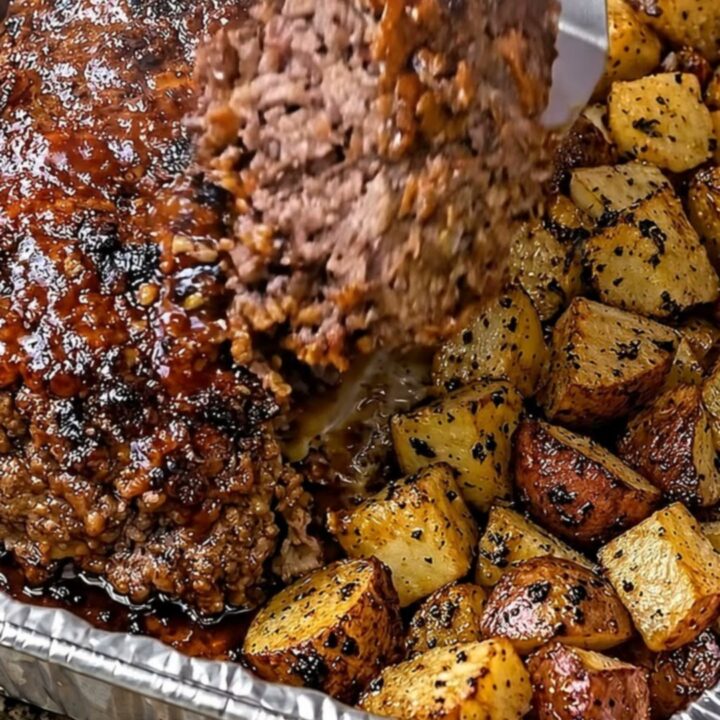
Glazed Beef Meatloaf and Roasted Potatoes
Ingredients
- 2 lbs ground beef
- 4 cups potatoes, cubed
Instructions
- Cut the potatoes into uniform cubes to ensure even roasting. Shape the ground beef into a loaf form directly in the baking pan, placing the potato cubes around the meat.
- Place the pan in the oven preheated to 375°F (190°C). Roast until the beef reaches an internal temperature of 160°F (71°C).
- Remove the pan from the oven and let the meatloaf rest for at least 10 minutes before slicing. This ensures the juices redistribute for a moist texture.
Estimated nutrition per serving
- Calories
- 420
- Protein
- 26 g
- Carbohydrates
- 20 g
- Fat
- 25 g
Next recipe

Slow Cooker Garlic Butter Chicken with Mashed Potatoes
See the recipe → →This recipe is based on a short cooking video and is published under the pen name Clara Weller. It was checked before publication, but errors can slip through. Nutrition, when shown, is an estimate. Read more in our editorial policy and on our food safety page.
More recipes to try

Slow Cooker Orange Herb Pork Chops with Honey Glaze
Total time: 4 h 20 min
Creamy Cheesy Chicken and Broccoli Casserole
Total time: 1 h
Crispy Pepperoni Pizza Quesadillas
Total time: 11 min
Creamy Cajun Sausage and Garlic Butter Spaghetti
Total time: 25 min
Garlic Butter Cajun Shrimp and Sausage Rice Skillet
Total time: 30 min