Breakfast · Part 2 of 3: Instructions
Giant Stuffed Nutella Croissant French Toast with Torched Sugar Crust Step-by-step instructions
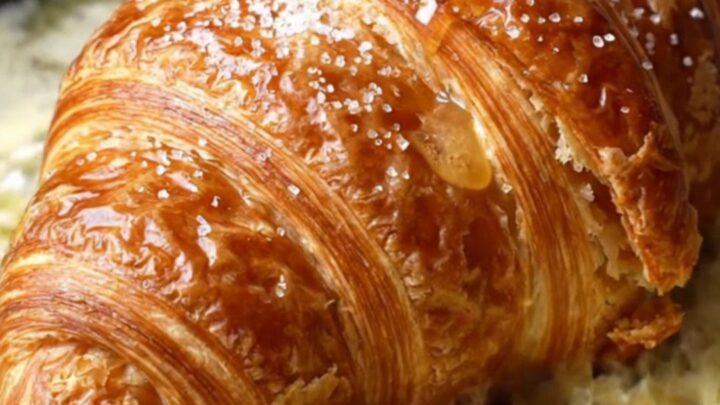
- Prep
- Cook
- Total
- Serves
- 2
Before you start
Before starting, gather all ingredients and equipment. Slice the strawberries and set them aside. In a shallow dish, whisk together the eggs, milk, cream, vanilla, and cinnamon.
Place the butter in a non-stick skillet and have a spatula ready. If you have a kitchen torch, keep it nearby. This recipe moves quickly once you start cooking, so having everything prepped and within reach ensures smooth execution.
Ingredients at a glance (10)
- 2 large all-butter bakery croissants
- 1/2 cup Nutella hazelnut spread
- 1/2 cup fresh sliced strawberries
- 2 large eggs
- 1/2 cup whole milk
- 1/4 cup heavy cream
- 1 tsp vanilla extract
- 1/2 tsp ground cinnamon
- 2 tbsp unsalted butter
- 2 tbsp granulated sugar
Instructions
Prep and Stuff
- Slice and Stuff the CroissantsUsing a serrated knife, slice each croissant horizontally through the middle, like opening a book. Spread 1/4 cup of Nutella on the inside of each croissant, covering both cut surfaces. Arrange the sliced strawberries evenly over the Nutella on the bottom half, then close the croissant and press gently to seal.Look for The croissant should be generously filled but still easy to close without squeezing out the filling.Tip Use day-old croissants if possible—they hold their shape better during soaking and frying.
- Make the CustardIn a shallow dish wide enough to fit a croissant, whisk together the eggs, whole milk, heavy cream, vanilla extract, and ground cinnamon until the mixture is smooth and slightly frothy. The custard should be well combined with no streaks of egg yolk.Look for The custard is a uniform pale tan color with a fragrant cinnamon aroma.Tip Whisk thoroughly so the cinnamon is fully dispersed, not floating on top.
After this phase, the croissants are sliced and filled with Nutella and strawberries, and the custard is whisked until smooth. The kitchen smells of cinnamon and vanilla.
The croissants are closed and ready for soaking, and the custard is a uniform tan color with no streaks. Check that the filling is evenly distributed and the croissants are not overstuffed, which could cause them to split during cooking.
Soak and Sear
- Soak the Stuffed CroissantPlace one stuffed croissant into the custard bath and let it soak for 20 seconds per side, using a spatula to gently press it down so the custard absorbs into the bread. Carefully lift it out, allowing any excess custard to drip back into the dish, and set it on a plate. Repeat with the second croissant.Look for The croissant should be moist but not falling apart; it will feel heavy and pliable.Tip Do not over-soak, or the croissant will become too soft and tear during frying.
- Heat the SkilletPlace a non-stick skillet over medium heat and add the 2 tablespoons of butter. Let it melt and foam until the foaming subsides and the butter smells nutty, but do not let it brown. Swirl the pan to coat the bottom evenly.Look for The butter is melted, foamy, and just starting to turn golden at the edges.Tip Medium heat is key—too high and the butter will burn before the croissant cooks through.
- Sear the Croissant French ToastCarefully place the soaked croissants into the hot skillet. Cook for 3 minutes per side, using a spatula to press gently, until the exterior is deep golden brown and caramelized. The crust should be crisp and the interior warm and custardy. If cooking in batches, keep the first croissant warm on a baking sheet in a low oven.Look for The underside is golden brown with darker spots; the croissant feels firm but springy.Safe temperature 160°F (71°C) internal temperature (egg dishes)Tip Resist the urge to flip too early—wait until the first side is well browned for the best crust.
The croissants have soaked in the custard and are now golden brown and crisp on both sides after pan-searing. They emit a rich, buttery aroma with hints of caramelization. The exterior is firm and crackly, while the interior is tender. Press gently—they should feel springy. The butter has been fully absorbed, and the pan is clean. The French toast is ready for the sugar topping.
Torch and Serve
- Add the Sugar ToppingTransfer the cooked croissant French toast to serving plates. Sprinkle the granulated sugar evenly over the top surface of each croissant, covering the entire top in a thin, even layer.Look for The sugar forms a snowy white crust that covers the golden bread completely.Tip Use enough sugar to coat but not pile up—an even layer torches evenly.
- Torch the Sugar CrustUsing a kitchen torch, pass the flame back and forth over the sugar until it melts, bubbles, and turns a deep amber color. Continue until the sugar forms a hard, glass-like shell. Let it cool for 30 seconds to harden completely.Look for The sugar transforms from white to golden amber and then hardens into a crackly shell.Tip Keep the torch moving to avoid burning; the sugar should caramelize evenly.
- Crack and ServeTap the torched sugar crust with the back of a fork to crack it into shards, exposing the warm, molten Nutella and strawberries inside. Serve immediately while the crust is crisp and the center is warm and flowing.Look for The crust cracks with a loud snap, revealing a glossy, melted chocolate and berry filling.Tip Serve right away—the sugar crust will soften if left to sit.
The sugar has melted and caramelized into a shiny, amber crust that hardens into a crackly shell. When tapped, it makes a crisp sound. The Nutella and strawberries are warm and molten inside. The French toast is plated and ready to be cracked open, releasing a stream of chocolate and berry goodness. The contrast of textures is perfect—crisp, soft, and gooey.
Common mistakes
One common mistake is over-soaking the croissants, which makes them fall apart. Stick to 20 seconds per side and handle them gently. Another is using too high heat, which burns the butter and leaves the inside undercooked.
Medium heat is ideal. Also, don’t skip the torching step—it’s what creates the signature crackly crust. If the sugar doesn’t melt evenly, keep the torch moving and focus on the thicker spots.
How to tell it’s done
The French toast is done when it’s deeply golden brown on both sides and feels firm yet springy to the touch. The internal temperature of the custard should reach 160°F (71°C) to ensure the eggs are fully cooked.
The torched sugar crust should be hard and crackly, with a deep amber color. When you tap it with a fork, it should shatter with a crisp sound, revealing the warm, molten filling inside.
- Egg dishes: 160°F (71°C) in the thickest part
Up next · Part 3 of 3
4 variations · storage & make-ahead · 5 answers · printable card
Tips, FAQ & printable recipe (Part 3)← Back to the ingredients (Part 1)