Desserts · Part 3 of 3: Tips & recipe card
Giant S’mores Skillet Cookie with Toasted Marshmallows Tips, FAQ & printable recipe

- Prep
- Cook
- Total
- Serves
- 8
Tips for success
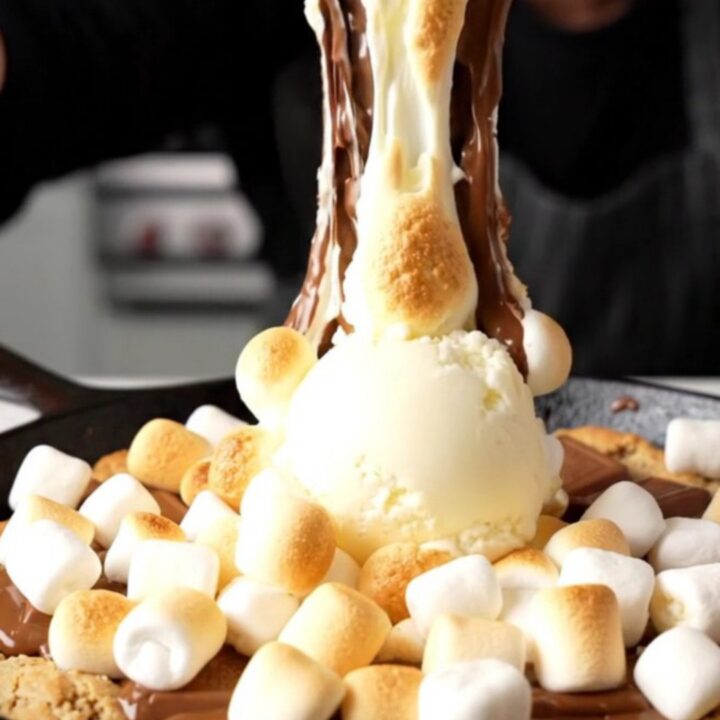
For the best texture, serve the skillet cookie warm, straight from the oven. The marshmallow is stretchy and the chocolate is molten, which is the perfect contrast to the soft cookie.
If you want a more intense toasted marshmallow flavor, use a kitchen torch to char a few extra marshmallows just before serving. This adds a smoky note that mimics a real campfire.
To make the cookie even more indulgent, add a scoop of vanilla ice cream on top—the cold, creamy ice cream against the warm, gooey cookie is a classic combination.
You can also drizzle with caramel sauce or sprinkle with sea salt for a sweet-salty twist. For extra crunch, scatter some chopped toasted nuts or extra graham cracker crumbs over the top before serving.
Variations
- Peanut Butter S'mores: Swirl 1/2 cup creamy peanut butter into the cookie dough before baking, and use peanut butter cups instead of chocolate bars for a rich, nutty twist.
- Dark Chocolate & Sea Salt: Swap the milk chocolate for dark chocolate (at least 70% cacao) and sprinkle flaky sea salt over the finished cookie to balance the sweetness.
- Berry S'mores: Add 1/2 cup fresh raspberries or sliced strawberries on top of the chocolate before adding the marshmallows. The fruit adds a bright, tart contrast.
- Coconut S'mores: Mix 1/2 cup sweetened shredded coconut into the cookie dough and sprinkle extra toasted coconut over the marshmallows before broiling.
Storage and make-ahead
- Fridge
- Refrigerate leftover skillet cookie in an airtight container for up to 4 days.
- Freezer
- Freeze the baked and cooled skillet cookie (without marshmallow topping) in a freezer-safe container for up to 3 months.
- Reheat
- Reheat individual portions in the microwave for 15-20 seconds, or the whole skillet in a 350°F (175°C) oven for 8-10 minutes until warm and gooey.
Store leftover skillet cookie in an airtight container at room temperature for up to 2 days. The marshmallow topping may soften and lose its crispness, but the cookie will still be delicious. To reheat, place the skillet in a 350°F (175°C) oven for 5-10 minutes, or microwave individual portions for 15-20 seconds until warm and gooey.
The cookie dough can be prepared ahead and refrigerated for up to 2 days. Press the dough into the skillet, cover, and refrigerate. When ready to bake, let the skillet sit at room temperature for 15 minutes, then bake as directed. You can also freeze the unbaked dough for up to 3 months—bake from frozen, adding a few extra minutes to the baking time.
Serving ideas
Serve the skillet cookie warm, directly from the skillet, with spoons for everyone to dig in. It's a shareable dessert that's perfect for parties, game nights, or any gathering.
Each spoonful should include a bit of cookie, melted chocolate, and marshmallow for the perfect bite. For a more polished presentation, you can cut it into wedges and serve on plates.
Pair the cookie with cold milk, coffee, or a scoop of vanilla ice cream. The warm, gooey texture is balanced by something cold and creamy.
For a festive touch, sprinkle with a little powdered sugar or drizzle with chocolate sauce before serving. This dessert is best enjoyed immediately, while the marshmallow is still stretchy and the chocolate is melted.
Frequently asked questions
Can this skillet cookie be made ahead of time?
Why does the marshmallow topping burn under the broiler?
Can this recipe be made gluten-free?
What if the cookie is too gooey in the center?
Can this recipe be doubled for a larger skillet?
Giant S'mores Skillet Cookie with Toasted Marshmallows
Ingredients
- 1/2 cup unsalted butter, melted
- 1/2 cup packed brown sugar
- 1/4 cup granulated sugar
- 1 large egg
- 1 tsp vanilla extract
- 1 1/4 cups all-purpose flour
- 1/2 tsp baking soda
- 6 whole graham crackers, crushed
- 6 oz milk chocolate bars, broken into rectangles
- 2 cups mini marshmallows
Instructions
- In a medium bowl, whisk the melted butter with the brown sugar and granulated sugar until smooth. Beat in the egg and vanilla extract. Stir in the flour, baking soda, and crushed graham cracker crumbs until a thick dough forms. The dough will be slightly sticky but should hold together when pressed.
- Butter an 8-inch cast iron skillet or coat it with nonstick spray. Press the cookie dough evenly into the skillet, smoothing the top with a spatula or your fingers. The dough should reach the edges but not go up the sides.
- Heat the oven to 350°F (175°C). Bake the skillet cookie for 15 minutes, until the edges are set and lightly golden but the center is still soft and slightly gooey. The cookie will continue to cook slightly after you add the toppings.
- Remove the skillet from the oven and immediately arrange the milk chocolate rectangles over the hot cookie, covering the surface. The heat from the cookie will begin to melt the chocolate.
- Scatter the mini marshmallows evenly over the chocolate, covering as much surface as possible. Press them down gently so they stick to the melting chocolate.
- Switch the oven to broil. Place the skillet under the broiler for 2 minutes, watching closely, until the marshmallows are puffed and golden brown on top. Rotate the skillet halfway through if needed for even browning.
- Remove the skillet from the oven and let it cool for 5 minutes on a wire rack. This allows the chocolate to set slightly and prevents the topping from sliding off when serving.
- Scoop the warm skillet cookie into bowls or plates, making sure each serving includes some melted chocolate, toasted marshmallow, and cookie. Serve immediately while the marshmallow is still stretchy and the chocolate is molten.
Estimated nutrition per serving
- Calories
- 480
- Protein
- 5 g
- Carbohydrates
- 60 g
- Fat
- 25 g
Next recipe
Warm Fig & Milk Pudding: Turkish İncir Uyutması
See the recipe → →This recipe is based on a short cooking video and is published under the pen name Clara Weller. It was checked before publication, but errors can slip through. Nutrition, when shown, is an estimate. Read more in our editorial policy and on our food safety page.
More recipes to try

Turkish Trileçe: Three-Milk Caramel Sponge Cake
Total time: 2 h 45 min
Forty-Layer Antep Pistachio Baklava with Crispy Phyllo
Total time: 1 h 35 min
Giant S'mores Skillet Pizookie with Toasted Marshmallow Fluff
Total time: 35 min
Caramelized Oven-Baked Rice Pudding with a Crackly Crust
Total time: 1 h
Molten White Chocolate Raspberry Skillet Lava Cake
Total time: 28 min