Dinner · Part 2 of 3: Instructions
Garlic Butter King Crab Leg Skillet with Parmesan Step-by-step instructions
- Prep
- Cook
- Total
- Serves
- 4
Before you start
Before you start, make sure the crab legs are thawed if frozen. Pat them dry. Grate the Parmesan and set it aside. Mince the garlic, chop the parsley, and strip the thyme leaves. Halve the lemon and set it cut side up.
Heat a large cast iron skillet over medium-high heat so it's ripping hot by the time you add the butter. Have all your ingredients within reach because the cooking goes fast.
Ingredients at a glance (8)
- 2 lb Alaskan king crab legs
- 1/2 cup unsalted butter
- 4 cloves garlic, minced
- 2 tbsp fresh parsley, chopped
- 1 tsp fresh thyme leaves
- 1/2 cup grated Parmigiano-Reggiano cheese
- 1 lemon, halved
- flaky sea salt, to taste
Instructions
Prep and Grate
- Split the crab legsUsing kitchen shears, cut each king crab leg shell lengthwise along the thinner side, exposing the snow-white meat. Crack the knuckles and claws lightly with the back of a knife or crab cracker so the meat is easy to pull out. Keep the legs in large pieces for a dramatic presentation.Look for The shell is split open, revealing the white crab meat without breaking it apart.Tip Cut only through the shell, not the meat, to keep the crab intact.
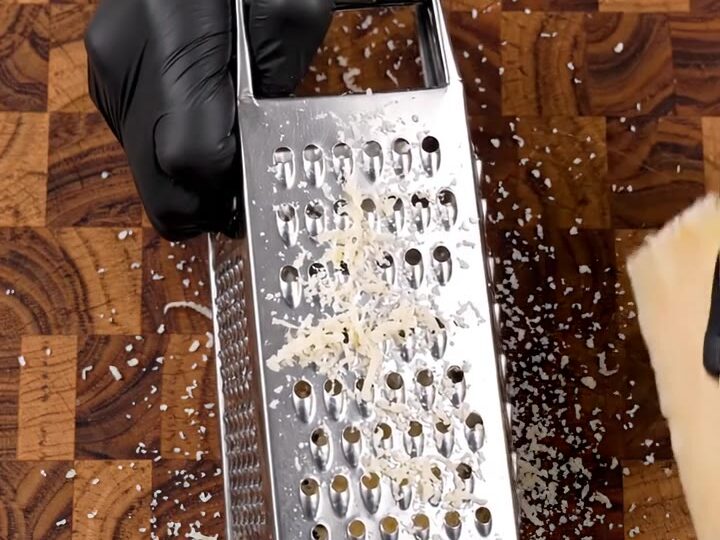
- Grate the ParmesanGrate a firm block of aged Parmigiano-Reggiano on the large holes of a box grater into a fresh pile of finely grated cheese. Set aside at room temperature.Look for You have a fluffy pile of grated Parmesan, about 1/2 cup.Tip Grate just before cooking for the best melt and flavor.
You should have split crab legs with exposed meat, a pile of freshly grated Parmesan, and the garlic, herbs, and lemon prepped. The kitchen smells of fresh herbs and cheese. The crab legs are still cold, but ready for the heat.
Sear and Baste
- Heat the skilletPlace a large cast iron skillet over medium-high heat and let it get hot, about 2 minutes. Add the butter, garlic, parsley, and thyme. Swirl the pan as the butter melts and foams, cooking the aromatics until fragrant, about 1 minute.Look for The butter is bubbling and the garlic smells toasty, not burnt.Tip Keep the heat medium-high but adjust if the butter browns too quickly.
- Sear the crab legsArrange the split king crab legs in the hot skillet, cut side up, nestling them into the garlic butter. Let them sear undisturbed for 2 minutes, then use tongs to turn them and baste with the bubbling butter.Look for The crab meat is turning opaque and the shells are bright red.Safe temperature 145°F (63°C) internal temperature (shellfish)Tip Don't overcrowd; cook in batches if needed.
- Baste continuouslyTilt the skillet slightly and use a spoon to continuously baste the exposed crab meat with the garlic herb butter. Cook until the crab is heated through and the meat is opaque and flakes easily, about 4 to 5 minutes. The internal temperature should reach 145°F (63°C).Look for The butter is sizzling and the crab meat is glistening with garlic butter.Safe temperature 145°F (63°C) internal temperature (shellfish)Tip Basting keeps the meat moist and infuses every bite.
The skillet is sizzling, the butter is foaming, and the crab legs are turning bright red. The garlic is fragrant, and the butter is bubbling over the white meat. The crab should be opaque and hot, with some golden sear marks. Baste generously.
Finish and Serve
- Add Parmesan and lemonRemove the skillet from the heat. Shower the grated Parmesan over the hot crab legs, letting it melt slightly. Squeeze the charred lemon halves over the top and sprinkle with flaky sea salt. Serve immediately.Look for The Parmesan is melting into the butter and the lemon adds bright aroma.Tip Char the lemon halves cut side down in the hot skillet for 1 minute before squeezing.
The Parmesan is melting into the butter, creating a creamy sauce. The lemon juice is squeezed over, and the salt crystals glisten. The crab is glossy and steaming, ready to serve immediately. The aroma is rich, buttery, and bright with lemon.
Common mistakes
Overcooking is the biggest risk; since most king crab is precooked, you only need to heat it through. Keep the heat medium-high and baste constantly.
Another common mistake is not splitting the legs enough — if the shell is too thick, the meat won't get the direct heat and butter.
Use sharp kitchen shears and cut confidently. Also, avoid crowding the pan; if you have more than 2 pounds, cook in batches to ensure even searing.
How to tell it’s done
The crab is done when the meat is opaque, flakes easily with a fork, and has reached an internal temperature of 145°F (63°C) when checked with an instant-read thermometer inserted into the thickest part of the meat.
The butter should be bubbling and the cheese melted. The edges of the crab meat may have some golden-brown spots from the sear, which add flavor.
- Shellfish: 145°F (63°C) in the thickest part
Up next · Part 3 of 3
4 variations · storage & make-ahead · 5 answers · printable card
Tips, FAQ & printable recipe (Part 3)← Back to the ingredients (Part 1)