Dinner · Part 1 of 3: Ingredients
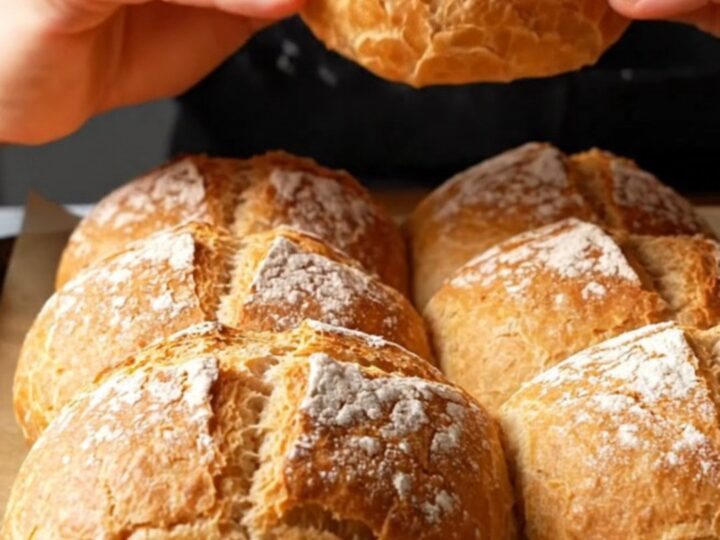
Fresh Homemade Crusty Rolls with Shattering Crust
- Prep
- Cook
- Total
- Serves
- 8
There's nothing quite like the sound of a crusty roll crackling as you press it between your hands. This recipe delivers that dramatic shatter, revealing a soft, pillowy crumb that steams with every tear. Made with simple pantry ingredients and a hot, steamy oven, these rolls bring bakery-quality results to your kitchen.
The secret is a wet, sticky dough and a blast of steam that creates a thin, brittle crust. Whether served alongside soup, used for sandwiches, or enjoyed warm with butter, these rolls are a sensory experience.
Fresh homemade crusty rolls are a staple for anyone who loves the contrast of a shattering crust and an airy, tender interior. This recipe uses a straightforward yeast dough that comes together in minutes, then proofs quickly to develop flavor and structure.
The key is baking at high heat with steam, which mimics the conditions of a professional bread oven. The result is a roll that crackles loudly when squeezed, tears open to reveal a honeycomb crumb, and tastes as good as it sounds. Perfect for dinner, sandwiches, or just snacking, these rolls are a rewarding project for any home baker.
Ingredients
- 2 cups warm water (450 ml)
- 1 packet active dry yeast (10 g / 1 tbsp)
- 1 tbsp granulated sugar
- 4 1/2 cups bread flour (550 g)
- 1 1/2 tsp fine sea salt
- 1 tbsp olive oil
- all-purpose flour, for dusting, to taste
Why this recipe works
The high hydration of the dough—about 80% relative to the flour—creates a light, open crumb with large irregular holes. As the dough bakes, the moisture inside turns to steam, pushing the structure outward and giving the interior a soft, pillowy texture. The wet dough also helps the crust develop a thin, crisp shell that shatters when bitten.
The combination of a very hot oven and injected steam is essential for a crackly crust. The steam keeps the surface moist during the first minutes of baking, allowing the dough to expand fully before the crust sets.
Once the steam dissipates, the surface dries and browns, creating a hard, brittle shell. This technique replicates the conditions of commercial bread ovens at home.
Notes and substitutions
Bread flour is recommended for its higher protein content, which gives the rolls more structure and chew. If using all-purpose flour, the rolls will be slightly softer but still delicious.
Active dry yeast needs to be dissolved in warm water first; instant yeast can be mixed directly into the flour. The water should feel warm but not hot, about 110°F (43°C), to activate the yeast without killing it.
The dough is intentionally sticky and wet—resist the urge to add too much flour. A heavily floured board is essential for shaping. For the steam, a preheated metal pan or cast-iron skillet works well; pour hot water into it carefully when the rolls go in. If no steam pan is available, you can also spray the oven walls with water, but the pan method is more effective.
- active dry yeast: instant yeast (use same amount, no need to dissolve first; mix directly into flour)
- bread flour: all-purpose flour (rolls will be slightly less chewy but still crusty)
- fine sea salt: table salt (use slightly less, about 1 1/4 tsp)
- olive oil: vegetable oil or melted butter (for a softer crumb)
Equipment
- Large glass bowl
- Wooden spatula
- Plastic wrap
- Baking sheet
- Parchment paper
- Baker's razor or sharp knife
- Spray bottle with water
Up next · Part 2 of 3
9 steps · 22 min of cooking · what to look for at each stage
Step-by-step instructions (Part 2)