Dinner · Part 2 of 3: Instructions
French Onion Soup Focaccia with Gruyere Step-by-step instructions
- Prep
- Cook
- Total
- Serves
- 8
Before you start
Before starting, gather all ingredients and equipment. Caramelize the onions first so they have time to cool slightly before folding into the dough. Measure the flour, yeast, and salt accurately. Warm the water to about 110°F.
Have a 9x13-inch baking pan ready and oiled. The total prep time is about 20 minutes, plus rising time. Ensure you have a clean, floured surface for kneading. The recipe is straightforward but requires attention to rise times for the best texture.
Ingredients at a glance (10)
- 4 cups all-purpose flour
- 2 1/4 tsp instant yeast
- 1 1/2 cups warm water
- 2 tsp kosher salt
- 1/4 cup olive oil, plus more for the pan
- 3 large yellow onions, thinly sliced
- 2 tbsp fresh thyme leaves
- 200 g gruyere cheese, grated
- 1/2 cup beef broth
- 2 tbsp fresh chives, chopped
Instructions
Caramelize and mix
- Caramelize the onionsHeat 2 tablespoons of olive oil in a large skillet over medium heat. Add the sliced onions and cook, stirring occasionally, until deeply golden and jammy, about 15 minutes. Stir in the fresh thyme and beef broth, scraping up any browned bits. Cook for 2 more minutes, then remove from heat and let cool slightly.Look for Onions are soft, deep brown, and smell sweet and savory.Tip Don't rush the onions; low and slow gives the best caramelization.
- Mix the doughIn a large mixing bowl, combine the flour, instant yeast, and kosher salt. Add the warm water and the remaining 2 tablespoons of olive oil. Stir with a wooden spoon until a shaggy dough forms. Turn out onto a floured surface and knead for 5 minutes until smooth and elastic.Look for Dough is smooth, slightly tacky, and springs back when poked.Tip If the dough is too sticky, add flour a tablespoon at a time.
- First risePlace the dough in a lightly oiled bowl, cover with plastic wrap or a clean towel, and let rise in a warm spot until doubled in size, about 1 hour.Look for Dough has doubled and feels airy.Tip A warm oven (off) with the light on works well for rising.
At the end of this phase, the onions are soft, deeply caramelized, and fragrant with thyme. The dough is smooth, elastic, and has risen to double its size. The kitchen smells warm and savory. The dough should be puffy and airy when touched. The onions should be cooled enough to handle without burning your hands. This phase sets the foundation for the flavor and texture of the final bread.
Fold and top
- Fold in the onionsGently deflate the dough and turn it out onto a lightly floured surface. Pat it into a rough rectangle. Spread the caramelized onions over the surface, then fold the dough over them like a letter. Knead a few times to distribute the onions evenly, but don't overwork.Look for Onions are visible throughout the dough, but not bursting out.Tip Keep the dough floured to prevent sticking.
- Second rise in the panOil a 9x13-inch baking pan generously with olive oil. Transfer the dough to the pan and press it out to the edges. Cover loosely with plastic wrap and let rise for another 30 minutes, until puffy.Look for Dough is puffy and has risen slightly.Tip Pressing with fingertips creates the classic focaccia dimples.
- Top with gruyerePreheat the oven to 450°F (232°C). Sprinkle the grated gruyere evenly over the surface of the risen dough, pressing gently so it adheres.Look for Cheese covers the top in an even layer.Tip Use a box grater for fine, even shreds that melt quickly.
The dough is now speckled with caramelized onions, and it has puffed up in the pan. The gruyere is evenly sprinkled over the top, creating a blanket of cheese. The dough feels soft and pillowy. The pan is ready for the oven. The cheese should be well distributed, and the dough should fill the pan evenly. This is the moment before the transformation—everything looks promising and inviting.
Bake and finish
- Bake until blisteredPlace the pan in the preheated oven and bake for 22 minutes, until the crust is deep golden brown and the cheese is bubbling and blistered in spots.Look for Crust is golden, cheese is browned and sizzling.Tip Rotate the pan halfway through for even browning.
- Garnish and serveRemove the focaccia from the oven and let it cool in the pan for 5 minutes. Sprinkle with fresh chives, then slice and serve warm.Look for Chives add a fresh green contrast to the golden cheese.Tip Use a serrated knife to cut clean slices without squishing the bread.
The focaccia emerges from the oven with a golden, blistered cheese crown. The crust is crisp, and the cheese is bubbling in spots. The aroma is intensely savory with notes of caramelized onion and toasted cheese.
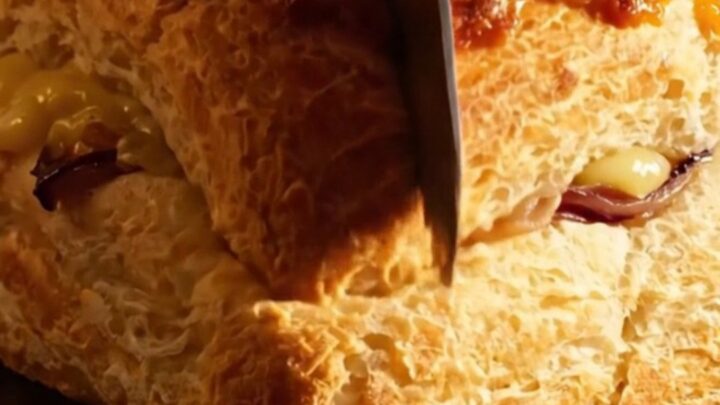
After a brief rest, it's sliced and garnished with chives, revealing a soft, airy crumb with pockets of onion. The cheese pulls away in long strands, making it irresistible to eat warm.
Common mistakes
A common mistake is not caramelizing the onions enough; they should be deep brown and jammy, not just translucent. Another is overkneading the dough after adding the onions, which can make the bread tough. Also, don't skip the second rise—it's essential for a light, airy crumb.
When baking, keep an eye on the oven; if the top browns too quickly, loosely tent with foil. Finally, don't slice the focaccia while it's piping hot, as the cheese will be too molten and the bread may tear.
How to tell it’s done
The focaccia is done when the crust is deep golden brown and the cheese is bubbling and blistered in spots. The internal temperature of the bread should be around 200°F, but the visual cues are more reliable here.
The edges will be crisp, and the cheese will have browned in places. A toothpick inserted into the center should come out clean. Let it cool for 5 minutes before slicing to allow the cheese to set slightly, but serve warm for the best pull-apart effect.
Up next · Part 3 of 3
4 variations · storage & make-ahead · 5 answers · printable card
Tips, FAQ & printable recipe (Part 3)← Back to the ingredients (Part 1)