Dinner · Part 2 of 3: Instructions
French Onion Rigatoni Bake with Gruyère in One Skillet Step-by-step instructions
- Prep
- Cook
- Total
- Serves
- 4
Before you start
Gather everything before you turn on the stove, because the steps move quickly once the pasta goes in. Set the wooden cutting board on a stable counter and slice the whole yellow onion into thin half-moon rings with a sharp chef's knife, keeping the slices even so they cook at the same rate.
Peel the garlic cloves and leave them whole, and pull the thyme leaves from four sprigs or keep the small sprig for garnish. Measure the beef broth, the rigatoni and the kosher salt into separate small bowls. Grate the Gruyère on the box grater just before you need it, so it stays light and fluffy. Preheat the oven rack to the upper third so it is ready when the skillet is finished on the stove.
Ingredients at a glance (10)
- 1 whole yellow onion, thinly sliced into half-moons
- 2 tbsp unsalted butter
- 1 tbsp olive oil
- 1 tsp kosher salt, plus more to taste
- 3 cloves whole garlic, peeled
- 4 sprigs fresh thyme sprigs, plus leaves for garnish
- 2 cups low-sodium beef broth
- 8 oz dry rigatoni pasta
- 6 oz Gruyère cheese, block, grated on a box grater
- freshly ground black pepper to taste
Instructions
Onions reach deep golden
- Slice and caramelize the onionHeat the butter and olive oil in the cast iron skillet over medium heat. Add the sliced onion, sprinkle with the kosher salt and cook, stirring every few minutes, until the onion turns deep golden and jammy, about 25 minutes.Look for Onions are deep golden, soft and jammy, with brown edges and a sweet smell.Tip Add a splash of water if the pan starts to scorch before the onions colour.
- Build the savory baseAdd the whole garlic cloves and thyme sprigs to the skillet and cook for 1 minute, stirring, until fragrant. Pour in the beef broth, scrape up the browned bits from the bottom of the pan and season with black pepper.Look for Fragrant garlic and thyme, and the broth is bubbling around the onions.Tip Scraping the pan lifts the browned flavour into the broth, which gives the sauce depth.
The onions should look deep golden and jammy, with brown edges and a sweet, toasty aroma filling the kitchen. They should be soft enough to spread easily with a wooden spoon, and there should be no raw, sharp smell left. Before you move on, check that the bottom of the skillet is not burning. If the pan looks dry and dark, add a splash of water and scrape gently. Once the garlic and thyme are fragrant and the broth is bubbling around the onions, the base is ready for the pasta.
Pasta nearly tender
- Simmer the rigatoniAdd the dry rigatoni to the skillet and stir to coat it in the onion broth. Bring everything to a gentle simmer, cover and cook, stirring now and then, until the pasta is nearly tender and most of the liquid is absorbed, about 12 to 15 minutes.Look for The pasta is nearly tender with a little saucy liquid left at the bottom.Tip Stir often so the rigatoni does not stick to the bottom of the skillet.
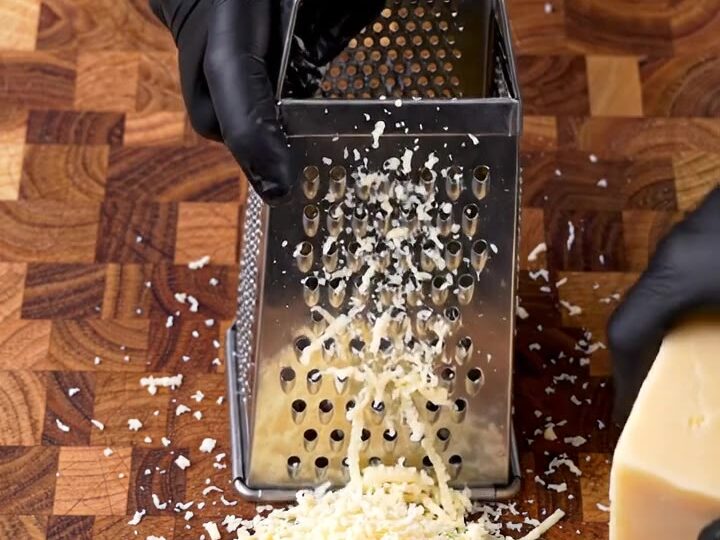
- Top with grated GruyèreGrate the Gruyère block over a box grater so it falls in a fine, fluffy pile. Spread a generous, even layer of the cheese over the pasta in the skillet, reaching the edges.Look for An even, thick blanket of fluffy shredded cheese covers the pasta.Tip Grate the cheese just before using it so it melts smoothly.
The rigatoni should be nearly tender, with a slight bite left in the center, and most of the broth should be absorbed into a light, clinging sauce around the pasta. Lift one piece with a spoon and press it against the side of the pan to test it.
The skillet should show only a thin film of liquid at the bottom, not a pool. If the pasta still feels hard, add a few tablespoons of water and cover for another minute or two. Once the texture is right, spread the cheese evenly over the top and move on to the oven.
Cheese golden and blistered
- Bake until golden and blisteredSet the oven rack in the upper third and heat the oven to 400°F (200°C). Transfer the skillet to the oven and bake until the cheese has melted completely, bubbles and browns into a golden, blistered crust, about 10 to 15 minutes.Look for Cheese is fully melted, bubbling at the edges and browned in spots.Tip Watch the top closely during the last 5 minutes so the cheese does not burn.
- Rest and serve from the skilletLet the skillet rest for 5 minutes so the cheese sets slightly. Scatter the fresh thyme leaves over the top, add a small thyme sprig on the side and serve straight from the cast iron skillet.Look for The cheese has set enough to cut and spoon, and strands pull from the center.Tip Use a wooden spoon to scoop from the center, where the cheese stays molten.
The Gruyère should be fully melted, bubbling at the edges and browned in patches across the top, with a crisp, blistered crust forming. Look at the middle of the skillet to be sure the cheese has melted all the way through. If the top is browning too quickly before the center melts, lower the rack or cover loosely with foil for a few minutes. When the crust is golden and the cheese pulls in stretchy strands, the bake is complete and the skillet can rest before serving.
Common mistakes
The most common error is rushing the onions. If the heat is too high, the sugars scorch before the onions turn sweet and jammy, which leaves a bitter taste that the broth cannot fix. Keep the heat at medium and stir every few minutes, and add a splash of water if the pan starts to darken too fast. Another frequent problem is overcooking the pasta on the stove.
Rigatoni should still have a slight bite when you add the cheese, because it keeps softening in the oven. If you simmer it until fully tender, the bake turns dry and heavy. Finally, avoid pre-shredded cheese. It melts less smoothly and can give the top a grainy texture, so grate the block fresh on a box grater for the best crust.
How to tell it’s done
The bake is done when the Gruyère has melted completely, bubbles across the surface and browns into a golden, blistered crust, usually in 10 to 15 minutes at 400°F (200°C). The rigatoni should be tender all the way through, with the sauce clinging to each piece and no pool of liquid at the bottom of the skillet.
Press a fork into the center: the cheese should stretch in strands and the pasta should give easily. Because the dish has no meat or egg, there is no internal protein temperature to check, so judge by the color and the melt. After resting five minutes, the cheese should be set enough to scoop cleanly, yet still molten inside.
Up next · Part 3 of 3
4 variations · storage & make-ahead · 5 answers · printable card
Tips, FAQ & printable recipe (Part 3)← Back to the ingredients (Part 1)