Dinner · Part 2 of 3: Instructions
French Onion Garlic Butter Pork Shoulder: Slow-Cooker Dump Dinner Step-by-step instructions
- Prep
- Cook
- Total
- Serves
- 8
Before you start
Before starting, gather all ingredients and ensure the slow cooker is clean and ready. Slice the onions thinly and set aside. If using a whole cowboy butter log, cut it into thick medallions.
No need to sear the pork—the slow cooker will develop flavor over time. Have a cutting board and two forks ready for shredding. The total prep time is about 15 minutes.
Ingredients at a glance (4)
- 4 lb boneless Boston butt pork shoulder roast
- 3 cups thinly sliced Vidalia onions
- 1 cup beef consommé
- 4 tbsp cowboy garlic butter, cut into thick medallions
Instructions
Layer and Top
- Layer the Roast and OnionsPlace the pork shoulder roast in the center of a 6-quart slow cooker. Pile the sliced Vidalia onions over and around the roast. Pour the beef consommé around the base, avoiding the top of the roast to keep the butter in place.Look for The onions should cover most of the roast, and the consommé should pool at the bottom without submerging the top.Tip Trimming excess fat is optional; the fat adds moisture during the long cook.
- Top with Cowboy ButterPlace the cowboy garlic butter medallions evenly on top of the roast and onions. The butter will melt and baste the meat as it cooks.Look for The butter medallions sit visibly on the surface, ready to melt into the gravy.Tip If the butter is very cold, let it sit at room temperature for a few minutes to slice easily.
At the end of this phase, the pork shoulder sits in the center of the slow cooker, surrounded by a mound of sliced Vidalia onions.
The beef consommé pools around the base, and the cowboy butter medallions rest on top. The raw ingredients look fresh and vibrant, with the butter ready to melt and baste the meat during cooking.
Slow-Cook and Rest
- Slow-Cook Until TenderCover the slow cooker and cook on LOW for 8 to 10 hours, or on HIGH for 5 to 6 hours, until the pork is fork-tender and shreds easily. The onions will caramelize and the butter will create a rich gravy. Let it rest for 3 minutes before slicing.Look for The meat is done when it pulls apart with a fork and the onions are silky and translucent.Safe temperature 145°F (63°C) internal temperature (steaks, chops and roasts)Tip Avoid lifting the lid during cooking to keep the heat steady.
- Rest the MeatTurn off the slow cooker and let the pork rest in the liquid for at least 10 minutes. This allows the juices to redistribute and makes shredding easier.Look for The meat is slightly cooler but still warm, and the liquid has settled.Tip Resting also lets the fat reabsorb into the meat for extra moisture.
After hours of gentle simmering, the slow cooker is filled with bubbling gravy. The pork is fork-tender and easily pulls apart, and the onions have collapsed into silky, caramelized strands. The aroma is deeply savory with garlic and herbs. The meat rests in the liquid, allowing the juices to redistribute before shredding.
Shred and Serve
- Shred the PorkTransfer the roast to a cutting board and shred with two forks, discarding any large fat pieces. Return the shredded pork to the slow cooker with the onions and gravy, stirring to coat.Look for The pork pulls apart into long, tender ribbons, and the gravy is glossy and thick.Tip For finer shreds, use a fork and pull in opposite directions.
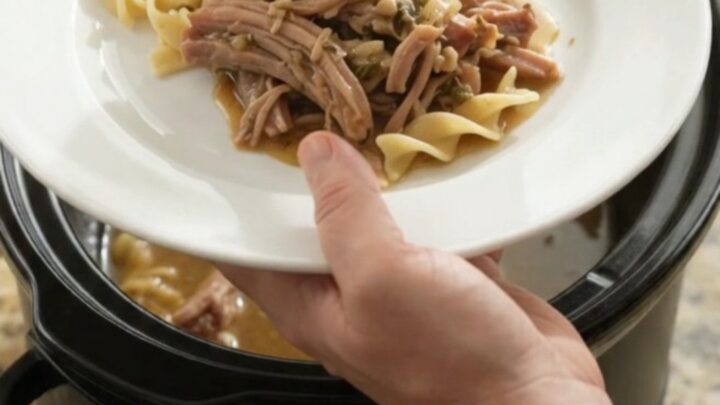
- Serve Over NoodlesSpoon the shredded pork and onion gravy over warm buttered egg noodles or your favorite side. Serve immediately.Look for The pork is glistening with gravy and the onions are caramelized.Tip A crusty bread also works well for soaking up the sauce.
The shredded pork is glossy with gravy and mixed with the caramelized onions. The sauce is thick and rich, coating each strand. When spooned over buttered egg noodles, it creates a comforting, satisfying dish. The final texture is tender, moist, and full of flavor.
Common mistakes
One common mistake is lifting the lid too often, which lets heat escape and extends cooking time. Another is using lean pork, which can dry out; choose a well-marbled shoulder.
Adding too much liquid can make the gravy thin, so stick to the measured consommé. Finally, shredding too early can result in tough pieces; wait until the meat is truly falling apart.
How to tell it’s done
The pork is done when it is fork-tender and easily shreds. The internal temperature should reach at least 145°F (63°C) for whole-cut meat, but for optimal tenderness, cook until it reaches 195°F (91°C) or higher, which allows collagen to break down fully.
The onions should be translucent and soft, and the gravy should be rich and slightly thickened. Rest the meat before shredding to keep it juicy.
- Steaks, chops and roasts: 145°F (63°C) in the thickest part, then a 3-minute rest
Up next · Part 3 of 3
4 variations · storage & make-ahead · 5 answers · printable card
Tips, FAQ & printable recipe (Part 3)← Back to the ingredients (Part 1)