Dinner · Part 2 of 3: Instructions
French Onion Butter Bottom Round Roast: Slow Cooker Step-by-step instructions
- Prep
- Cook
- Total
- Serves
- 6
Before you start
Before you start, pat the roast dry with paper towels. There's no need to sear it—the slow cooker will do the work. Slice the onions thinly, about 1/4-inch thick. Measure the consommé and have the butter ready.
Place everything in the slow cooker in the order listed, and you're done. Plan for 8 to 10 hours of cooking time, so start in the morning for a dinner that's ready when you are.
Ingredients at a glance (4)
- 3 1/2 lb beef bottom round roast
- 2 medium Vidalia onions, thinly sliced
- 2 cups beef consommé
- 1/2 cup salted butter (1 stick)
Instructions
Layer and Start
- Layer the Roast and AromaticsPlace the beef bottom round roast in the center of a 6-quart slow cooker. Scatter the sliced Vidalia onions over and around the roast. Pour the beef consommé around the base of the roast, being careful not to rinse the onions off the top. Place the stick of butter on top of the roast.Look for The roast is nestled in the onions, with the butter melting over the top as the cooker heats.Tip No need to sear the roast first—the slow cooking will develop deep flavor.
- Cover and Cook LowCover the slow cooker and set it to LOW. Cook for 8 to 10 hours, until the roast is fork-tender and easily shredded. The butter will melt into the juices, and the onions will soften into silky ribbons. Let it rest for 3 minutes before slicing.Look for The liquid will be bubbling gently, and the aroma of onions and butter will fill the kitchen.Safe temperature 145°F (63°C) internal temperature (steaks, chops and roasts)Tip Resist the urge to lift the lid—each peek adds 20 minutes of cooking time.
- Rest the RoastWhen the roast is fork-tender, turn off the slow cooker. Using tongs, transfer the roast to a cutting board and let it rest for at least 3 minutes. This allows the juices to redistribute.Look for The roast holds together but flakes apart with a fork.Safe temperature 145°F (63°C) internal temperature (steaks, chops and roasts)Tip Resting is essential for a moist, tender result.
The roast is nestled in the slow cooker, surrounded by onions and consommé, with a pat of butter melting over the top.
The aroma starts to build as the cooker heats up, promising a rich, savory meal ahead. The onions are raw and crisp, but they will soften dramatically during the long cook.
Shred and Coat
- Shred the BeefUsing two forks, shred the roast into bite-sized pieces. The meat should pull apart easily with little resistance. Transfer the shredded beef back into the slow cooker with the onions and juices.Look for The beef is tender and shreds into long, juicy strands.Tip Shred while the meat is still warm for the best texture.
- Stir and Coat in JusStir the shredded beef into the onion-butter jus, making sure every piece is coated. The sauce should be glossy and rich. If the sauce seems thin, let it simmer on the warm setting for 10 minutes to reduce slightly.Look for The beef is glistening with a golden, buttery sauce.Tip Taste and adjust seasoning if needed—the consommé and butter add plenty of salt.
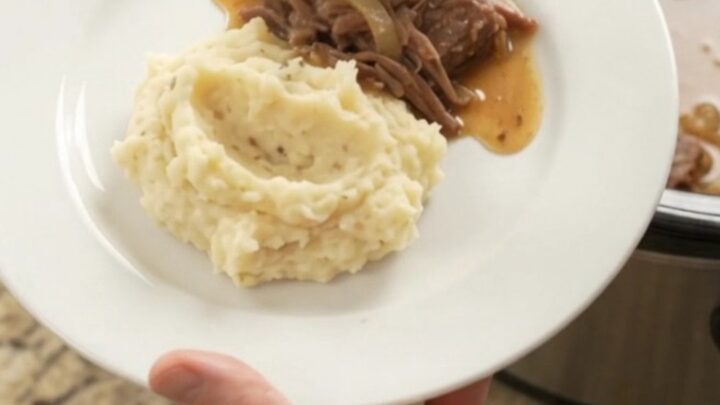
- Serve Over Mashed PotatoesSpoon the French onion butter roast over a bed of whipped Yukon Gold mashed potatoes. Ladle extra jus over the top and serve hot.Look for The beef is piled high over creamy potatoes, with a pool of rich jus around the edges.Tip For a low-carb option, serve over roasted vegetables or cauliflower mash.
The roast is fork-tender and shreds into long, moist strands. The onions have collapsed into silky ribbons, and the liquid has transformed into a glossy, golden jus. The butter has fully emulsified, giving the sauce a velvety sheen. Tasting the sauce reveals a deep, sweet-savory flavor.
Serve and Enjoy
- Garnish and FinishIf desired, sprinkle with fresh thyme or chopped parsley before serving. The onions should be caramelized and sweet, and the butter sauce should be emulsified and silky.Look for A final sprinkling of herbs adds color and freshness.Tip No need for extra salt—the consommé and butter are seasoned.
The shredded beef is piled high over creamy mashed potatoes, with caramelized onions and a generous ladle of buttery jus. The dish looks rich and inviting, with steam rising and the scent of onions and beef filling the room. Each bite is tender, juicy, and full of umami.
Common mistakes
One common mistake is lifting the lid to check on the roast, which releases heat and extends cooking time. Another is using a lean cut without enough fat—bottom round is lean, so the butter and consommé are essential to keep it moist.
Don't skip the rest step after cooking; it allows the juices to redistribute, preventing dry meat. Finally, don't rush the cooking on HIGH—low and slow is the key to tender results.
How to tell it’s done
The roast is done when it is fork-tender and easily shreds with a fork. To check, insert a fork into the center of the roast and twist—it should pull apart without resistance.
The internal temperature should read at least 145°F (63°C) for whole cuts of beef, but because it's cooked low and slow, it will likely reach well above that, which is fine for this braise. Let the roast rest for at least 3 minutes before shredding.
- Steaks, chops and roasts: 145°F (63°C) in the thickest part, then a 3-minute rest
Up next · Part 3 of 3
4 variations · storage & make-ahead · 5 answers · printable card
Tips, FAQ & printable recipe (Part 3)← Back to the ingredients (Part 1)