Dinner · Part 2 of 3: Instructions
French Onion Brown Gravy Pork Shoulder Step-by-step instructions
- Prep
- Cook
- Total
- Serves
- 8
Before you start
Before starting, ensure the pork shoulder is at room temperature for no more than 30 minutes. Pat it dry with paper towels—this helps the seasonings adhere, though no additional salt is needed given the salty consommé and gravy.
Thinly slice the onions (about 1/4-inch thick) and measure out the consommé, gravy, and butter. Have a 6-quart slow cooker ready. No other prep is needed; everything goes into the pot in layers.
Ingredients at a glance (5)
- 4 lb boneless pork shoulder roast
- 2 large Vidalia onions, thinly sliced
- 1 can (10.5 oz) beef consommé
- 2 cups rich brown gravy
- 4 tbsp unsalted butter, cut into pats
Instructions
Layer and Set
- Layer the Roast and OnionsPlace the pork shoulder roast in the center of a 6-quart slow cooker. Scatter the sliced Vidalia onions over and around the roast. Pour the beef consommé around the base of the roast, being careful not to rinse the onions off the top.Look for The roast is nestled in the cooker with onions piled on top and consommé pooling at the bottom.Tip Use a spoon to gently press the onions onto the roast so they stay in place.
- Add Gravy and ButterPour the rich brown gravy over the roast and onions. Dot the top with the pats of unsalted butter. Do not stir; the layers will meld during cooking.Look for The gravy and butter sit on top, ready to melt and baste the roast.Tip Cutting the butter into small pats helps it distribute evenly as it melts.
At the end of this phase, the slow cooker contains the raw pork shoulder, onions, consommé, gravy, and butter in distinct layers. The liquid should be pooling around the roast, and the butter pats are visible on top. The scene looks simple, but the flavors are ready to meld.
Slow-Cook to Tender
- Slow-Cook Until Fork-TenderCover the slow cooker and cook on LOW for 8 to 10 hours, or on HIGH for 5 to 6 hours, until the pork is fork-tender and easily shreds. The onions should be meltingly soft and caramelized. Let it rest for 3 minutes before slicing.Look for The meat pulls apart with a fork and the onions have turned deep golden and translucent.Safe temperature 145°F (63°C) internal temperature (steaks, chops and roasts)Tip For the most tender results, always choose LOW and the longer end of the time range.
- Rest the RoastTurn off the slow cooker and let the pork rest in the liquid for at least 10 minutes. This allows the juices to redistribute and makes the meat easier to shred.Look for The roast is no longer bubbling but is still hot and moist.Tip Resting is crucial for a juicy final texture.
After hours of slow cooking, the kitchen smells richly savory and sweet.
The roast has darkened and is visibly falling apart, the onions have turned golden and translucent, and the gravy is bubbling gently. A fork inserted into the meat should twist easily with no resistance.
Shred and Serve
- Shred the PorkUsing two forks, shred the pork directly in the slow cooker, mixing it with the onions and gravy. The meat should pull into thick, succulent ribbons.Look for The pork separates into long strands and is coated in the glossy mahogany gravy.Tip Remove any large pieces of fat as you shred, if desired.
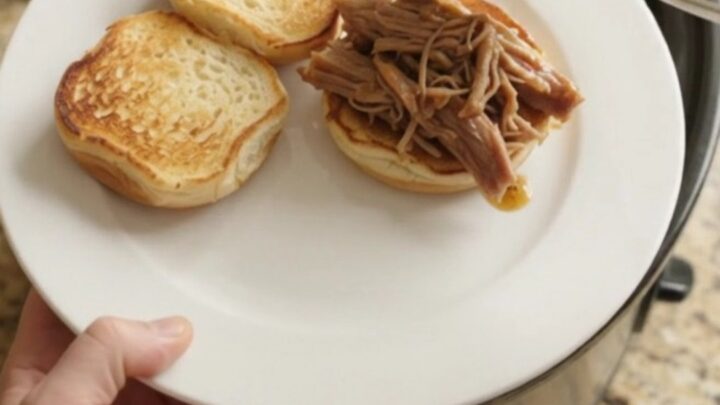
- Serve and EnjoySpoon the shredded pork and onions onto toasted brioche slider buns or over mashed potatoes. Drizzle with extra gravy from the slow cooker.Look for The pork is steaming and glistening with gravy, ready to be devoured.Tip For a crisp contrast, toast the buns before piling on the pork.
The shredded pork is glossy with gravy, with onions and rich sauce clinging to every strand. The texture is moist and tender, not dry or stringy. The gravy has thickened slightly and coats the back of a spoon. The dish is ready to be piled onto buns or served over starches.
Common mistakes
One common mistake is using a lean cut like pork loin or tenderloin, which will dry out. Stick with pork shoulder. Another is lifting the lid too often during cooking, which releases heat and extends cooking time.
Also, resist the urge to stir—layers are key. Finally, don't skip the resting time after cooking; it allows the juices to redistribute and makes shredding easier.
How to tell it’s done
The pork is done when it is fork-tender and easily shreds without resistance. A meat thermometer inserted into the thickest part should read at least 145°F (63°C) for safety, but the long cook time will far exceed that.
The onions should be soft and deeply caramelized, and the gravy should be slightly thickened and glossy. If the pork isn't shredding easily, cook for another hour and check again.
- Steaks, chops and roasts: 145°F (63°C) in the thickest part, then a 3-minute rest
Up next · Part 3 of 3
4 variations · storage & make-ahead · 5 answers · printable card
Tips, FAQ & printable recipe (Part 3)← Back to the ingredients (Part 1)