Dinner · Part 2 of 3: Instructions
Fork-Tender Braised Lamb Shanks with Shallots Step-by-step instructions
- Prep
- Cook
- Total
- Serves
- 4
Before you start
Before you start, take the lamb shanks out of the refrigerator and let them sit at room temperature for about 30 minutes. This helps them cook more evenly. Pat them very dry with paper towels—moisture is the enemy of a good sear. Measure out all your ingredients and have them ready.
Peel the pearl onions or shallots and the garlic cloves. Slice the carrot. Have your broth measured and your herbs ready. Preheat the oven to 320°F (160°C) before you begin searing, so it is ready when you need it. Set a plate near the stove for the seared shanks.
Ingredients at a glance (13)
- 2 large lamb shanks
- 2 tbsp olive oil
- 1 tbsp butter
- 10 whole pearl onions or shallots, peeled
- 6 cloves garlic
- 1 tbsp tomato paste
- 1 tbsp sweet pepper paste
- 400 ml lamb or beef broth
- 1 carrot, sliced
- 1 sprig fresh rosemary
- 1 bay leaf
- 1 tsp salt
- 1/2 tsp black pepper
Instructions
Searing and Aromatics
- Sear the Lamb ShanksPat the lamb shanks dry with paper towels. Season generously with salt and black pepper. Heat the olive oil and butter in a heavy Dutch oven over medium-high heat until shimmering. Add the lamb shanks and sear without moving them for 4-5 minutes per side, until deeply browned and caramelized on all sides. Use tongs to turn them. Remove the shanks to a plate and set aside. Let it rest for 3 minutes before slicing.Look for The shanks should have a deep mahogany crust, not just pale brown.Safe temperature 145°F (63°C) internal temperature (steaks, chops and roasts)Tip Don't crowd the pan; sear in batches if needed to get a proper crust.
- Sauté the AromaticsReduce the heat to medium. Add the pearl onions or shallots to the same pot and cook, stirring occasionally, for 3-4 minutes until they start to soften and take on color. Add the garlic cloves and sliced carrot, and cook for another minute until fragrant.Look for The onions should be golden at the edges, and the garlic fragrant but not burned.Tip If the pan looks dry, add a splash of broth to loosen any browned bits.
At the end of this phase, the lamb shanks should have a deep, mahogany crust on all sides, and the pot should have a rich brown fond on the bottom. The shallots and garlic should be softened and fragrant, just starting to color. The pastes should be dissolved into the broth, creating a deep red liquid. The kitchen will smell of caramelizing meat and sweet aromatics.
The Long Braise
- Add the Pastes and BrothStir in the tomato paste and sweet pepper paste, and cook for 1 minute, stirring constantly, until the pastes darken slightly and become aromatic. Pour in the broth, scraping up any browned bits from the bottom of the pot. Add the rosemary sprig and bay leaf. Return the lamb shanks to the pot, nestling them into the liquid. Bring to a simmer.Look for The liquid should be a deep red-brown, and the pastes fully dissolved.Tip Scraping the bottom ensures maximum flavor from the fond.
- Braise Until Fork-TenderCover the pot with a tight-fitting lid. Transfer to the oven and braise at 320°F (160°C) for 2 1/2 hours, or until the meat is fork-tender and falling off the bone. Check occasionally to ensure there is enough liquid; add a little hot water if needed. Let it rest for 3 minutes before slicing.Look for The meat should be so tender that a fork slides in with no resistance.Safe temperature 145°F (63°C) internal temperature (steaks, chops and roasts)Tip If the sauce reduces too much, add a splash of broth to keep the meat moist.
After 2 1/2 hours in the oven, the lamb shanks should be fork-tender, with the meat beginning to pull away from the bone. The sauce should be reduced and glossy, with the shallots and carrots tender and sweet.
The aroma will be rich and savory, with hints of rosemary and garlic. Check that there is still enough liquid to keep the meat moist; if not, add a splash of broth.
Resting and Serving
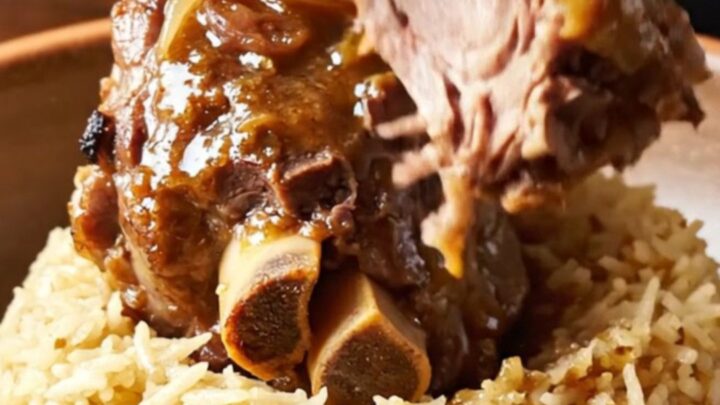
- Rest and ServeRemove the pot from the oven. Let the lamb shanks rest in the sauce for at least 5 minutes. Carefully transfer the shanks to a serving platter. Skim any excess fat from the sauce if desired. Spoon the sauce, shallots, and carrots over the meat. Serve hot over buttery Turkish rice pilaf if desired.Look for The sauce should be glossy and slightly thickened, coating the back of a spoon.Safe temperature 145°F (63°C) internal temperature (steaks, chops and roasts)Tip Letting the meat rest in the sauce keeps it moist and allows the flavors to meld.
After resting, the lamb shanks should be glistening and coated with a thick, glossy sauce. The meat should be so tender that it falls off the bone with the slightest pressure. The sauce should coat the back of a spoon and be rich with flavor. The shallots should be soft and sweet, and the carrots tender. The dish is ready to be served over rice pilaf or with crusty bread.
Common mistakes
One common mistake is not searing the lamb shanks long enough. The crust is essential for flavor, so be patient and let them develop a deep brown color. Another is overcrowding the pot, which lowers the temperature and causes the meat to steam instead of sear. Also, be careful not to let the garlic burn when sautéing; it can turn bitter.
When braising, make sure the lid is tight-fitting to trap steam. If the sauce seems too thin at the end, don't be tempted to add flour; instead, let it simmer uncovered to reduce. Finally, always rest the meat before serving to allow the juices to redistribute.
How to tell it’s done
The lamb shanks are done when the meat is fork-tender and easily pulls away from the bone. Insert a fork into the thickest part of the meat; it should slide in with almost no resistance.
The internal temperature should read at least 145°F (63°C) for food safety, but for braised lamb, it will be much higher, typically around 200°F (93°C), which is what makes it so tender. The sauce should be reduced and glossy, coating the back of a spoon. If the sauce is too thin, you can simmer it uncovered on the stovetop for a few minutes to thicken it.
- Steaks, chops and roasts: 145°F (63°C) in the thickest part, then a 3-minute rest
Up next · Part 3 of 3
4 variations · storage & make-ahead · 5 answers · printable card
Tips, FAQ & printable recipe (Part 3)← Back to the ingredients (Part 1)