Desserts · Part 1 of 3: Ingredients
Flaky Sweet Poppy Layer Buns
- Prep
- Cook
- Total
- Serves
- 8
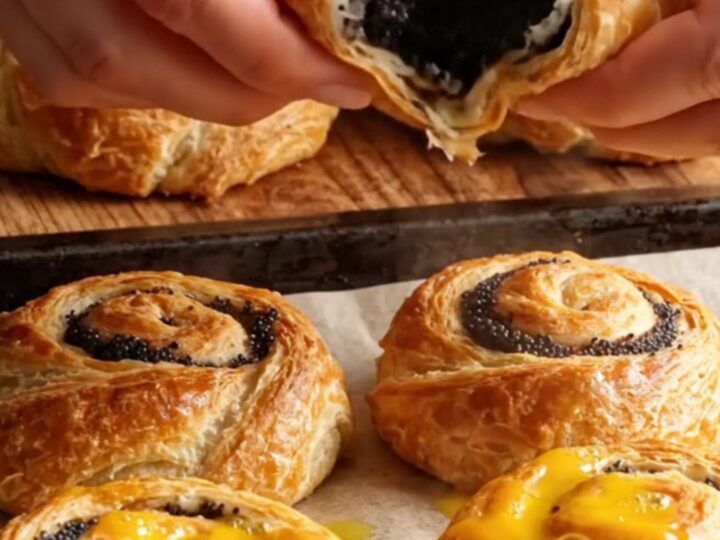
These flaky sweet poppy layer buns are the kind of pastry that stops you mid-scroll: golden, coiled spirals that pull apart into dozens of paper-thin layers, each one painted with a glossy black poppy seed filling.
The dough is soft and supple, the filling rich and nutty, and the whole thing bakes up deeply golden with a satisfying crunch on the outside and a tender, pull-apart interior. Whether served warm with tea or as a show-stopping brunch centerpiece, these buns deliver on every level.
This recipe turns a simple yeast dough into a spectacular pastry by layering it with a sweet black poppy seed paste, then slicing, twisting, and coiling it into snail-like buns. The technique is straightforward: roll the dough thin, spread the filling, stack the layers, and let the oven do the rest.
The result is a pastry that is equal parts flaky, tender, and aromatic, with a beautiful spiral pattern that makes it as pleasing to look at as it is to eat. Perfect for holidays, weekend baking, or any time you want to impress.
Ingredients
Dough
- 1 1/2 cups warm milk (300ml)
- 1/2 cup vegetable oil (100ml)
- 3 tbsp granulated sugar
- 1 tsp salt
- 1 packet active dry yeast (11g)
- 1 large egg
- 4 1/2 cups all-purpose flour
Filling
- 1 cup black poppy seed paste (haşhaş ezmesi)
- 125 g melted butter
- 1/2 cup vegetable oil
- 4 tbsp granulated sugar
Topping
- 1 egg yolk, beaten
Why this recipe works
The magic of these buns lies in the lamination technique. By rolling the dough into thin sheets and stacking them with a rich poppy seed filling, you create dozens of distinct layers.
When baked, the heat causes the moisture in the filling to steam, pushing the layers apart and creating that signature flaky texture. The contrast between the crisp outer crust and the soft, tender interior is what makes every bite irresistible.
The filling itself is a key player: black poppy seed paste is naturally rich and nutty, with a slight sweetness that pairs beautifully with the buttery dough.
Mixing it with melted butter and oil not only makes it spreadable but also helps keep the layers moist during baking. The result is a pastry that is deeply flavorful, with a subtle crunch from the poppy seeds and a glossy sheen that catches the light.
Notes and substitutions
Black poppy seed paste, sometimes labeled haşhaş ezmesi, is available at Middle Eastern grocers or online. It has a distinct, slightly sweet flavor that cannot be replicated with whole seeds alone. If you cannot find it, you can make your own by grinding black poppy seeds with a little honey or sugar and milk until a thick paste forms. The texture should be similar to a thick nut butter.
Use a neutral oil like vegetable or canola for both the dough and the filling, as olive oil would overpower the delicate flavor. The dough is forgiving: if it feels too sticky, add a little more flour, but be careful not to over-knead, as that can make the buns tough. A light touch and a well-floured surface are your best tools.
- black poppy seed paste: If unavailable, grind 1 cup of black poppy seeds with 1/4 cup honey or sugar and a little milk until a thick paste forms.
- active dry yeast: Instant yeast can be used; reduce the amount to 8g and mix directly into the flour without dissolving.
- vegetable oil: Any neutral oil such as canola or sunflower works in both dough and filling.
- all-purpose flour: Bread flour will yield a slightly chewier texture; use the same volume.
Equipment
- Large mixing bowl
- Whisk
- Rolling pin
- Baking sheet
- Pastry brush
- Knife or bench scraper
Up next · Part 2 of 3
8 steps · 25 min of cooking · what to look for at each stage
Step-by-step instructions (Part 2)