Dinner · Part 2 of 3: Instructions
Fifteen-Minute Lemon Ricotta Farfalle with Charred Asparagus Step-by-step instructions
- Prep
- Cook
- Total
- Serves
- 4
Before you start
Before beginning, ensure all ingredients are measured and ready, as the cooking process moves very quickly. Wash and trim the woody ends off the asparagus, then set it aside near your skillet.
Zest and juice the lemons into your mixing bowl, and have your Parmesan grated and ready to go. Since the pasta cooks in minutes, having your colander in the sink and a measuring cup ready to catch that vital starchy pasta water will make the entire process seamless and stress-free.
Ingredients at a glance (9)
- 250 grams whole-milk ricotta
- 2 lemons, zested and juiced
- 60 grams grated Parmesan cheese
- 45 milliliters olive oil
- 300 grams fresh asparagus spears
- 350 grams farfalle pasta
- 90 milliliters starchy pasta water
- 1/4 cup sliced almonds, toasted
- fresh mint leaves for serving
Instructions
Whisking the Ricotta Base
- Prepare the Ricotta BaseIn a large mixing bowl, combine the ricotta, lemon zest, lemon juice, grated Parmesan cheese, and olive oil. Whisk the ingredients together vigorously until the mixture is smooth, fluffy, and well-incorporated. Set the bowl aside while preparing the remaining components of the dish.Look for The mixture should look light and airy, with a consistent texture throughout.Tip Ensure the ricotta is at room temperature to achieve the fluffiest consistency possible.
The base is ready when the ricotta, lemon, Parmesan, and olive oil have transformed into a smooth, emulsified cream.
It should look light, fluffy, and aromatic, with the lemon zest evenly distributed throughout the mixture. Ensure there are no lumps of cheese remaining before moving on to the pasta cooking stage.
Cooking the Pasta and Asparagus
- Cook Pasta and AsparagusBring a large pot of salted water to a boil and cook the farfalle according to package directions until al dente. While the pasta cooks, heat a skillet over medium-high heat and char the asparagus spears until they are tender-crisp and show nice browned marks. Remove the asparagus and cut into bite-sized pieces.Look for The asparagus should be slightly softened with visible char marks on the tips.Tip Save the starchy water before draining the pasta, as it is crucial for building the final creamy sauce.
The pasta is ready when it is al dente, and the asparagus is finished when it shows distinct brown char marks on the tips while remaining firm-tender. Ensure you have collected the starchy water before draining the pasta, as this is the essential component for turning the ricotta into a silky glaze.
Emulsifying and Plating
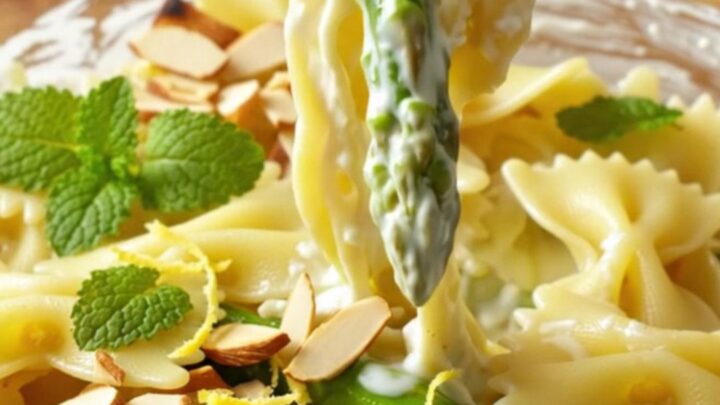
- Emulsify and ServeTransfer the hot, drained farfalle directly into the bowl with the ricotta mixture. Add the reserved ninety milliliters of starchy pasta water. Toss everything together vigorously until the heat from the pasta melts the cheese into a glossy, creamy glaze that coats every bow tie. Gently fold in the charred asparagus pieces, then garnish with the toasted almonds and fresh mint leaves.Look for The sauce transforms from a thick paste into a glossy, light, and creamy coating.Tip Work quickly to ensure the pasta remains hot while creating the emulsion.
The dish is complete when the pasta is coated in a glossy, light sauce that binds the asparagus to the noodles. The final plate should look vibrant and fresh, with the toasted almonds and mint providing a beautiful contrast in both color and texture. Serve immediately while the pasta is hot.
Common mistakes
A common mistake is using too much pasta water or adding it all at once; start with the recommended amount and add a splash more only if needed to achieve the desired consistency.
Another error is overcooking the pasta, which can lead to a mushy texture that does not hold the sauce well. Finally, ensure the asparagus is not crowded in the pan, as this can cause it to steam rather than char, resulting in a soggy vegetable that lacks depth and flavor.
How to tell it’s done
The dish is ready when the farfalle is cooked to an al dente texture, meaning it should be firm to the bite. The sauce should be glossy, creamy, and clinging to the pasta, not pooled at the bottom of the bowl.
The asparagus should be vibrant green with visible char marks on the tips, indicating it has been cooked through while maintaining a pleasant snap. There is no raw protein in this dish, so focus purely on the texture of the pasta and the consistency of the sauce.
Up next · Part 3 of 3
2 variations · storage & make-ahead · 3 answers · printable card
Tips, FAQ & printable recipe (Part 3)← Back to the ingredients (Part 1)