Dinner · Part 1 of 3: Ingredients
Easy Turkish Flatbread Pide With Juicy Spiced Beef
- Prep
- Cook
- Total
- Serves
- 9
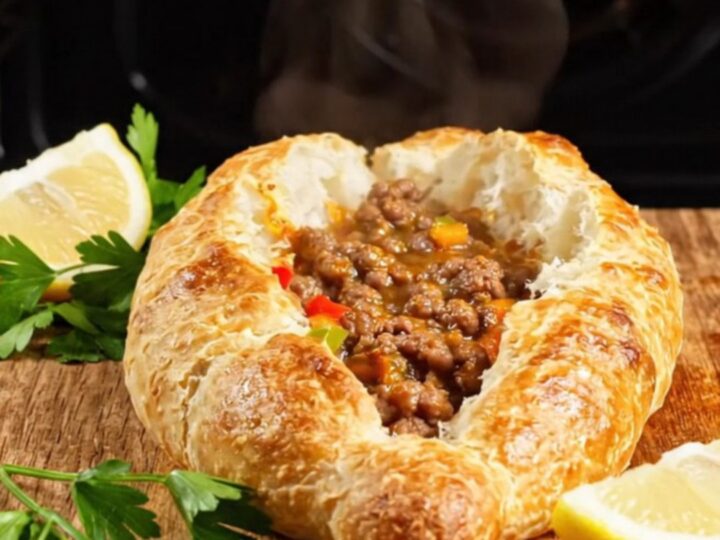
This easy Turkish flatbread pide requires zero rolling pins and delivers a crackly, blistered crust wrapped around a juicy spiced beef filling. The dough is soft and pliable, pressed flat with greased palms, so there is no need for a rolling pin or any special equipment. A quick brush of water before baking creates that signature golden, crisp exterior. Inside, the ground beef is seasoned with grated onion, green pepper, and sweet red kapya pepper, then baked until tender and moist.
Turkish pide is a beloved flatbread that comes in many forms, from boat-shaped with various toppings to folded pockets filled with meat and vegetables. This version simplifies the process by skipping the rolling pin entirely—the dough is pressed and stretched by hand, making it accessible to home cooks of any skill level.
The filling is a classic combination of ground beef, grated onion, and peppers, seasoned simply with salt and black pepper. The dough is enriched with milk and oil, giving it a tender crumb and a slightly chewy texture. Baking at high heat produces a blistered, crackly crust that contrasts beautifully with the moist, savory filling. Serve these pide warm, straight from the oven, for a satisfying meal that feels both rustic and special.
Ingredients
Dough
- 1 cup warm milk
- 1 cup warm water
- 1/2 cup vegetable oil
- 1 tbsp active dry yeast
- 1 tsp salt
- 4 1/2 cups all-purpose flour
Filling
- 500 g ground beef
- 1 finely grated onion
- 1 green pepper, finely chopped
- 1 red kapya pepper, finely chopped
- 1/2 tsp black pepper
- 2 tbsp vegetable oil
Why this recipe works
The dough relies on a generous amount of milk, water, and oil, which together create a soft, extensible dough that stretches easily without tearing. This is what allows the pide to be pressed and shaped by hand, eliminating the need for a rolling pin. The oil also enriches the crumb, keeping the bread tender even after baking at high heat. Letting the dough rest until doubled gives the yeast time to develop flavor and structure, resulting in a light, airy interior.
The filling is kept simple, with grated onion and peppers adding moisture and sweetness to the ground beef. Grated onion releases its juices during baking, helping to keep the meat juicy without making the dough soggy.
The high oven temperature quickly sets the crust, creating a crisp barrier that traps the filling's moisture inside. As the pide bake, the steam from the filling and the water brushed on top contribute to a blistered, crackly surface that is both visually appealing and texturally satisfying.
Notes and substitutions
Use whole milk for the dough if possible; the fat and protein contribute to a softer, more tender crumb. The water should be warm but not hot—about 110°F (43°C)—to activate the yeast without killing it.
Active dry yeast needs to be dissolved in the liquid, while instant yeast can be mixed directly into the flour. All-purpose flour works well, but bread flour will give a slightly chewier texture. If the dough feels too sticky, add a little more flour, but avoid over-flouring, as that can make the pide tough.
For the filling, use ground beef with a moderate fat content, around 15% to 20%, to keep it moist. Finely grating the onion ensures it melts into the meat, adding flavor without large chunks.
Green pepper and red kapya pepper add color and a mild sweetness; if kapya pepper is unavailable, roasted red bell pepper is a good substitute. Season with salt and black pepper to taste, but keep the seasoning simple to let the natural flavors shine. The oil in the filling helps bind the ingredients and adds richness.
- red kapya pepper: Use 1 roasted red bell pepper, finely chopped, or 1/2 teaspoon sweet paprika for a similar color and mild sweetness.
- ground beef: Substitute ground lamb or a mix of ground beef and lamb for a richer, more traditional flavor.
- all-purpose flour: Bread flour works well and gives a slightly chewier crust; reduce the water by 2 tablespoons if the dough feels too sticky.
- active dry yeast: Use 2 1/4 teaspoons instant yeast; mix it directly into the flour without proofing, and reduce the rest time by 15 minutes.
Equipment
- Large mixing bowl
- Wooden spoon
- Clean kitchen towel
- Baking sheet
- Pastry brush
- Measuring cups and spoons
- Box grater
- Chef's knife
Up next · Part 2 of 3
5 steps · 15 min of cooking · what to look for at each stage
Step-by-step instructions (Part 2)