Dinner · Part 3 of 3: Tips & recipe card
Easy Tangy Mustard Crockpot Pulled Pork Tips, FAQ & printable recipe

- Prep
- Cook
- Total
- Serves
- 8
Tips for success
For a deeper flavor, you can sear the pork butt in a hot skillet before placing it in the slow cooker. While not strictly necessary, this step adds a caramelized crust that enhances the overall depth of the dish. If you choose to do this, ensure the skillet is very hot and sear all sides until browned.
If you prefer a thicker sauce, you can remove the meat once it is cooked and continue to simmer the remaining liquid in the slow cooker on high with the lid off for about 15 to 20 minutes.
This will evaporate excess moisture and concentrate the mustard and sugar flavors into a rich, sticky glaze that you can then pour over the shredded pork.
Variations
- Spicy Mustard Pork: Add two tablespoons of hot sauce or a teaspoon of crushed red pepper flakes to the mustard sauce mixture before pouring it over the pork to introduce a pleasant heat.
- Garlic Herb Pork: Incorporate four cloves of minced garlic and a tablespoon of dried thyme or rosemary to the mix for a more aromatic and herb-forward flavor profile that complements the mustard.
Storage and make-ahead
- Fridge
- Store in an airtight container for up to 3 days.
- Freezer
- Freeze in a freezer-safe bag for up to 3 months. Thaw in the refrigerator overnight.
- Reheat
- Reheat in a saucepan over low heat or in the microwave until steaming hot throughout.
Store any leftovers in an airtight container in the refrigerator for up to 3 days. Ensure the pork has cooled to room temperature, but do not leave it out for more than 2 hours before refrigerating to maintain food safety.
The sauce helps keep the meat moist during storage, so keep the meat submerged in as much liquid as possible.
This dish is perfect for making ahead as the flavors often improve after sitting in the refrigerator overnight. You can cook the pork, shred it, and store it in its juices.
When ready to serve, simply reheat it gently on the stovetop or in the microwave, adding a splash of water if the sauce has become too thick.
Serving ideas
Serve the pulled pork piled high on soft brioche buns with a side of coleslaw for a classic meal. The crunch of the slaw provides a refreshing contrast to the tender, rich meat. You can also serve it over a bed of creamy mashed potatoes or alongside roasted vegetables for a more substantial dinner plate.
For a lighter option, serve the pulled pork in lettuce cups or over a crisp garden salad. The tangy mustard profile pairs wonderfully with fresh greens and pickled vegetables.
Regardless of how you choose to serve it, ensure the meat is warm and well-coated with the reduced cooking juices for the best possible dining experience.
Frequently asked questions
Can this be made ahead for a party?
Why does the meat need to rest before shredding?
Is it necessary to add water or broth?
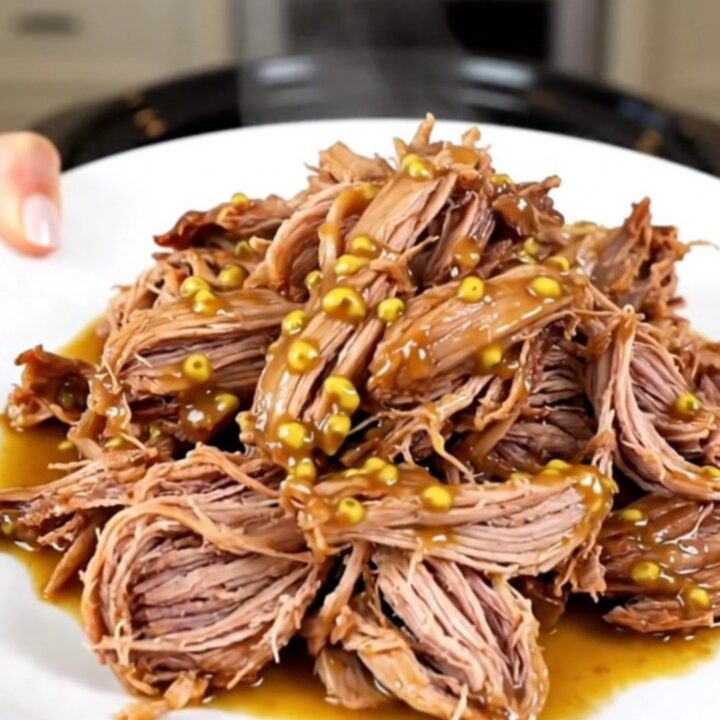
Easy Tangy Mustard Crockpot Pulled Pork
Ingredients
- 3 lb pork butt
- 2 large onions, sliced
- 1/2 cup brown sugar
- 1 cup yellow mustard sauce
Instructions
- Place the raw pork butt into the bottom of the slow cooker. Scatter the sliced onions evenly over and around the pork to create a flavorful bed for the meat to cook in.
- Sprinkle the brown sugar over the pork. Pour the yellow mustard sauce over the top, ensuring it coats the meat well. Cover and cook on low for about 8 hours until the pork reaches an internal temperature of at least 145°F (63°C), then allow the meat to rest for at least 3 minutes.
- Remove the pork from the slow cooker and transfer it to a cutting board or platter. Use two forks to shred the tender meat, mixing it with the juices from the pot before serving on a plate.
Estimated nutrition per serving
- Calories
- 420
- Protein
- 32 g
- Carbohydrates
- 15 g
- Fat
- 26 g
- Fiber
- 1 g
- Sugar
- 12 g
- Sodium
- 650 mg
Next recipe

Slow Cooker Butternut Squash and Sage Tortellini
See the recipe → →This recipe is based on a short cooking video and is published under the pen name Clara Weller. It was checked before publication, but errors can slip through. Nutrition, when shown, is an estimate. Read more in our editorial policy and on our food safety page.
More recipes to try

Slow Cooker Honey Garlic Beef Meatballs
Total time: 4 h 10 min
Slow Cooker Green Chile Shredded Beef for Easy Weeknight Dinners
Total time: 8 h 15 min
Slow Cooker Pork Chile Colorado: Tender and Simple
Total time: 8 h 15 min
Easy Slow Cooker Italian Dressing Pork Chops
Total time: 8 h 8 min
Crockpot Blackberry Barbecue Chicken Wings
Total time: 4 h 10 min