Dinner · Part 2 of 3: Instructions
Easy Slow Cooker Sauerbraten Pork Roast Step-by-step instructions
- Prep
- Cook
- Total
- Serves
- 6
Before you start
Before beginning, ensure your slow cooker is clean and placed on a stable, heat-resistant surface. Have all your ingredients measured and ready, including the sliced onions and carrot coins.
If your pork shoulder is very large, you may need to cut it into two or three pieces to fit comfortably within the vessel. Ensure you have a reliable digital meat thermometer on hand to confirm when the pork reaches the safe internal temperature of 145°F (63°C) before serving.
Ingredients at a glance (5)
- 3 lb pork shoulder roast
- 1 large yellow onion, sliced
- 2 cups carrots, sliced into coins
- 1/2 cup gingersnap cookie crumbs
- 1 cup vinegar broth
Instructions
Preparation and assembly
- Assemble the slow cookerPlace the pork shoulder roast into the center of the slow cooker insert. Arrange the sliced onions and carrot coins around the sides of the meat. Sprinkle the gingersnap cookie crumbs evenly over the top of the roast to build the flavor base for the gravy.Look for The vegetables should surround the pork snugly.Tip Ensure the gingersnaps are crushed finely for a smoother sauce.
At this stage, the slow cooker is filled with the raw pork, vegetables, and gingersnap crumbs. Everything should be arranged in an even layer to ensure consistent cooking. Verify that the insert is sitting correctly in the heating base and that the lid is clean and ready to provide a tight seal. This is the moment to double-check that you have sufficient vinegar broth to create the base for your sauce.
Slow braising
- Add liquid and cookPour the vinegar broth over the pork and vegetables. Cover the slow cooker with the lid. Set the slow cooker to cook on low for 8 hours or on high for 4 hours until the pork is fork-tender.Look for The broth should partially submerge the pork.Tip Avoid lifting the lid frequently to maintain a consistent internal temperature.
During the main cooking phase, the kitchen will begin to fill with the savory, tangy aroma of the braising liquid. The pork is slowly transforming into a tender, pull-apart consistency. You should see the liquid simmering gently. Avoid opening the lid, but if you must check, ensure the liquid level has not dropped too low; if it has, you may add a small splash of water or additional broth to maintain the braise.
Finishing the roast
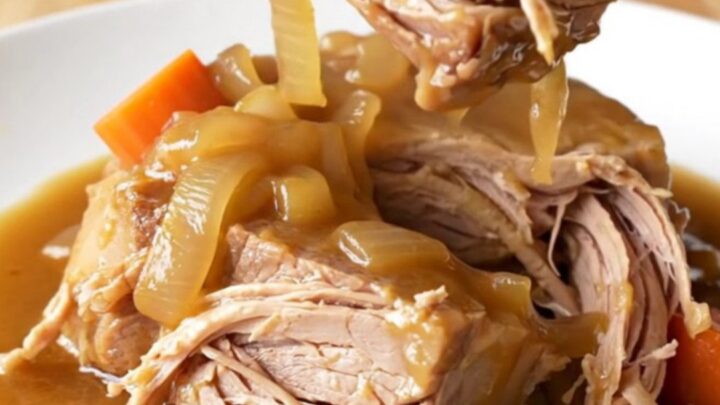
- Finish and restOnce the cooking time is complete, verify the pork has reached an internal temperature of 145°F (63°C). Carefully remove the roast to a cutting board, shred the meat into chunks, and return it to the gravy. Allow the meat to rest for at least 3 minutes before serving to ensure tenderness.Look for The meat pulls apart easily with a fork.Safe temperature 145°F (63°C) internal temperature (steaks, chops and roasts)Tip The residual heat in the gravy will keep the pork warm while resting.
The final stage involves verifying the temperature and preparing the meat for service. The pork should be thoroughly cooked and tender enough to shred with a fork. The gravy should be rich, dark, and thick.
Once shredded, the meat should be returned to the gravy to absorb the flavors for the final few minutes of resting. Ensure the meat is piping hot and the sauce is well-distributed before moving to the serving platter.
Common mistakes
A common mistake is overcrowding the slow cooker or using a cut of meat that is too lean, which can lead to dry results. Avoid the temptation to lift the lid during the cooking process, as this releases heat and steam, significantly extending the required time.
Another error is failing to let the meat rest after cooking; taking the time to let the juices redistribute ensures every bite is succulent and flavorful, preventing the pork from becoming stringy or dry upon slicing.
How to tell it’s done
The pork is perfectly cooked when it reaches an internal temperature of at least 145°F (63°C). Beyond the temperature check, the physical cues are unmistakable; the meat should be opaque throughout with no signs of pink.
When touched with a fork, the fibers should yield and pull apart with very little resistance. The gravy will have thickened into a rich, glossy brown sauce that coats the back of a spoon, and the vegetables should be tender but still hold their shape.
- Steaks, chops and roasts: 145°F (63°C) in the thickest part, then a 3-minute rest
Up next · Part 3 of 3
2 variations · storage & make-ahead · 3 answers · printable card
Tips, FAQ & printable recipe (Part 3)← Back to the ingredients (Part 1)